




Analysts and a House lawmaker say the decision by self-described “bagman” Ramil Madriaga to waive his bank secrecy rights could significantly strengthen the impeachment case against Vice President Sara Duterte — potentially elevating him to star witness status if the proceedings reach the Senate.

Madriaga, who claims to have served as a former aide to the Vice President and a “dummy” for her father, ex-President Rodrigo Duterte, submitted the waiver to the House committee on justice following his April 14 testimony. The document authorizes the National Bureau of Investigation and other authorities to access all bank accounts held under his name, jointly with others, or those he “beneficially owned” — granting sweeping power to obtain and examine “any and all bank information and records” pertaining to him.
In his supplemental affidavit, Madriaga identified six accounts he says were opened under his name by “close associates” of the former president, at branches of Chinabank in Legaspi Village, Chinabank Main, and a Chinabank branch near the fire station on Ayala Avenue — all in Makati — as well as PNB’s Makati Metropolitan Avenue branch, an unspecified bank in Pasig City, and another in Lubao, Pampanga. He said the accounts were intended for “intelligence operations” and “laundering,” and that “millions of pesos” passed through them, though he provided no specific figures.
His lawyer, Raymund Palad, told the Inquirer that Madriaga had “no idea” of the amounts deposited. “He was just instructed to make withdrawals,” Palad said. Palad added that the waiver was meant to support his client’s account of his proximity to the Duterte family.
Political science professors from two universities said the move carries weight beyond symbolism. Ederson Tapia of the University of Makati said the waiver “strengthens the impeachment case because it shifts his allegations from mere accusation toward verifiable proof.” He added: “By opening his records, he has placed his credibility on the line in a way that few witnesses do, and that gives his testimony greater weight.”
Arjan Aguirre, assistant professor of political science at Ateneo de Manila University, said the waiver “would allow the House to examine his financial records and potentially trace a paper trail.” He cautioned, however, that its ultimate impact would depend on “how committee members handle the discussion and assess the evidence, and whether they allow it to meaningfully shape public understanding of the issue.”

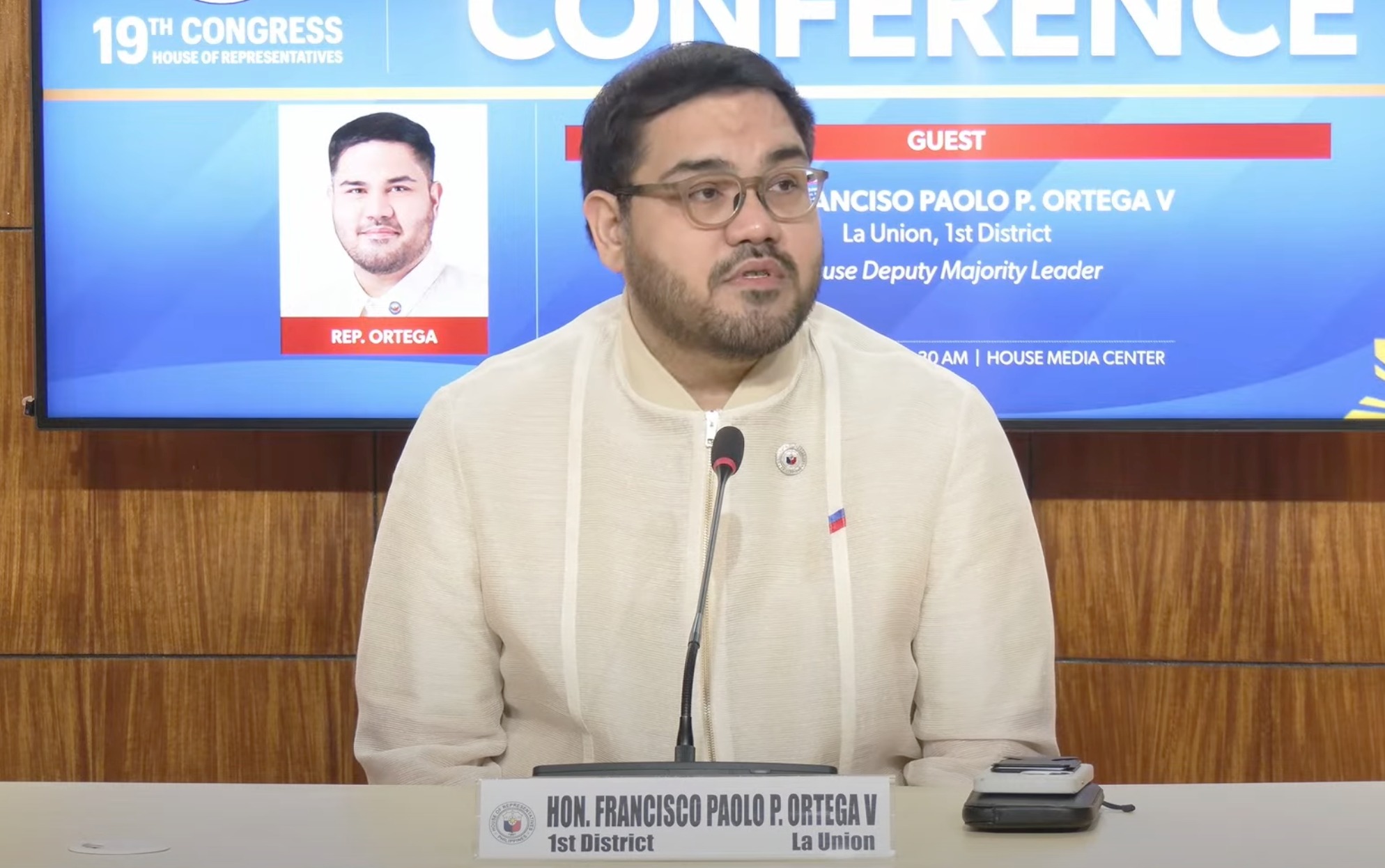
Deputy Speaker Paolo Ortega V, an ex officio member of the House justice committee who endorsed an impeachment complaint against the Vice President, said Madriaga’s willingness to open his finances to scrutiny works in his favor as a witness. “A witness who has nothing to hide is very credible … this is a really good test of his credibility,” Ortega said. He added that if the case reaches the Senate on the strength of Madriaga’s disclosures, “he will surely be the star witness.”
Ortega also stressed that the waiver would move the inquiry beyond accusations. “We will see a bigger picture than just mere allegations,” he said. “That’s where the waiver becomes important, because it allows investigators to trace not just the person but also the flow of money.”
Among the claims in Madriaga’s supplemental affidavit: that Rodrigo Duterte directed him to collect P100 million on three separate occasions from a Lubao bank and deliver the combined P300 million to Malacañang. He also said he transported bags of confidential funds — between P30 million and P35 million per delivery — to three separate locations within a single 24-hour period in December 2022, bringing the total to P125 million. He said the deliveries took less than a day, contradicting earlier reports that placed the timeline at 11 days.
The P125 million is described as part of the P612.5 million in confidential funds from the Office of the Vice President and the Department of Education allegedly misused by Duterte — one of the central allegations in the impeachment complaints against her. Madriaga also alleged that her 2022 election campaign was financed by Chinese businessmen, including an officer of a pharmaceutical company.
Beyond the confidential funds controversy, the complaints before the House justice committee include allegations that she accumulated wealth beyond her declared legal income and that she plotted to kill President Marcos, First Lady Liza Araneta-Marcos, and former Speaker Martin Romualdez. Duterte has denied any wrongdoing, and she and her allies continue to contest the constitutionality of the proceedings. The Supreme Court previously nullified her impeachment last year for breaching the constitutional bar against subjecting the same official to more than one impeachment process within a year.
Tapia warned that Duterte faces growing political risk if she does not directly challenge the allegations. “In politics, unrefuted allegations can begin to acquire the weight of presumed truth, especially when they circulate repeatedly without a clear, evidence-based rebuttal,” he said.
