



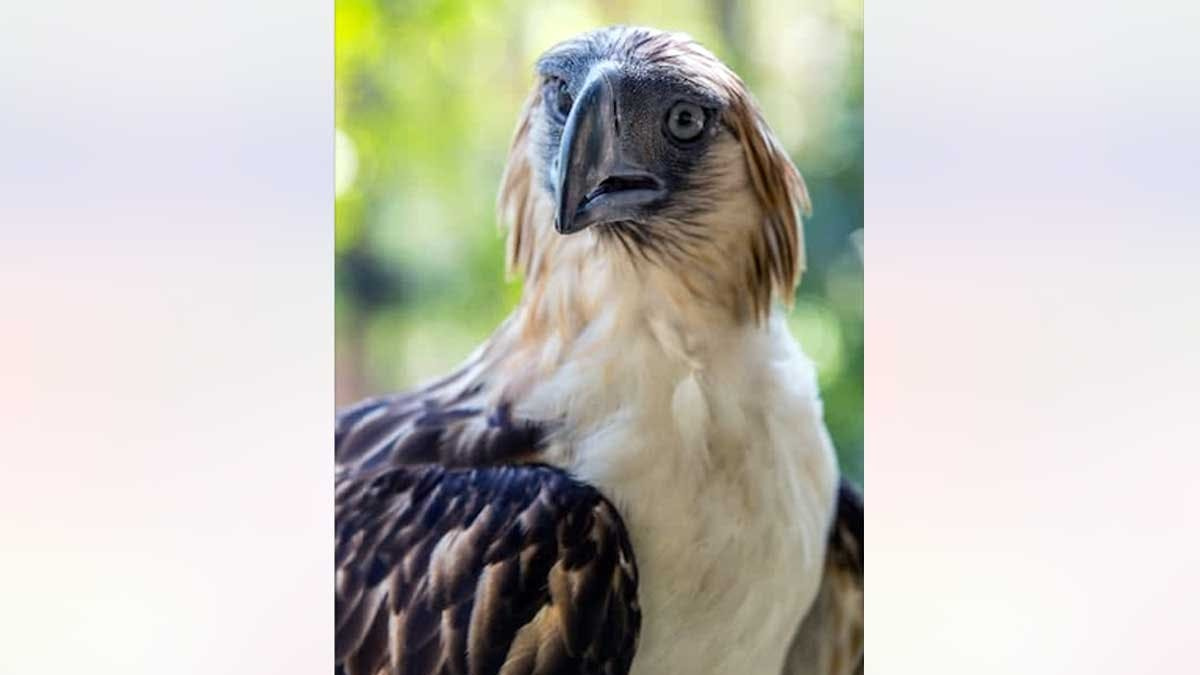

A raptor that has spent more than four decades under human care now holds something no other Philippine Eagle is known to possess: official identification cards naming her a senior citizen and a person with disability.

Quezon City’s local government issued the documents to Girlie, a Philippine Eagle housed at the Ninoy Aquino Parks and Wildlife Center, prompting the Philippine Eagle Foundation (PEF) to single her out for tribute as the country observes Philippine Eagle Week. The foundation framed the gesture as both a celebration and an assertion of kinship between Filipinos and their national bird.
“It is a recognition as historic as it is moving, and a powerful statement: the Philippine Eagle is not just our national symbol—she is family,” the PEF said.

Conservation groups estimate Girlie’s age at roughly 46 to 47, which the foundation says makes her the oldest Philippine Eagle ever documented in captivity. That longevity is striking for a species whose members rarely reach such an age, and it is the reason her qualification for senior citizen status carries symbolic weight beyond the paperwork itself.
Her path to becoming a fixture in Metro Manila began with injury. Rescued in 1982 after a slingshot wound damaged her wing and left her blind in one eye, Girlie could never be released back into the forest. According to the Department of Environment and Natural Resources, she was initially taken in for care and later figured into early breeding work before her eventual relocation to the capital region in 2009, where she has remained on public display.
The Philippine Eagle ranks among the rarest birds of prey on earth, surviving on only a handful of Philippine islands and numbering a few hundred breeding pairs in the wild. Officials have repeatedly pointed to Girlie as a way to make those grim figures tangible to a public that may never encounter the species in its natural habitat.
