




An artificial intelligence platform built for large-scale lending will underpin a proposed short-term loan product for members of the Social Security System (SSS), following an agreement finalized in the first week of July.

Standard Economics, the firm behind the technology, will lend its Economic Superintelligence platform to the SSS Micro Loan Program, or SSS LoanLite. The system handles identity verification, AI risk assessment, AI underwriting, payments, AI fraud prevention, and data security, and was built to let governments and institutions move and allocate funds at population scale without degrading the experience for the people receiving them.
“Standard Economics is honored to support SSS in its mission to serve Filipino workers and their families,” said Evan Stanley Jones, the company’s president and chief executive officer. “Our goal is to provide modern financial infrastructure that helps institutions deliver support faster, safer, and more efficiently. We believe everyday, people deserve access to financial products that are trusted, high quality, and built around their needs.”
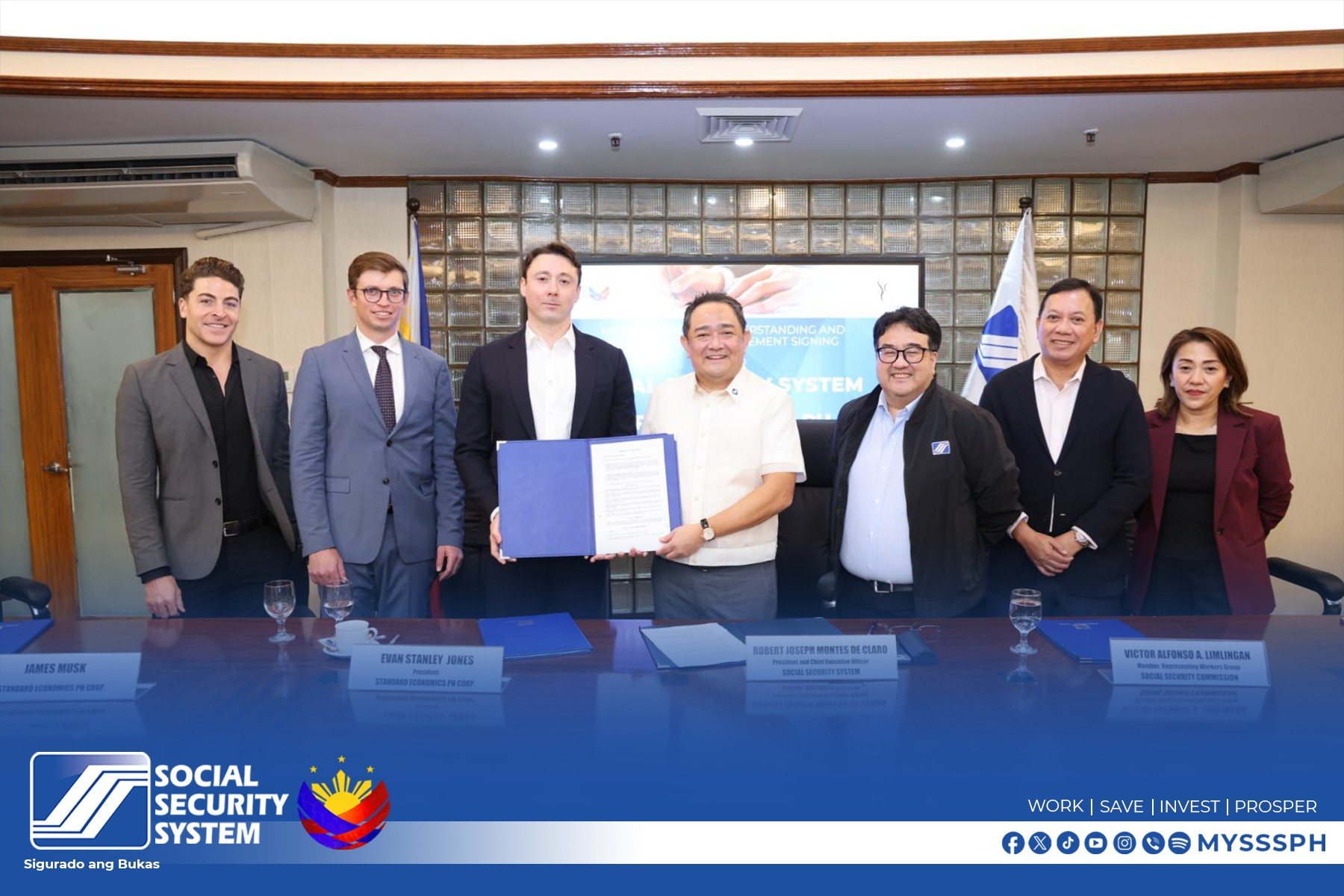
The two organizations executed a Memorandum of Understanding and a Non-Disclosure Agreement on 07/03/2026. Jones signed alongside SSS President and Chief Executive Officer Robert Joseph M. de Claro.
LoanLite is envisioned as a digital microloan facility offering members quicker, more secure, and cheaper short-term assistance. Beyond the product itself, the agreement is meant to reinforce the systems SSS uses to evaluate applications, release funds, and manage loan accounts across a large membership base.

De Claro credited the company’s newness as no barrier to what it could deliver.
“Your organization may be relatively new to the industry, but it shows a great promise through its innovations that enable faster loan disbursement, lower transaction costs, greater financial inclusion, automated processes and real-time monitoring,” he said. “By leveraging blockchain technology and digital payments, you have the potential to be a true game changer.”
He tied the arrangement to President Ferdinand R. Marcos Jr.’s push to present the Philippines as open to investment, a message he said carries added weight now that the World Bank has reclassified the country as an upper middle-income economy.
De Claro also pointed to Finance Secretary and Social Security Commission Chairperson Frederick D. Go, whose stated priority is faster service delivery at lower cost to borrowers through technology. Under the Standard Economics partnership, he said, SSS expects to apply AI toward tighter security controls and stronger audit capabilities within the LoanLite program.
For Standard Economics, the Philippines figures prominently in a wider effort to widen access to modern financial services. The company describes its work as building infrastructure that gives ordinary people a route to economic security, entry into the modern economy, and the accumulation of wealth over time.
