



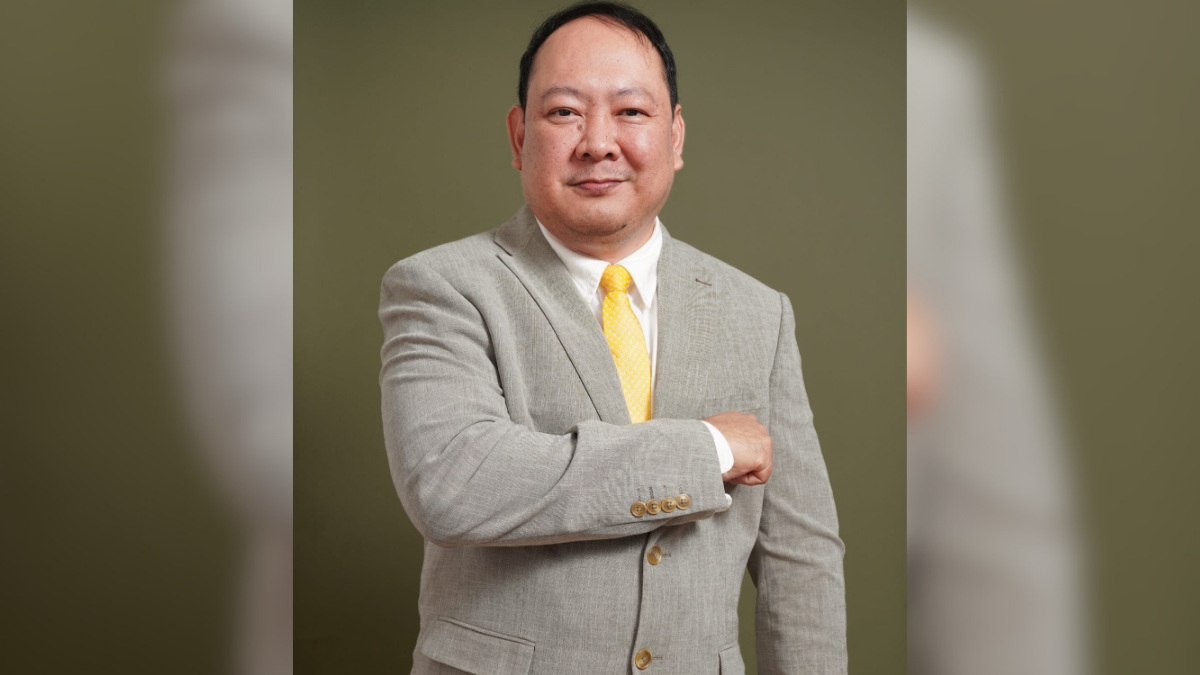

There is a particular kind of quiet ambition that drives people to leave everything familiar behind — not out of desperation, but out of a restless belief that something bigger is waiting. Edmon Alvarez Zaraspe knew that feeling well. More than two decades ago, the Batangas-born engineer packed his tools and boarded a flight that would eventually take him to over 20 countries, including stops in Russia, Germany, Australia, and across the Gulf. Today, the 48-year-old sits not on a factory floor but behind a regional director’s desk at the American Welding Society (AWS) in Singapore — the first Filipino, and the first Southeast Asian, ever appointed to the position.

That is not a minor footnote. It is the headline of a career built through discipline, cross-cultural agility, and an almost stubborn commitment to showing up — and showing up well.
Starting small, building deep
Zaraspe’s entry into the working world was unglamorous by design. His first job, back in the Philippines, was as a non-destructive testing (NDT) technician — a role requiring precision, patience, and a tolerance for the unglamorous business of finding what is wrong before something breaks catastrophically. It lasted a year, but it laid the groundwork for everything that followed.
“My first job was an NDT Technician,” he recalls simply. No elaboration needed. The work taught him to read materials the way others read text — for what they say and for what they hide.
His family had already shown him the road. His father was an overseas worker, as were his elder siblings. The idea of building a life beyond Philippine borders was not foreign to him — it was almost expected. “Growing up, my father and elder siblings worked as overseas professionals, and their experiences exposed me early on to the possibilities and opportunities available beyond our borders,” he says. “At the same time, job opportunities in my home country were relatively limited.”
That combination — inspiration and pragmatism — pushed him abroad in 2002. What he found there changed the entire scope of what he thought a career could look like.
A passport full of standards
Over the next two-plus decades, Zaraspe built a body of field experience that few professionals in any industry can match. His work in engineering and supplier technical audits took him across continents — from Houston, Texas, to Moscow; from Bahrain and Qatar to South Korea and Japan. Each assignment added not just a stamp to his passport but a layer of understanding about how global manufacturing actually works when international codes meet real-world conditions.
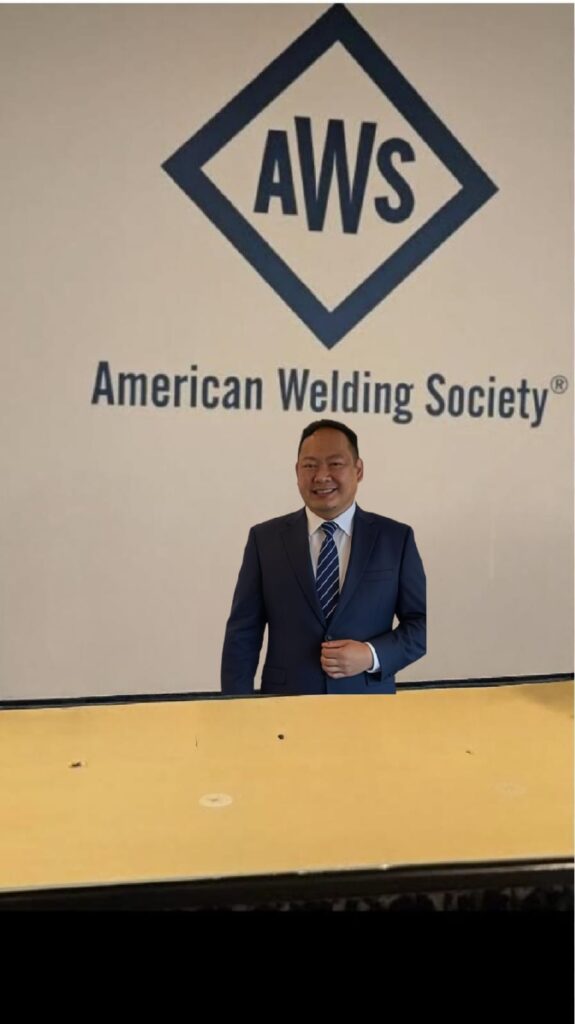
“I am not just familiar with codes — I’ve seen how they are applied, challenged, and enforced in real-world environments across multiple continents,” he says. The line carries the weight of someone who has watched theory collide with site reality and come out knowing the difference.
His technical foundation — welding, metallurgy, heat treatment, NDT, coating systems — gave him credibility in rooms where credibility is earned, not granted. But it was his ability to move between cultures, and communicate across them, that accelerated his rise. He speaks multiple languages, and he treats that not as a party trick but as a professional tool. “Effective communication is a fundamental pillar of success — especially in global and multicultural settings,” he says.
The view from the top of the region

His appointment as AWS Regional Director for Southeast Asia was historic. But Zaraspe does not frame it as personal vindication. He frames it as an opportunity — to extend standards, to develop people, and to close the gap between what global certifications promise and what regional industries actually receive.
In his current role, he oversees engagement across nine territories: the Philippines, Singapore, Malaysia, Indonesia, China, Thailand, Japan, South Korea, and Brunei. His stakeholders span oil and gas, aerospace, heavy industry, and semiconductors. His work involves not just maintaining standards but building the architecture for how those standards are absorbed, implemented, and eventually owned by local industries.
“What I am most passionate about is creating impact — whether by facilitating knowledge-sharing, supporting workforce development, or building partnerships that drive progress within industries,” he says. “The most satisfying aspect of my work is seeing the tangible results of these efforts: individuals gaining new skills, organizations improving their standards, and collaborations that lead to long-term value.”
He lives his mantra — connect people, elevate standards, deliver impact — less as a corporate tagline than as an operating principle.
What it costs, and who keeps you standing
None of this came without difficulty. Zaraspe is candid about the emotional weight of extended separation. Homesickness, he says, was one of his most significant challenges — particularly in the early years, when the novelty of international life had not yet settled into routine.
“Being away from my home country, extended family, and familiar environment was not easy, especially during the early stages of my journey,” he admits. What kept him grounded was not willpower alone. It was his wife and children. “Their encouragement, understanding, and constant presence gave me the strength to persevere through difficult moments.”
His father’s example also stayed with him. Having watched his father navigate the same disorientation and come through it with dignity, Zaraspe drew confidence from that inherited resilience. It is the kind of support structure that does not appear on a CV but shapes everything on it.
What comes next — and who it is for
Zaraspe is already thinking about what happens when this chapter ends. His plans for returning home are not vague. He wants to use his global expertise to help build a more competitive local workforce — promoting internationally recognized certifications, mentoring young engineers, and working with institutions to bridge the gap between global standards and Philippine industrial practice.
“Investing in people and their competencies is key to sustainable growth,” he says. He also speaks of advocating for greater access to professional certification for workers who might otherwise never encounter it. It is the kind of goal that sounds idealistic until you consider that it comes from someone who spent 23 years doing exactly that work across an entire region.
His advice to fellow Filipinos overseas is grounded in the same clarity. “Practice proper budgeting and save consistently. Be cautious and choose your circle wisely. Stay connected with your family and loved ones, as they are your greatest source of strength and motivation.” No grand philosophy. Just earned wisdom, offered plainly.
