



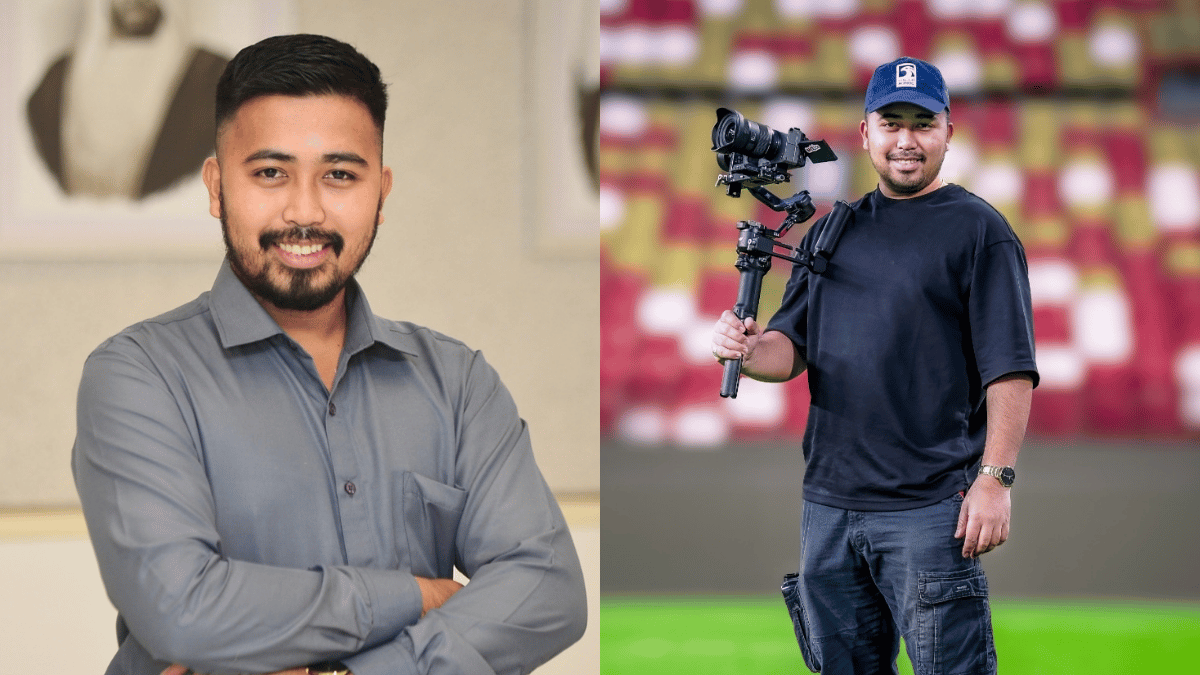

His professional license says Registered Criminologist. His workdays in Abu Dhabi are spent behind a camera, figuring out how to make a stranger feel the character of a room they may never set foot in. Winner Matias, a 28-year-old from Santiago City, Isabela, has spent the past two years working inside that contradiction, and somewhere along the way, it stopped feeling like one.

Today, Winner works as a photographer, videographer, editor, and content creator for Polished Interiors Design, an interior design firm in Abu Dhabi, where his job covers photography, video production, editing, social media content, brand execution, and digital content creation. It is a long way from the career his diploma from Northeastern College pointed toward, and he knows it.
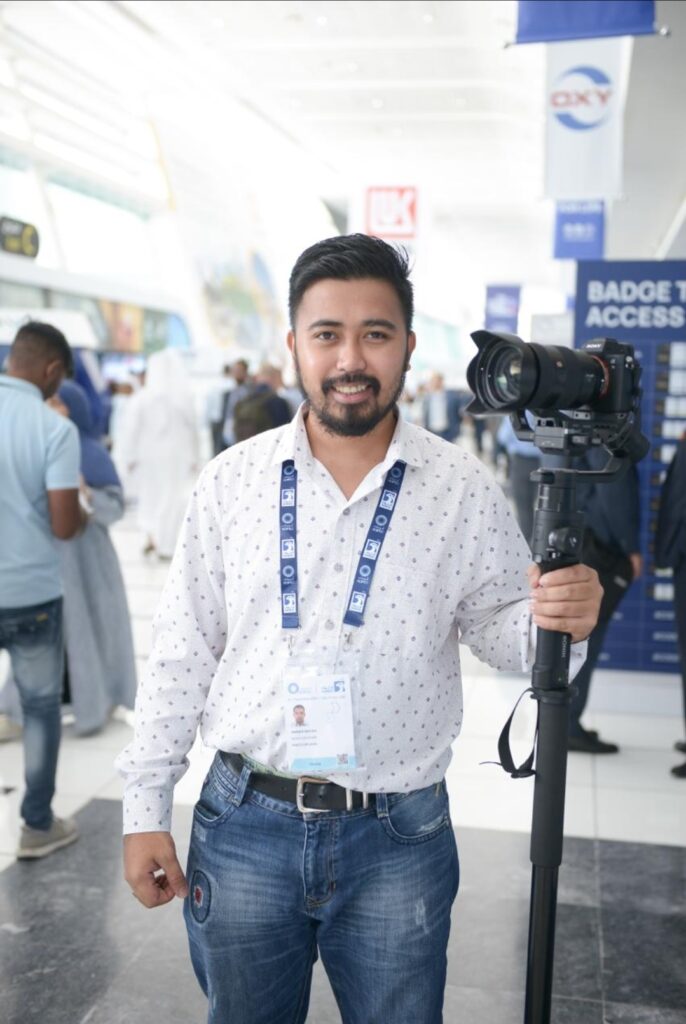
“My degree says Criminology, but my life led me toward a camera,” he shares with TGFM. “My camera taught me to see stories.”
The Isabela native does not describe the detour as an escape or a correction. To him, every job before the camera was part of the same apprenticeship, even when it did not look like one.
From a food court counter to public service
Winner started working at 18, as a crew member at a food court. It was the kind of job many young Filipinos take without much ceremony, but he credits it with his earliest lessons in discipline, patience, customer service, and what it means to earn a living through plain hard work.
He carried that work ethic into college, where he studied Criminology at Northeastern College and collected recognitions and awards along the way. Those honors, he says, built his confidence and taught him to work hard for every opportunity that came his way. He went on to pass the licensure exam and become a Registered Criminologist.
Then came government service, and with it, one of the most difficult stretches his generation has lived through. With the Department of the Interior and Local Government, Winner worked as a contact tracer during the COVID-19 pandemic, tracking exposures at a time when communities were frightened and information moved faster than certainty.
“It was a challenging time for everyone, and being part of work that helped communities during that period taught me the importance of service and responsibility,” the former contact tracer recalls.
He later worked with the Local Government Unit of Santiago City and then with a Department of Health hospital in the city. It was there that his creative side began to take on real professional weight. He handled photography, graphic design, and content-related tasks, the kind of work that rarely makes headlines but keeps public institutions visible to the people they serve.
He also spent time as a college instructor, an experience that left him with a conviction he still holds: “knowledge becomes more meaningful when you share it with other people.”
Looking back, the Registered Criminologist does not see wasted years or a wrong turn. He sees a set of skills that happened to fit together in ways he could not have predicted.
“My experience in Criminology taught me discipline, observation, attention to detail, and responsibility,” Winner says. “My creative career taught me storytelling, communication, patience, and the courage to keep learning.”
It was a realization that took time to settle. “I realized that having a degree does not mean you have to limit yourself to only one path,” he adds.
A bigger room to work in
By the time he considered working abroad, Winner already had experience in both government work and creative work in the Philippines. What he wanted was a larger and more demanding environment, one that would push him further as a photographer, videographer, and editor.
There was also a more personal reason. Winner is a husband and a father, and that changed the math of every decision he made.
“As a husband and a father, my priorities changed. I no longer work only for myself,” the young father says. “Every long day, every project, every deadline, and every sacrifice has a purpose.”
He arrived in Abu Dhabi with a job as a Photographic Product Machine Operator. He did not expect much beyond steady work. “At first, I never imagined how much this opportunity would change my life—not only professionally, but also personally,” he says.
The UAE gave him range. Over two years, Winner worked on projects for major clients in the oil and energy sector, government and semi-government-related projects, exhibitions, weddings, real estate, corporate events, and interior design. The volume alone tells part of the story.
“In just two years, I have worked on and helped produce more than 2,000 videos,” the Filipino videographer says, a figure he counts among the biggest milestones of his career so far.
Life in the UAE brought other things he had not fully weighed before leaving. He values the health insurance and access to healthcare, which gives his family an added layer of security. He appreciates the safety and order of the country, and the daily education that comes from working alongside people of many nationalities and professions. The earning opportunities, compared with what he could make back home, allow him to support his family and plan ahead.
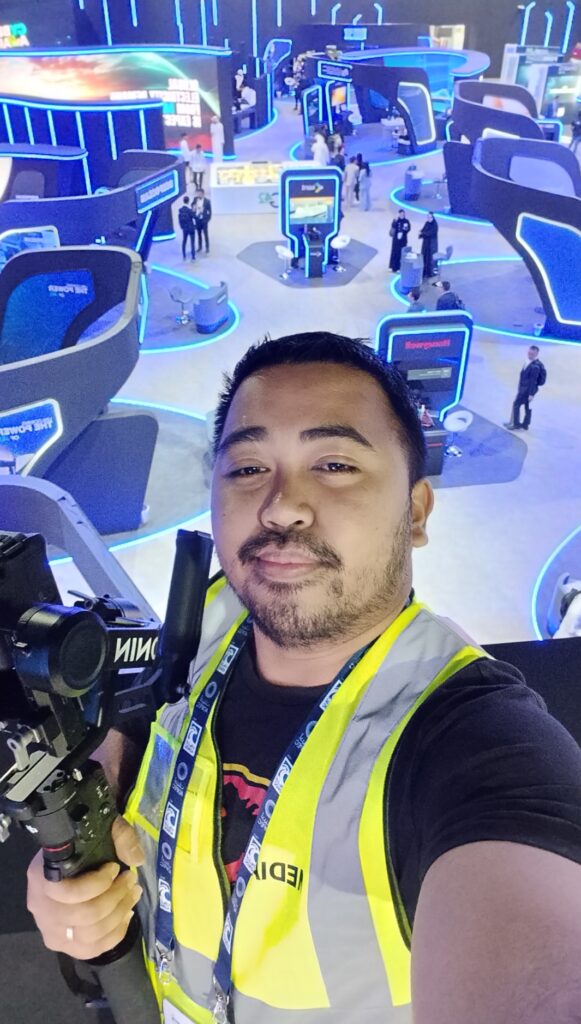
But Winner is careful not to reduce the experience to a paycheck. Working abroad, he says, forces a person to grow up in specific ways. “You learn how to handle responsibilities without always having your family beside you,” he explains. You learn to manage money, time, emotions, and a career on your own.
And, eventually, you learn something about home. “Sometimes, it takes living thousands of kilometers away from your hometown to truly understand how important your family, friends, and country are to you,” Winner says.
One day before the cancellation
The steady rhythm did not last. When regional tensions escalated in the Middle East, the effects reached Winner’s line of work quickly. Photography and videography projects were affected, and uncertainty hung over what jobs would continue and which would quietly disappear.
For an overseas worker, that kind of uncertainty is not abstract. “As an OFW, uncertainty can be frightening because your livelihood is connected to your ability to continue working,” he says.
He worried about his family’s safety and about whether he still had a future in the country. “There was a point when I seriously thought about giving up,” Winner admits.
So he made the decision many OFW parents dread. He chose to send his wife and daughter back to the Philippines and began the process of cancelling their UAE residence visas. In his mind, the Abu Dhabi chapter was closing.

“I remember the feeling of thinking that perhaps my journey in the UAE was already coming to an end,” he says.
What he did in that stretch, he says, was pray. Faith is not a side note in Winner’s story; he places it at the center. “I could not see the answer, but I learned to manampalataya nang walang pag-aalinlangan—to believe even when the situation was uncertain,” he says.
One day before the cancellation was to be finalized, an offer came through. It gave him a way to stay in Abu Dhabi and continue his career, this time in the interior design industry.
“For me, that was more than a job offer,” the Isabela native says. “It was a reminder that when you have done everything you can, sometimes you simply have to trust God and keep moving forward.”
The experience reshaped how he thinks about setbacks. “I realized that sometimes a closed door is not the end of the journey,” Winner says. “Sometimes, it is simply a moment that forces you to wait for another door to open.”
Through all of it, his support system stayed the same: his wife and daughter, his faith, and the people who believed in him. “They remind me why I keep going even when things become difficult,” he says of his family.
If the episode left him with one lesson, it is this: “You can be afraid and still move forward. You can feel lost and still keep searching for your direction.”
Learning to make people feel a space
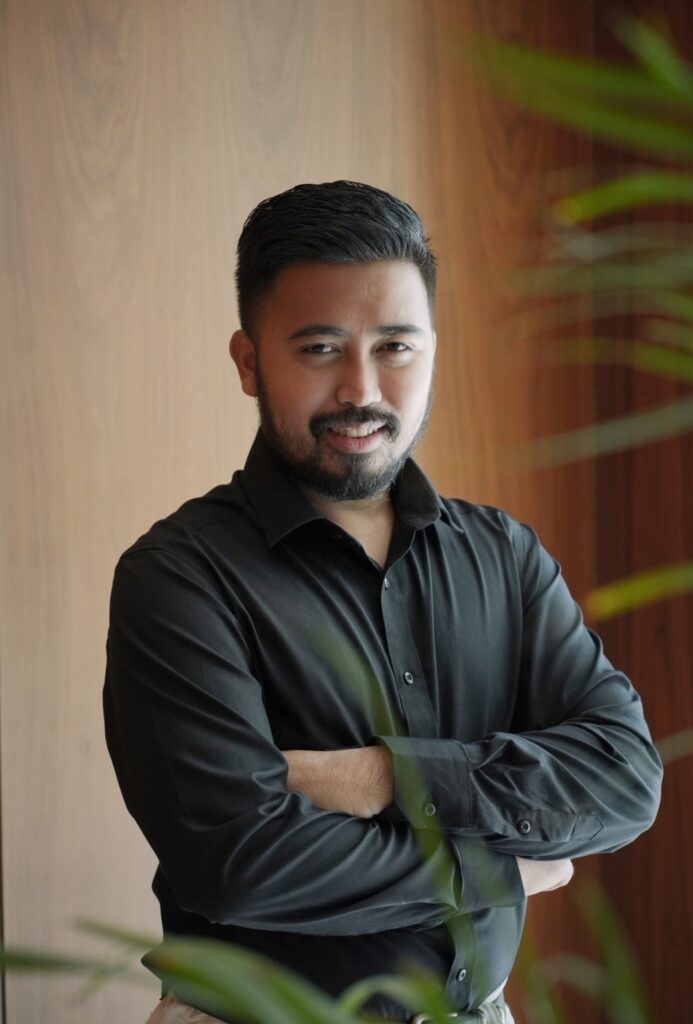
The new job asked more of him than technical skill. Shooting weddings and corporate events is about capturing what happens. Shooting interiors is about capturing what a space is meant to be.
“I am not only taking photographs and videos; I am learning to understand spaces, architecture, materials, lighting, details, styling, and luxury residential design,” the Abu Dhabi-based creative explains.
When he walks into a finished villa or an interior project, he says, recording what is in front of the lens is only the starting point. The real work happens in the questions he puts to himself. “How can I make people feel the space? How can I show its character? How can I tell the story of the design?”
That is where the old training shows. The attention to detail and the habit of observation he picked up in criminology now serve a different purpose: noticing how a material reads on screen, how a room holds light, what a viewer should see first.
Winner is also exploring how artificial intelligence fits into multimedia production, using it for ideation, planning, creative development, and content production. He is clear about where he stands on the debate.
“I see AI not as a replacement for creativity, but as another tool that allows me to work smarter, experiment more, and turn ideas into something people can see and feel,” the Filipino content creator says. The industry keeps changing, he adds, and a creative person should never stop learning.
What keeps him in the work, though, is simpler than any tool. “For me, the most satisfying part is seeing an idea start from nothing and eventually become a finished photograph, video, campaign, or piece of content that people appreciate,” Winner says.
It is a long road from where the passion began. “Photography and videography started as a passion for me,” he says. “Today, they have become my profession, my responsibility, and part of the story I am building for my family.”
A studio of his own, and an open door for others
Winner does not see his years abroad as an end in themselves. “My dream is bigger than simply completing my years as an OFW,” he says. “I want to build something that I can eventually bring back home.”
His long-term plan is to establish his own photography, videography, editing, and multimedia business, serving clients in the Philippines and, he hopes, abroad. He wants to bring everything the UAE has taught him to that venture: discipline, international experience, client management, branding, social media, and AI.
Behind that plan sits a second one. The former college instructor wants to help young Filipinos interested in photography, videography, editing, graphic design, and digital media, particularly those from provinces like his own.
“I know what it feels like to start with limited opportunities and wonder whether your passion can really become a career,” he says. He wants young creatives who believe opportunity lives only in big cities or overseas to hear a different message. “I want them to understand that where you come from does not have to determine how far you can go.”
For fellow OFWs, his advice starts with a warning: “do not lose yourself while trying to build a better life.” He urges them to save, to invest when they are ready, and to resist the temptation that comes with a bigger salary. “Do not spend everything just because you are earning more than you used to,” Winner says.
He is equally direct about trust. “Not everyone who calls you ‘kabayan’ will have good intentions,” the Registered Criminologist cautions, urging his countrymen to build relationships on respect, honesty, and action rather than words alone.
On love and family, he speaks from experience. Distance creates misunderstandings, he says, and communication is the only real remedy. “Money cannot replace time, communication, and trust.”
And for those whose careers feel stalled, Winner offers his own path as evidence that a first degree or a first job does not have to be the last word. “For those who are struggling right now, don’t be ashamed to start again,” he says.
Two years in, he measures success differently than he once did. “Success is not always about having the biggest salary, the most expensive camera, or the most impressive job title,” he says. “Sometimes, success is simply having the courage to continue.”
He admits that his career has “never been a straight line.” The food court, the pandemic, the hospital, the classroom, the camera, and the villa have all been part of the same unfinished route.
There is one sentence he is working toward saying out loud someday, to his wife and daughter. “We made it. All those years of sacrifice were worth it.”
Until then, the young man from Santiago City keeps working. “I am still learning. I am still improving. I am still dreaming,” Winner says. “And I am still creating.”
