



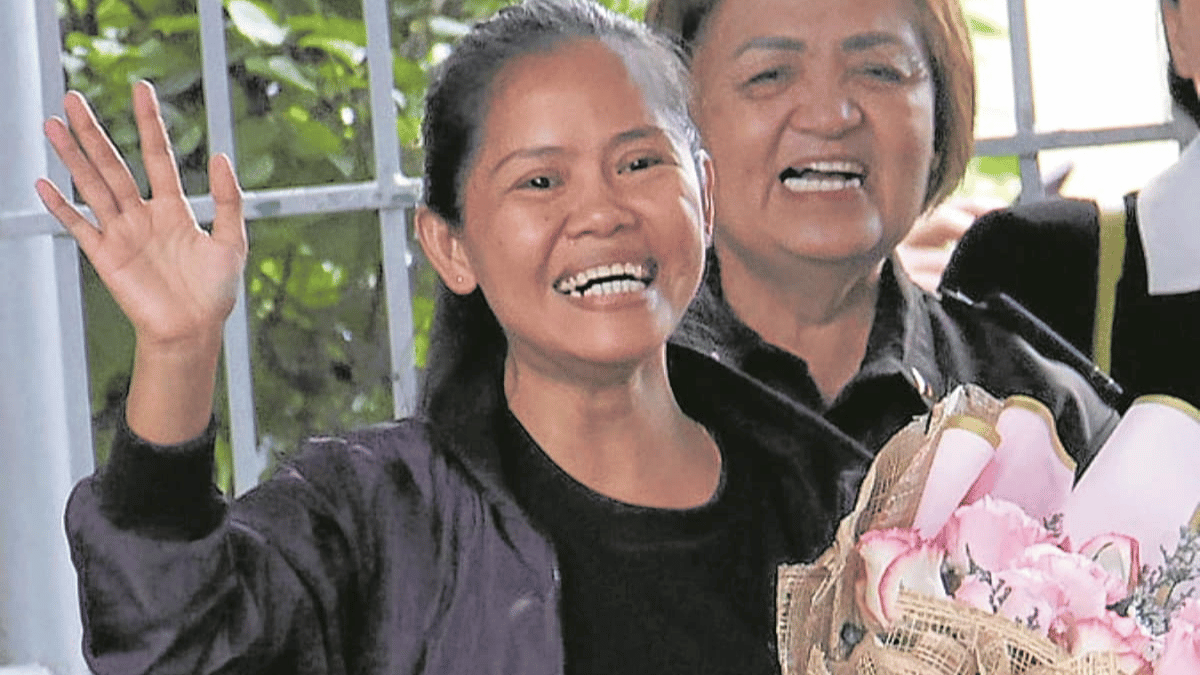

Mary Jane Veloso, the former domestic worker who was hours away from an Indonesian firing squad in 2015, now holds an absolute pardon from President Ferdinand Marcos Jr.

Marcos confirmed the grant on Friday, September 25, saying he had signed the papers the day before. “Pinirmahan ko na. Pinirmahan ko na ‘yong pardon niya kahapon,” he told reporters, meaning he had already signed her pardon a day earlier. According to the Philippine Daily Inquirer, he gave the confirmation during a short interview in Samar and walked away without elaborating.
An absolute pardon is the widest form of executive clemency available to a Philippine president, a power set out in Article VII, Section 19 of the 1987 Constitution. It erases the legal effects of a conviction and restores the recipient’s civil and political rights. Philstar.com described the clemency as giving Veloso a clean slate.
The decision came two days after the matter surfaced in the House of Representatives. During deliberations on the proposed 2027 budget of the Office of the President on Wednesday, September 23, Bataan 2nd District Rep. Albert Garcia disclosed that the administration was weighing the pardon, after Gabriela Women’s Party Rep. Sarah Elago asked what the government was doing to secure Veloso’s release. Garcia said the Office of the President was “seriously considering granting an absolute pardon” on humanitarian grounds, and told lawmakers there would be “an announcement in a few days,” the Daily Tribune reported. Elago pointed out that Veloso’s case had been classified as one of human trafficking and forced drug-mule exploitation.
Palace press officer Claire Castro confirmed the deliberations the same day but would not go into particulars. “As for the specific details, I am not the one authorized to disclose them at this time,” she said. Abante reported that Castro cited, apart from humanitarian reasons, Veloso’s long-held claim that she was innocent when she was arrested.

Veloso, a mother of two, has maintained from the start that she was an unwitting courier. Her neighbors, Maria Cristina Sergio and Julius Lacanilao, had recruited her in 2010 for a supposed household job in Malaysia. When she arrived, she was told the position no longer existed and was sent instead on a short trip to Indonesia carrying a suitcase Sergio had supplied. Authorities at Adisucipto International Airport in Yogyakarta found 2.6 kilograms of heroin inside, and a Sleman district court sentenced her to death in October 2010.
Her life was spared in 2015 through a last-minute intervention. Sergio’s surrender in the Philippines prompted then-President Benigno Aquino III to make an urgent appeal to Jakarta, and the reprieve came only hours before her scheduled execution on April 29, 2015. Indonesia deferred the execution indefinitely so she could testify against her recruiters in the Philippines. Neither recruiter has escaped conviction entirely: in January 2020, a Nueva Ecija court sentenced Sergio and Lacanilao to life imprisonment for large-scale illegal recruitment in a separate case filed by three other women.
After nearly 15 years in Indonesian custody, Veloso was flown home under a transfer arrangement between Manila and Jakarta. She arrived on December 18, 2024, and has been held at the Correctional Institution for Women in Mandaluyong City since then. Indonesian officials had said at the time that any clemency after her transfer would be for Marcos to decide.
Castro said this week that the administration did not need to notify Indonesia of the pardon decision, according to the Inquirer.
