



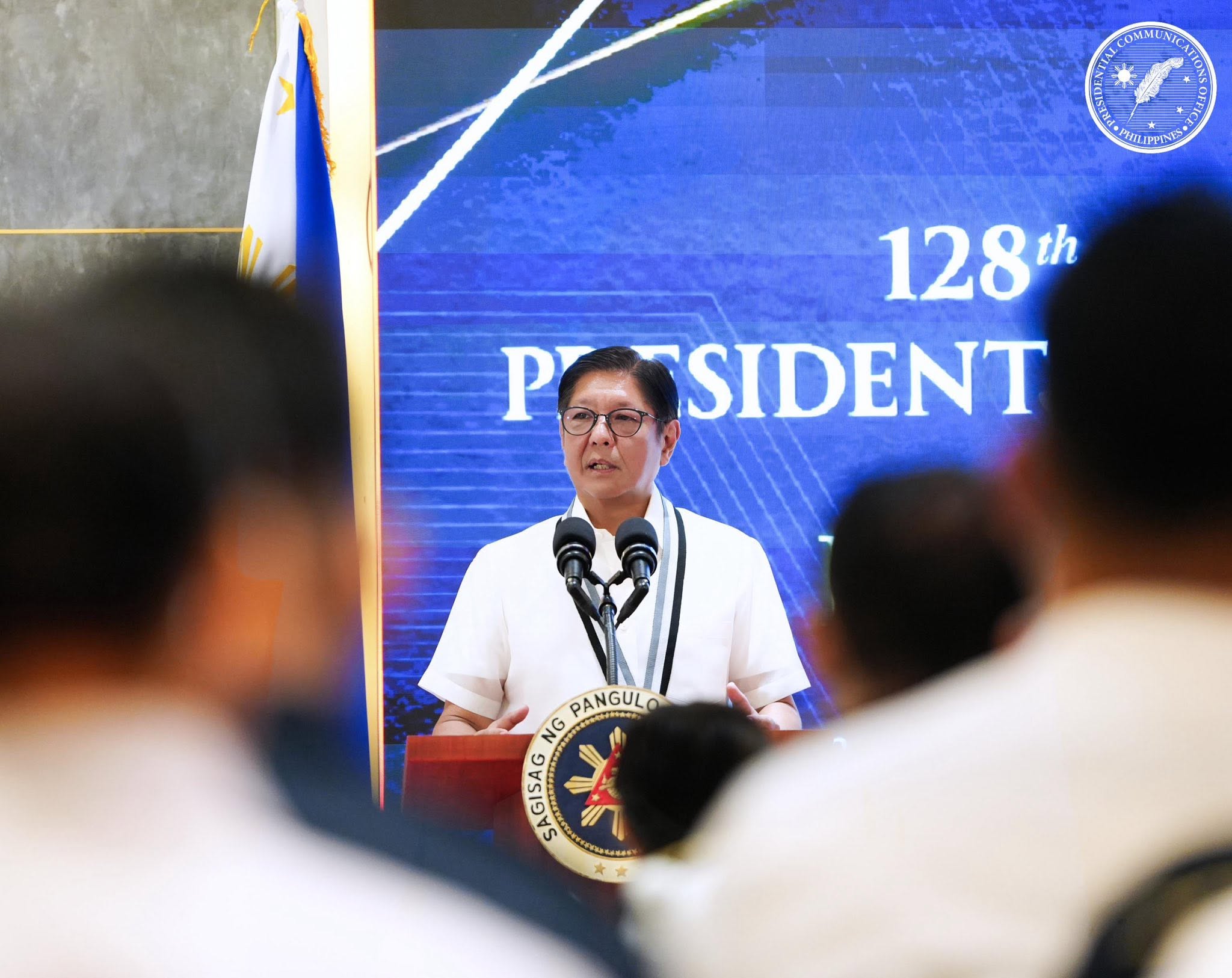

A new online platform that lets Filipinos trace the flow of public funds anchored the latest push by the Marcos administration to overhaul how government money is managed and reported.

Unveiled in Malacañang on Friday, the Centralized Open Monitoring Platform for Appropriations and Spending Statistics, or Compass, was rolled out by the Department of Budget and Management as a public tool for tracking appropriations and expenditures. The system pulls together thousands of budget release records and trillions of pesos in spending data into one accessible location, giving ordinary citizens a clearer view of where public money goes.
President Ferdinand Marcos Jr. tied the platform to a broader commitment he made at the ceremony, where he led the endorsement of the updated Philippine Public Financial Management Reform Roadmap 2024–2028. He argued that citizens too often regard public budgets as distant and impenetrable.
“Many of our citizens see government budgets as complex, inaccessible and removed from their daily lives. This should not be the case. We need to make the government budget and spending easily accessible and understandable for any Filipino who has any interest whatsoever in finding out where their money is going,” Marcos said.
He framed openness as a way to draw the public directly into the work of governance. “By making budget and financial information more accessible, understandable and actionable, we invite citizens to become active partners in governance,” he said.

The president also insisted that responsibility cannot be confined to a single stage of public work, listing planning, budgeting, procurement, implementation and evaluation as points where it must apply. “Every public office must be prepared to show where the funds went, and what they have achieved in improving the lives of every Filipino family,” he said.
Setting a benchmark for the rest of his term, Marcos said the measure of success would be clear by the time he leaves office. “By 2028, we must be able to say that the government has become more open, more disciplined, more responsive and more trusted by the Filipino people,” he said. He added that stronger fiscal systems would guarantee that “every peso is carefully spent and accounted for.”
The reform roadmap itself, prepared by the DBM under Acting Secretary Kim Robert de Leon, condenses an earlier set of 41 interventions into 18 priority measures. Fourteen are classified as mission-critical, while four are treated as quick wins, and all are slated for completion by 2028. Among its goals are an integrated financial management information system and the alignment of planning and budgeting across different levels of government, with the aim of sharpening public services.
De Leon, for his part, cast openness as a defense against the misuse of public funds. “Transparency is among the strongest safeguards against corruption. When information is open, accountability becomes stronger. When actions can be seen and scrutinized, public resources are better protected and public trust is reinforced,” he said.
