



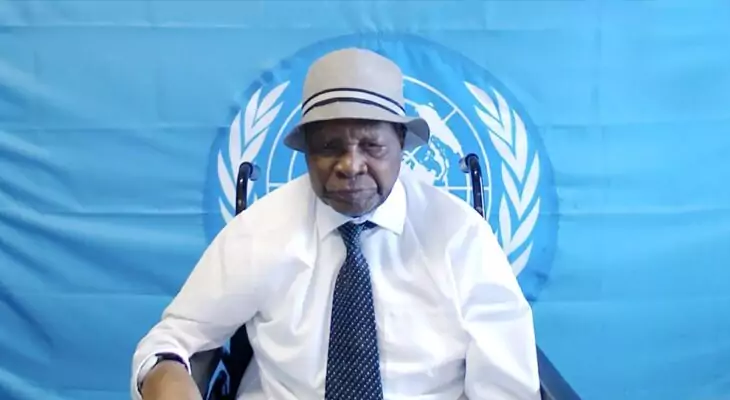

Félicien Kabuga, who spent his final years detained at The Hague while facing charges linked to one of the worst atrocities of the 20th century, has died in a Dutch hospital, the United Nations announced Saturday.

The U.N. International Residual Mechanism for Criminal Tribunals confirmed his death in a statement, noting that the medical officer of the U.N. Detention Unit was notified immediately. An investigation has been ordered to determine the circumstances surrounding his death.
Kabuga was 91. He had been accused of financing and inciting the systematic killing of Rwanda’s Tutsi minority during the 1994 genocide, a 100-day campaign of mass murder that left approximately 800,000 people dead.

His path to The Hague was long and circuitous. An international arrest warrant was issued in 2013, accompanied by a $5 million bounty. He evaded capture for years before French authorities arrested him in 2020. His trial formally opened in 2022 — nearly three decades after the killings — on charges that included genocide, conspiracy and incitement to commit genocide, extermination, persecution, and murder. He pleaded not guilty to all counts.
The proceedings were cut short in 2023 when judges ruled he was no longer fit to stand trial due to dementia. Rather than release him, the court established a procedure to continue hearing evidence while removing any possibility of a conviction — a decision that drew sharp criticism from genocide survivors in Rwanda, who felt the gravity of the charges demanded the full weight of a sentence, up to and including life imprisonment.
His continued detention after that ruling hinged on unresolved questions about where he could be released. Rwanda had offered to accept him, but his legal team opposed any transfer there, citing concerns about his treatment. Kabuga had family ties to the former Rwandan government — his daughter married a son of President Juvénal Habyarimana, whose assassination on April 6, 1994, provided the immediate trigger for the genocide.
