



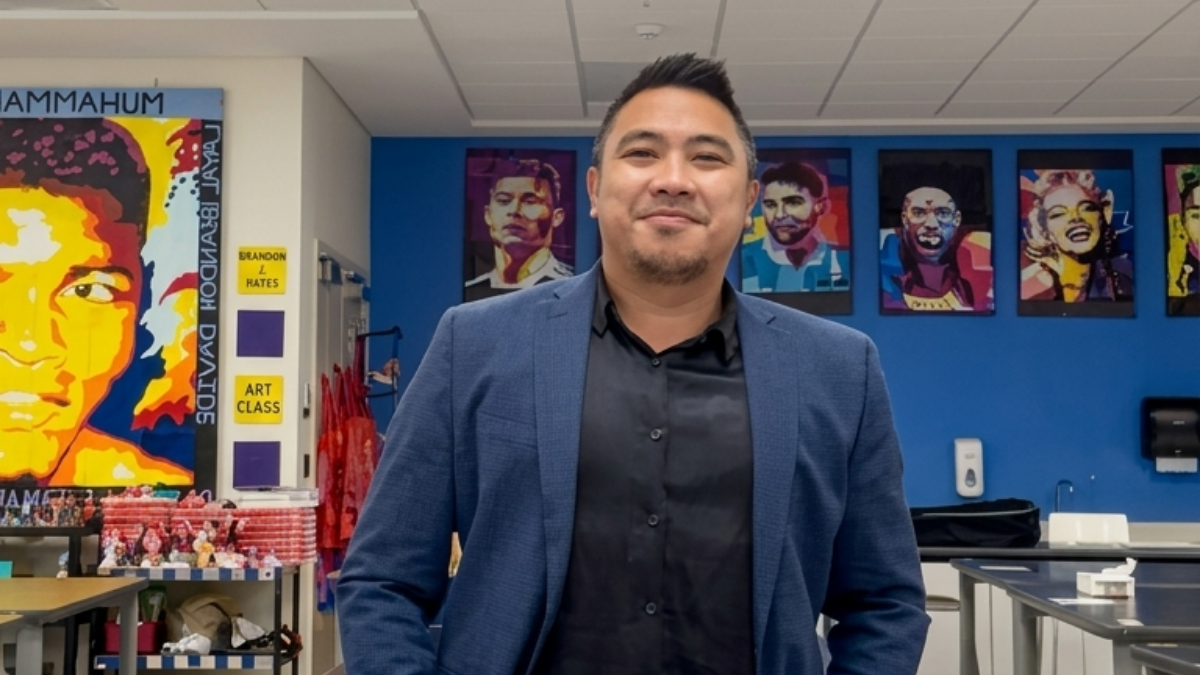

Children who grow up in Benguet’s highlands learn early that the horizon is something to walk toward, not just look at. For one boy from the Ibaloi tribe, raised in the cool ridges above Baguio City, that instinct never faded — it only found bigger mountains to cross. Janno B. Abance, now 37, has spent the last eleven years turning a mountain child’s restlessness into a career that has carried him from a Navotas classroom to Jeddah, and now to Uzbekistan.

He is a Music and PE teacher at Vosiq International School, a U.S. Licensed Teacher for the State of Illinois, a certified life coach, and a mental wellness advocate. He is also a husband to his wife, Diane, and father to two daughters, Jael Praise and Jianna Grace. But the titles, as he is quick to say, are not the point.
“More than the titles, every student whose life I have positively impacted is my greatest achievement,” he shares with TGFM. It is a line that could sound rehearsed coming from someone else. From him, after everything that got him here, it reads like a verdict.


A calling that took a detour
Janno did not walk a straight line into teaching. His career began in a private school in the Philippines, then swerved — briefly — into the BPO industry, where he sharpened the communication and interpersonal skills that still shape how he works a room today. It was a detour, but a useful one. The realization that teaching was his actual calling eventually pulled him back, and he joined the Department of Education in Navotas City, where he served for six years.
Then came the part of the story that most people would call the leap. In 2016, the Ibaloi educator left home for Saudi Arabia, taking a post as a Music, Arts, and PE teacher at Al Dura International School in Jeddah. For him, the move was never a simple matter of pay.
“My decision to work abroad wasn’t simply about earning more — it was about growing as an educator and fulfilling a dream of teaching students from different cultures,” he explains. There was a point to prove, too. He wanted to show that “Filipino teachers could thrive on the international stage while carrying our values of excellence, resilience, humility, and compassion.”
Six years at Al Dura built the foundation. What came next tested whether it would hold.
Thirty days and three résumés
The hardest chapter did not announce itself. The former DepEd teacher had already weathered a difficult leadership environment in his early years abroad — the kind that quietly erodes a teacher’s confidence and makes him question whether he belongs in the classroom at all. He was just beginning to steady himself when the ground shifted again.


The school announced it would close. Staff were given 30 days to find new work or go home. For Janno, home was not a clean option: Diane was nine months pregnant with their second daughter, which made travel unsafe. He needed a job, fast, and he was not particular about which one.

“I prepared three different résumés — one for teaching, one for office work, and one for any job available, even janitorial work,” he recalls. Every day he crossed Jeddah on foot, dropping off applications, sitting for interviews, and waiting on calls that did not come. For a man who had built an identity around being capable, the silence was its own kind of weight.
The turning point, when it arrived, came in the least corporate way imaginable. “During one of my lowest moments, I prayed while playing my guitar and sang the song ‘God Will Make a Way,'” he says. A few days later, the phone rang. It was the American International School of Jeddah, offering him a job.
That call reset everything. At AISJ — a Pre-K to 12 U.S.-accredited school serving over a thousand students across dozens of nationalities — he became a Middle School Visual Arts and PE teacher, a High School Music teacher, Summer Camp Director, an athletic coach, and an educational trip leader. He was also the only Filipino teacher on the faculty, a fact he carried less as a burden than as a quiet assignment. “Setbacks often become God’s setup for something greater,” he says, and in his case the phrase is not a platitude but a timeline.
More than the subjects on the schedule
Ask him what he actually does for a living and he will resist the obvious answer. The music teacher does not think of his job as music, or PE, or art. He thinks of it as the work of helping young people find things in themselves they did not know were there.
“What I enjoy most is seeing my international students discover gifts they never knew they had,” he says. “Every student has a unique story, and being part of their journey is one of the greatest privileges of my life.” The most rewarding moments, he adds, come years later — when a former student circles back to say that something he taught, or simply the way he believed in them, changed the course of their life.
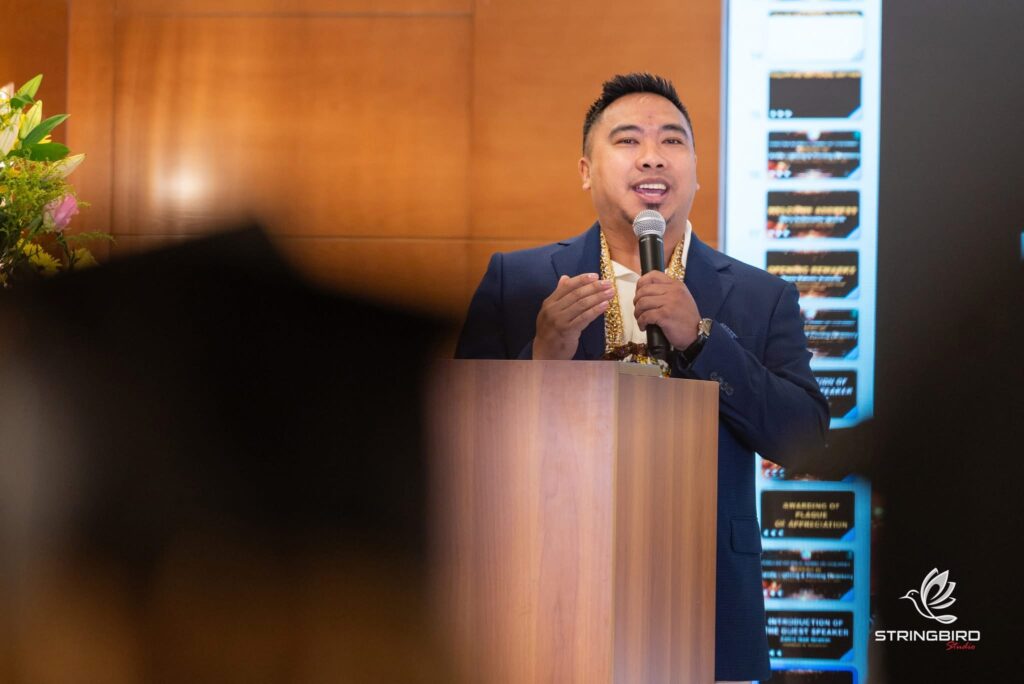
His years at AISJ came with a fuller résumé than most teachers ever assemble. He earned his U.S. Professional Educator License and completed two master’s degrees, one in Educational Leadership and another in Multicultural Education through SUNY Buffalo. He directed the summer camp, led seven-day student trips to Spain and Italy, and served as the first elected President of the Philippine International School Teachers Association in Jeddah. Beyond the classroom, he judged Filipino community events and ran seminars on educational strategy, mental wellness, and behavioral discipline.

That last theme is not incidental. Having personally moved through anxiety, depression, and hard seasons, the certified life coach wants his advocacy to reach past the walls of any single school. “Having personally overcome anxiety, depression, and difficult seasons, I want to help more people discover hope, healing, and purpose,” he says.
Now in Uzbekistan, he has opened yet another chapter — a new country, a new student body, the same mission. His long-term dream bends back toward mentorship: guiding the next generation of teachers and school leaders, whether in the Philippines or abroad, while widening his work in mental wellness through coaching, music, and education.
For the kababayans following the same road, his advice is less about strategy than about posture. “Don’t just dream of working abroad — dream of becoming a blessing wherever God places you,” he says. “Build your character more than your résumé.” There will be loneliness and rejection, he acknowledges, but he refuses to let those seasons write anyone’s ending.
It is the same conviction that once carried a boy down from the mountains of Benguet — the belief that the horizon is not a limit but an invitation. Wherever the road leads next, the Ibaloi educator seems intent on the same quiet goal: to leave every classroom, and every life in it, a little better than he found it.
