



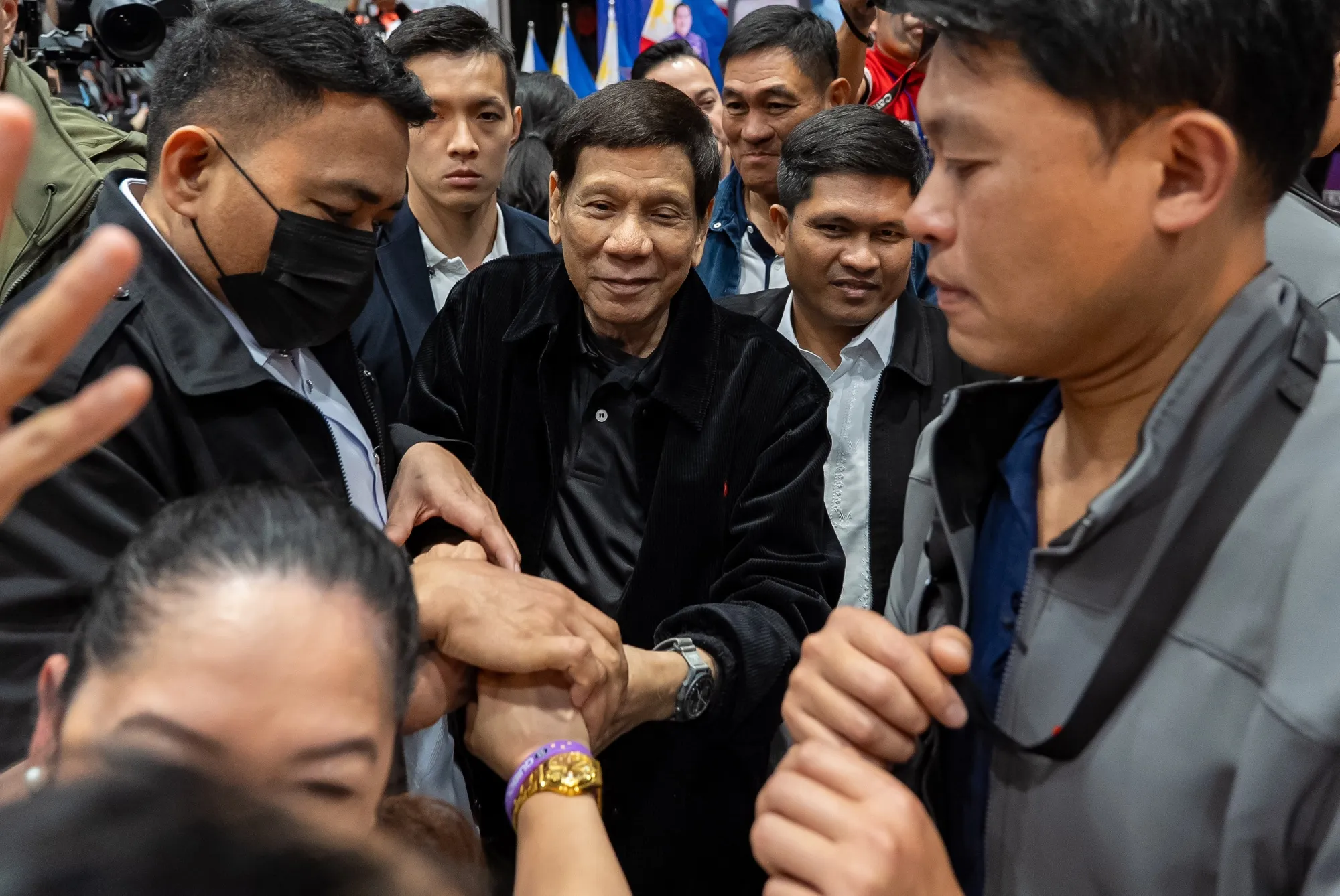

Charges of crimes against humanity await Rodrigo Duterte when the former Philippine president appears Wednesday before the International Criminal Court in The Hague—his first time in public view in over a year. The 81-year-old has skipped multiple hearings since being taken into custody, with his team pointing to his health, though the tribunal’s judges determined in January that his condition posed no barrier to trial. He rejects the allegations against him.

The case rests on killings tied to Duterte’s drug crackdown, a campaign he oversaw first as a mayor in the southern Philippines and afterward from the presidency. Prosecutors allege that officers and government-linked squads killed dozens on his instructions, driven either by cash rewards or by fear of being marked for death themselves.
Judge Joanna Korner signaled at a June session that she anticipated his presence. “We would expect Mr. Duterte to be here unless there’s some medical issue,” she said. His lead attorney, Peter Haynes, acknowledged the point at that same hearing, telling the panel of his client: “He’s fully aware that you’ll expect to see him sooner rather than later.”
The proceeding set for Wednesday centers on how evidence will be shared and on fixing a schedule ahead of the trial’s November start.
Duterte’s path to The Hague began with his March 2025 arrest. An appearance planned for last September was pushed back when judges approved a brief delay so a medical panel could weigh whether he was well enough to participate. That review concluded he was fit for the pretrial phase.

Scrutiny of the crackdowns predates the arrest by years; the ICC began examining the killings in 2018. How many died remains contested, with national police citing upward of 6,000 deaths during his term and rights organizations placing the figure as high as 30,000. Weeks after the court disclosed its preliminary inquiry in February 2018, Duterte declared the Philippines would exit the ICC.
That exit later became a legal argument his lawyers tried to use, asking judges to dismiss the case outright. The bid failed. According to the ruling, a state cannot “abuse” its withdrawal from the Rome Statute “by shielding persons from justice in relation to alleged crimes that are already under consideration.”
The drug war has kept spilling into Philippine politics. In July, senators sitting as an impeachment court began trying Vice President Sara Duterte, his daughter, on accusations that span unexplained wealth and public threats against the family of President Ferdinand Marcos Jr. A guilty verdict could bar her from office for life. She, too, denies wrongdoing.
Before that, in May, an effort to detain another ICC target erupted into gunfire inside the Senate, though no injuries resulted. The warrant named Ronald Marapon dela Rosa, once Duterte’s national police chief, who vanished after the confrontation and has evaded capture since.
