



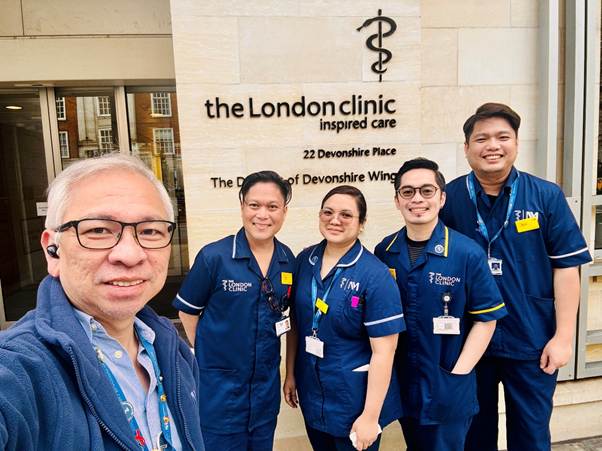

In the evolving landscape of global healthcare, Filipino nurses continue to emerge as one of the most influential and trusted professional groups. Nowhere is this more evident than in the United Kingdom, where Filipino nurses are not only sustaining workforce capacity but redefining leadership, education, and patient-centered care.

At the center of this transformation is a remarkable ecosystem of professionals—many of whom are shaping practice not just at the bedside, but across systems, institutions, and communities. Among them is Walter Burog, Head of Professional Practice, whose leadership offers a powerful lens into the strategic and human impact of Filipino nurses in the UK.
Walter Burog: Architect of Practice, Champion of Excellence
Walter Burog occupies a pivotal role in advancing professional standards and clinical excellence within his organization. As Head of Professional Practice, he leads the strategic development of education, workforce capability, and service delivery—ensuring that healthcare professionals are not only competent but continuously evolving.
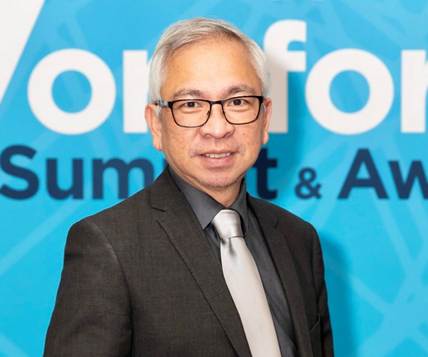
Within The London Clinic, Walter leads a multidisciplinary Clinical Education teamresponsible for designing and delivering high-quality, evidence-based training programs across a wide spectrum of services—from resuscitation and medical-surgical care to oncology, blood transfusion, and diagnostic services .
This team is not only technically robust—it is culturally rich. Composed of professionals from Filipino, British, Australian, Italian, Spanish, and South African backgrounds, it represents a model of how diversity can enhance clinical education and collaboration.
Walter’s leadership philosophy is deeply rooted in innovation and empowerment. He is not merely maintaining standards—he is actively shaping them. Through forward-thinking strategies, he fosters continuous improvement, encourages interdisciplinary collaboration, and builds systems that support both staff development and patient safety.
Yet what distinguishes Walter is not only his strategic vision, but his ability to articulate the broader significance of Filipino nurses within the UK healthcare system.
As he explains:
“Filipino nurses play a vital and highly impactful role in the UK’s healthcare system. We constitute one of the largest international nursing groups with over 50,000 registered in the Nursing and Midwifery Council, making us the second-largest group of international nurses.”
This is not a marginal contribution—it is structural. Filipino nurses are deeply embedded in the functioning of healthcare services across the UK.
Walter further emphasizes the operational importance of this presence:
“Our presence significantly helps alleviate chronic staffing shortages and ensures continuity of care.”
In a system facing sustained workforce pressures, this contribution is both immediate and indispensable.
Beyond Numbers: Culture as a Clinical Asset
What elevates the contribution of Filipino nurses, according to Walter, is not just their numbers, but the values they bring into practice.
“Beyond the NHS and independent healthcare sectors, approximately 90,000 Filipino care workers support the UK’s adult social care sector, bringing professionalism, empathy, and a person-centred approach shaped by cultural values such as deep, genuine care (malasakit), shared humanity (pakikipagkapwa), and hard work.”
These cultural values are not peripheral—they are embedded in care delivery. They influence how nurses communicate, how they advocate, and how they respond to patients’ emotional and social needs.
Walter captures this impact succinctly:
“These attributes enrich our patient experience, strengthen multicultural teams, and enhance the quality of long-term care.”
In this sense, Filipino nurses do not simply integrate into healthcare systems—they actively enhance them.
Leadership Beyond the Bedside
Walter also highlights an often under-recognized dimension of Filipino nurses’ contribution—their role in leadership, education, and community-building.
“We also contribute to leadership, education, research and community-building within the healthcare ecosystems, supporting newcomers and fostering inclusive and compassionate workplace cultures.”

This insight is particularly important. Filipino nurses frequently serve as informal mentors, cultural translators, and support systems for newly arrived international staff. They help others navigate clinical expectations, workplace dynamics, and cultural transitions.
This form of leadership is relational and values-driven. It is not about hierarchy, but about influence, inclusion, and shared growth.
Walter further situates this contribution within a broader historical and professional context:
“Our long-standing migration pathways, strong clinical training, kindness and cultural adaptability have made us a strong contributor to the resilience, innovation and effectiveness of UK healthcare.”
This statement reflects both continuity and evolution—Filipino nurses have long been part of global healthcare, but their role continues to expand in scope and impact.
Colleagues in Practice: Stories of Leadership and Resilience
Walter’s insights are reinforced by the lived experiences of his colleagues, who embody the values he describes.
Bryle Jay-R Cruz, an Oncology Ward Manager, exemplifies leadership forged through adaptation. Transitioning from the Philippines to the UK required him to navigate unfamiliar professional cultures. Over time, this challenge became the foundation of his leadership philosophy—one centered on psychological safety, empathy, and team support.
In oncology, where emotional intensity is high, Bryle leads not only through clinical expertise but through presence and compassion—ensuring that both patients and staff feel supported.
Jeorge Duldulao, a specialist in stem cell transplant and CAR T therapy, demonstrates how Filipino cultural values translate into high-acuity clinical care. His practice is guided by malasakit, ensuring that patients—many of whom are far from home—feel understood, reassured, and cared for throughout complex treatment journeys.
His work highlights the integration of technical expertise and emotional intelligence—an essential combination in modern healthcare.
Tracy Nanquil, a cancer care nurse and educator, reflects the resilience required to build a career abroad. From navigating the pressures of professional qualification to enduring years of separation from family, her journey illustrates the personal sacrifices behind professional success.
Yet her story also speaks to the power of community. Support from fellow Filipino nurses and professional associations helped her overcome challenges and thrive in a new environment.
A Message for the Future
For aspiring Filipino nurses, the pathway to international practice requires more than ambition—it demands preparation, professionalism, and integrity.
Rex Dalaten, an intraoperative care specialist, emphasizes the importance of strong clinical foundations, cultural adaptability, and respect in multicultural workplaces. He also calls for unity among Filipino nurses, encouraging them to support one another and reject divisive mindsets.
His message is both practical and aspirational: success is not only about individual achievement, but about collective progress.
A Continuing Global Narrative
The story of Filipino nurses in the United Kingdom is not static—it is continuously evolving. It is a story of contribution, leadership, and identity, shaped by both individual journeys and collective impact.
At its core, it is a story about people—professionals who bring skill, compassion, and cultural depth into every aspect of healthcare.
Through leaders like Walter Burog and his colleagues, Filipino nurses are not only participating in global healthcare—they are shaping its future.
Disclaimer: This article is part of a special series leading up to the celebration of Filipino Nursing Diaspora Day on 7 May 2026, highlighting the global contributions, experiences, and impact of Filipino nurses worldwide.
