



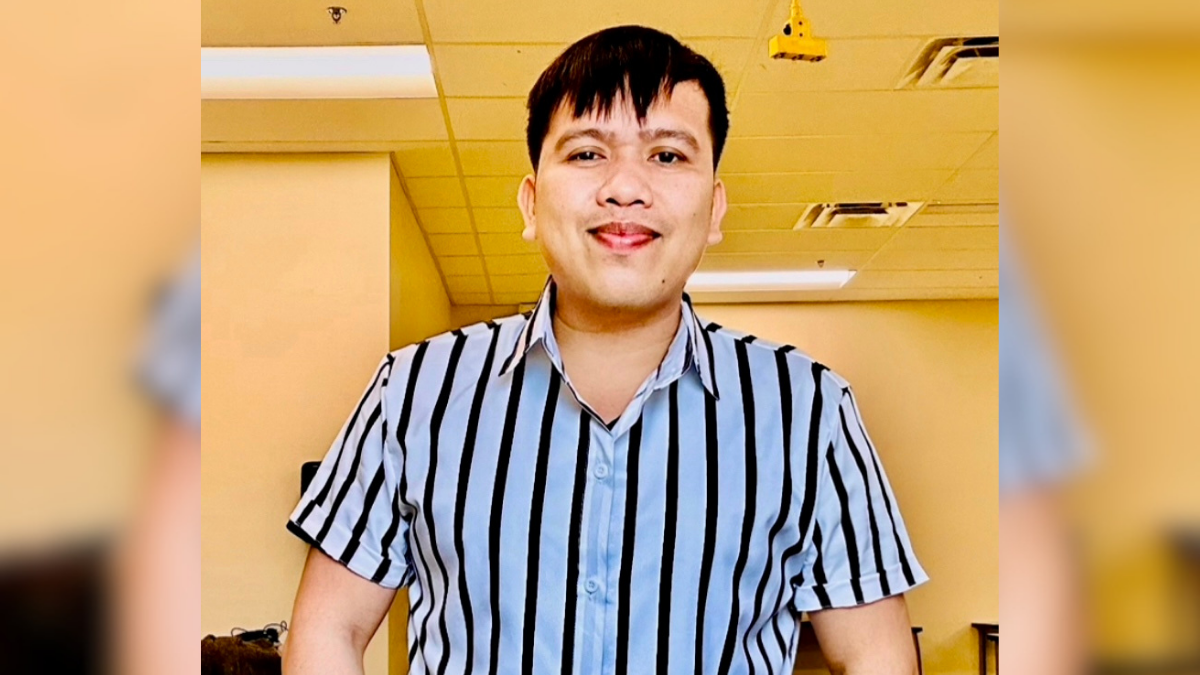

When science teachers talk about curiosity, they usually mean the kind they want to spark in their students. Rarely do they admit it’s the same force pulling at their own careers. For Reynaldo Jr. Caratao, that distinction never quite held. The 36-year-old educator from Surigao del Sur followed his own curiosity across the Pacific, and it reshaped not only where he teaches but how.

Today he stands in front of 11th-grade Chemistry and 12th-grade AP Environmental Science classes at Lodestar High School in Oakland, California, part of the Lighthouse Community Public Schools network. He arrived in August 2022 on a J-1 Exchange Teacher visa, his first job outside the Philippines. Four years on, the move looks less like a departure and more like an education in its own right.
A question worth crossing an ocean for
Most people who work abroad lead with the financial calculation. Reynaldo doesn’t pretend money played no part, but he insists it sat in the passenger seat. “As a science teacher, curiosity has always guided my decisions,” he shares with TGFM. He wanted to see how teachers in another country reached students from wildly different cultural, linguistic, and economic backgrounds, and whether he could hold his own in a classroom that looked nothing like the ones he knew.
He is candid about the rest of the equation. “Like many Filipinos, I wanted to improve my quality of life and help secure my future,” he says, noting the better compensation and long-term benefits that came with the opportunity. But he frames the priority plainly: the goal was never simply to earn more. “It was becoming a better teacher.”
That framing matters, because it explains what he did once he got there. He didn’t treat the assignment as a paycheck with a return date. He treated it as fieldwork.
Nine years of foundation
Before Oakland, there were nine years at Unidad National High School in the Philippine public system, and they were anything but quiet. Reynaldo taught science while collecting responsibilities the way some teachers collect classroom supplies. He served as Science Coordinator for Unit 4, supporting science programs across 13 secondary and 21 elementary schools. He led the Learning Resources Management and Development System team, advised the Supreme Student Government, coordinated among SSG advisers at the district level, and sat on an ISO team driving school improvement.
Outside those titles, he coached students through Science Investigatory Projects, Science Olympiads, journalism contests, and assorted academic competitions. The recognition followed. He was named Outstanding Secondary School Teacher of Surigao del Sur in 2022, having earlier reached the Division finalist round in 2011, and went on to represent the province as a Regional Outstanding Secondary School Teacher finalist in the Caraga Region in 2022.
It’s a résumé that could have anchored a comfortable career at home. Instead, it became the foundation for a harder, stranger chapter.
What the distance cost, and what it built
The romance of teaching abroad tends to skip the part where you sit alone in an apartment thousands of miles from everyone who knows your name. Reynaldo doesn’t skip it. “Like many overseas workers, I experienced homesickness, loneliness, and uncertainty,” he says. Being absent for family milestones was hard. So was adapting to a new culture, an unfamiliar school system, and a different set of expectations, all while managing financial pressures that didn’t vanish on arrival.

What carried him through was partly inheritance. His sister had become a J-1 Exchange Teacher before him, and watching her succeed gave him a template for believing he could too. Faith, family, friends, and colleagues filled in the rest. He distills the lesson without sentimentality: “Resilience is built one difficult day at a time.”
The discomfort turned out to be productive. Somewhere in the work of teaching diverse learners, Reynaldo began shaping a classroom routine he eventually formalized as the PSRP Framework, short for Predict, Solve, Reflect, and Propose or Present. Designed to push engagement, critical thinking, collaboration, and problem-solving in science classrooms, it started as a daily practice and grew into something he now shares with other educators and mentees.
From newcomer to mentor
There’s a particular kind of vertigo in arriving somewhere as an outsider and then being asked to guide others. Reynaldo felt it. Selected as an RTC Mentor through Reach University in California, he found himself supporting non-credentialed teachers as they worked toward their teaching credentials. “Coming from the Philippines and beginning my journey as an international teacher, I never imagined that I would one day mentor aspiring teachers in California,” he says. Watching his mentees advance toward becoming credentialed teachers, he says, remains one of the proudest moments of his professional life.
His sense of the job kept widening. In 2024, he was named a Youth Vote Champion by Families in Action for Quality Education for helping Oakland youth participate in the city’s inaugural Oakland Youth Vote for School Board election. The recognition, signed by FIA co-founder and CEO Kemi Kian and lead youth organizer Javier Baraza, confirmed something he’d come to believe: that education runs past academics into civic life. Helping young people become informed, engaged citizens, he decided, was part of preparing them for the future, not a detour from it.
The return as the point
Here is where Reynaldo’s story complicates the familiar arc of the Filipino abroad. The J-1 program comes with the 212(e) Home Residency Rule, which requires participants to return home for two years before pursuing certain other US visas. Many treat that clause as an obstacle. He treats it as the plan.
Once he fulfills the requirement, he intends to return to the Philippines and put what he’s gathered to use, through teacher mentoring, leadership, educational research, and curriculum development. High on the list is formally publishing and expanding the PSRP Framework so more teachers and students can benefit from it. He’s also thinking structurally, raising a question about the exchange model itself: how can returning educators be better supported so their international experience actually strengthens education back home?
His answer is that they should be deployed as mentors, researchers, curriculum contributors, and instructional leaders rather than quietly reabsorbed. The experience, in his view, is a resource the system tends to waste.
For kababayans navigating their own version of the journey, his advice is grounded and direct. “Always remember why you started,” he says, urging people to guard their long-term goals against temporary distractions, to be wise with money, and to choose relationships carefully. One principle sits above the rest. “Respect begets respect,” he says, calling it the thing that builds trust whether you’re dealing with colleagues, employers, students, or family.
What stays with him, in the end, isn’t the list of awards. It’s gratitude, split between the country that built his foundation and the one that stretched him. “The greatest measure of success is not the awards we receive, but the lives we influence along the way.” For a teacher who left home to learn as much as to teach, that may be the most honest grade he could give himself.
