





Every migrant who has ever scrubbed a restaurant table while clutching a dream knows the quiet arithmetic of starting over — counting tuition against rent, ambition against exhaustion. Lianne Sadicon Gutierrez did that math for two years before the numbers finally worked in her favour. Today she stands in front of a Year 9 mathematics class in Melbourne, but the road to that whiteboard ran through a childcare centre, a waiter’s apron, and a hospital room where she nearly lost everything.

Born in Papandayan, Pinamalayan, in Oriental Mindoro, the 36-year-old arrived in Brisbane on April 5, 2023, as an international student studying Early Childhood Education. She had already built a career back home — almost 13 years of it — yet she landed in Australia willing to begin again from nothing.
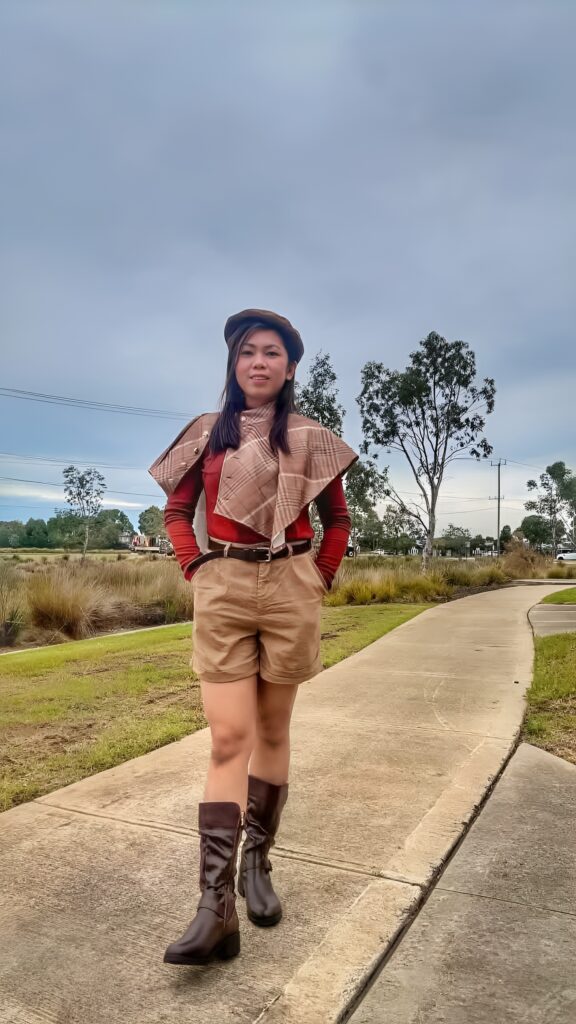
A teacher who refused to stop being one
In the Philippines, Lianne was not a newcomer to the profession. She spent four years teaching at the primary level in a private school, then nearly nine years as a Secondary Teacher III in the Department of Education. For about six years she served as her public school’s Mathematics Coordinator, coaching competitors and building programs designed to lift students’ confidence in a subject many of them feared.
Australia asked her to set most of that aside, at least at first. While studying, she worked at a childcare centre and picked up shifts as a restaurant waiter to cover tuition and household costs. The jobs had little to do with quadratic equations, but she does not describe them with regret. “Although those jobs were different from my profession back home, they taught me humility, resilience, and determination,” she says.
What she would not set aside was the goal itself. Between classes and shifts, she researched how to become a registered teacher across Australia and New Zealand, sat English examinations, and submitted her qualifications and teaching record to the New Zealand Qualifications Authority and the Australian Institute for Teaching and School Leadership for assessment. Five months later, the verdict came back: she was a registered teacher in both countries.
Her reasons for leaving in the first place were never only about a bigger pay cheque. “Working abroad was not only about earning more money. It was also about gaining new experiences, meeting different people, and showing myself that dreams can come true through hard work, faith, and perseverance,” she says. Post-pandemic Australia, opening its doors to skilled workers and educators, simply offered the clearest path.
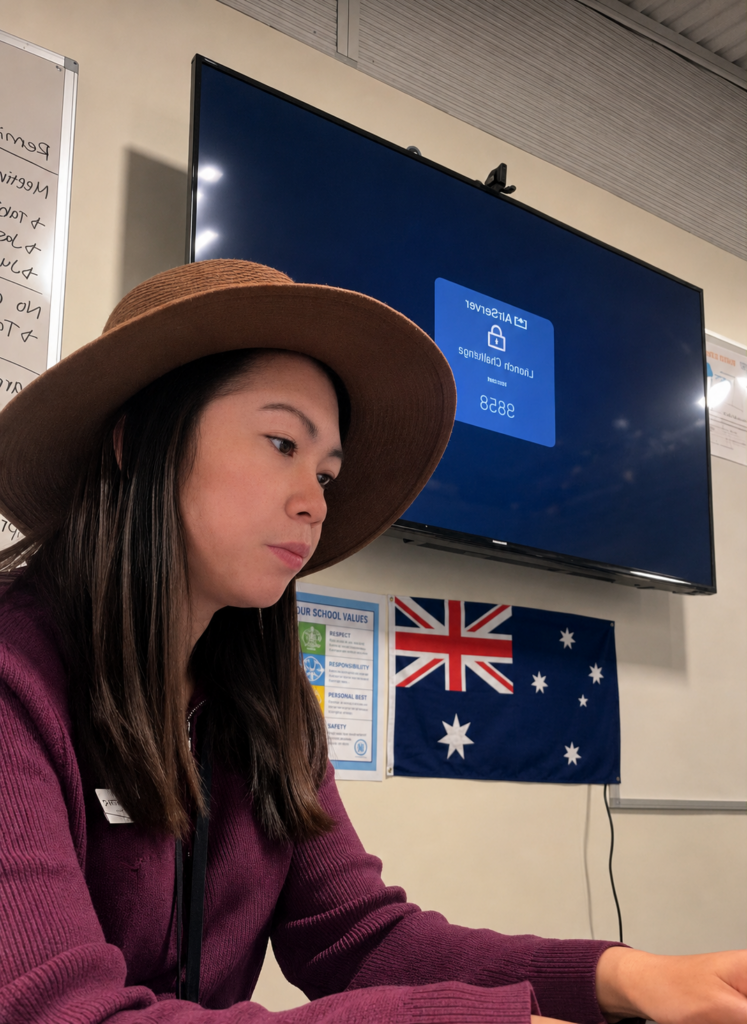
The year everything nearly came apart
Then came the part of the story that no migration brochure prepares you for. Money was already tight; balancing study, work, and a household left little margin. Lianne underwent minor surgery related to her uterus. Six months later, her husband faced something far graver — open-heart surgery that doctors said was more complicated than a bypass and urgently needed for him to survive.

The timing could not have been worse. They were still temporary visa holders, and he had been admitted to a private hospital, where the bill could have climbed into the hundreds of thousands of dollars. The fear was paralysing. “There were days I could not focus on work, schooling, or even think clearly because of fear and anxiety,” she recalls.
What happened next is the moment she still cannot tell without emotion. Through what she describes as God’s grace and the kindness of surgeons, doctors, nurses, and hospital staff, the couple was never charged a single dollar for the hospital expenses. “Until today, I still become emotional whenever I remember that miracle,” she says. Her faith, she is certain, carried her through those nights — many of them spent praying in church for healing and strength.
Within two years and ten months of arriving, she and her husband became permanent residents. The contrast with where they began is not lost on her.
Smaller classes, bigger purpose
For nearly a year now, Lianne has taught Year 9 mathematics in a government secondary school, Truganina P-9 College, and the work has reaffirmed why she chose the profession in the first place. For her, the subject was never just numbers. “Teaching Mathematics is more than numbers and formulas for me — it is about helping students believe in themselves and realize they are capable of solving problems, not only in class but also in life,” she says.
The Australian system suits her. She points to smaller class sizes, a manageable workload, and a support structure that lets teachers focus on the quality of their instruction and the wellbeing of their students — conditions that allow her to do the kind of teaching she always wanted to do. The cultural diversity of her school has reshaped her too, she says, making her more open-minded and appreciative of the backgrounds her students bring into the room.

She is especially conscious of the young Filipinos watching. The most rewarding part of the job, she says, is knowing she can inspire them to dream bigger and to believe success is possible no matter where they start.
Her ambitions now point upward. She hopes to grow into a leadership role at her school and to encourage fellow Filipino teachers eyeing a future abroad. Next year she plans to apply for dual citizenship, holding her Filipino identity and her Australian life side by side.
For the kababayans still in the difficult early seasons of their own migration, her advice is plainspoken and hard-earned. “Never compare your journey with others. And most importantly, never stop believing in yourself,” she says. The struggles, she insists, all carry a purpose — a conviction summed up in the line she returns to most: “Your current situation is not your final destination.”
