




The textbook version of a teaching career runs in a straight line: pick a subject, master it, spend decades passing it down. The real version bends. For one Filipina educator in rural South Carolina, the bend came in the middle of a science lesson, in the form of a spark that jumped out of a wall outlet.

Dr. Claire Ceniza-Tejero was running an electromagnetism experiment when two of her students decided to plug the tips of nails directly into a classroom outlet. The flash was sudden and bright. No one was seriously hurt, but the moment stayed with her long after the room settled.
“It was a frightening moment that deeply impacted me,” she shares with TGFM. “Although no one was seriously hurt, the incident made me realize how important it is to understand not only academic instruction but also the behavioral, emotional, and learning needs of students.”
She had been teaching science for years by then, good at it, recognized for it. What the spark revealed was that being good at delivering content was not the same as understanding the children in front of her. That gap became the question that reorganized the rest of her career.
From the lab bench to the IEP table
Before any of that, there was a long apprenticeship in chalk and curiosity. Dr. Claire taught science in the Philippines for 15 years, building a reputation for lessons that were hands-on and tied to her students’ actual lives rather than confined to a textbook chapter. When she moved to the United States, she carried that approach into her first overseas job: middle school science teacher at Kingstree Middle Magnet School of the Arts, in the small town of Kingstree, South Carolina.
The recognition came quickly. School administrators flagged her instructional effectiveness; she collected certificates for outstanding teaching performance, for student gains on benchmark assessments, even a nomination from a student who saw her modeling the habits of highly effective people. She mentored a teacher cadet through a practicum, coached the Academic Challenge team for three years, and was treated, in her words, as an asset to the school community.
By most measures, she had arrived. A science teacher with a strong record, settling into a new country. The outlet incident complicated that tidy picture. She already held a Master’s in Education with a major in Special Education, a credential she had not yet put to its full use. After the experiment, she decided to.
“From the moment I started working with exceptional learners, I discovered a deeper passion,” she says. “I truly fell in love with teaching students with special needs. Their resilience, unique strengths, and growth inspired me every day.”
That transition is now six years old. Today she serves as Lead Special Education Teacher at the same Kingstree magnet school, a role that has more in common with air-traffic control than with a quiet classroom. She supports students with disabilities, mentors teachers and paraprofessionals, keeps individualized education programs compliant with federal law, and acts as a resource person for colleagues navigating the same terrain. The science teacher who once explained circuits now spends her days explaining accommodations, advocacy, and intervention to adults as often as to children.
What the job actually gives back
Ask her what she appreciates most about the work, and the answer is not the title or the leadership. It is smaller and harder to put on a résumé.
“The most fulfilling part of my work is seeing growth—whether big or small—in my students,” she says. “It brings me great joy to witness a student mastering a skill they once struggled with, gaining confidence, becoming more independent, or simply believing in themselves. Those moments remind me why I chose this profession.”
It is a useful corrective to the way special education is often described from the outside, in the language of paperwork and legal compliance. From the inside, the former science teacher frames it as something closer to a calling. Every child learns differently, she argues, and every one of them deserves a real shot at success in a setting built to support rather than sort them. She talks about helping students discover strengths they did not know they had, and about the quieter satisfaction of mentoring the teachers who work alongside her.
Her commitment to the field has not stayed inside the classroom. She served as Special Olympics Coordinator at her previous school, Greeleyville Elementary, and carried the role into her current one, using it to build confidence and pride in students whose abilities rarely get a public stage. In 2021–2022, the work was formally acknowledged: she was named Teacher of the Year.
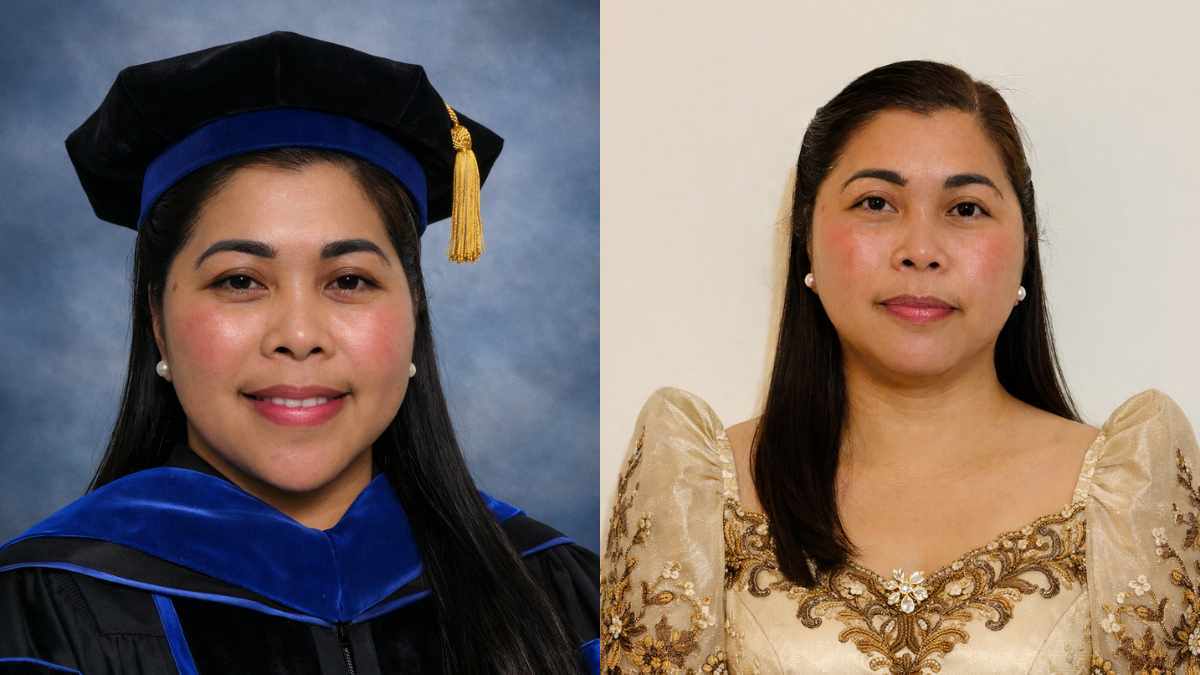
And in January 2026, she added a credential that reframes the whole arc. She completed a Doctor in Development Education with a major in Special Education, graduating with the title she now carries. For an educator who entered the field almost by accident, after a near-miss with a live wire, the doctorate reads less like an ambition checked off than like a destination she did not know she was walking toward.
“Earning my doctorate was a significant milestone in my professional journey,” she says. “It reflects my commitment to continuous growth, lifelong learning, and dedication to improving the lives of children with special needs.”
The reason behind the reason
There is a tidy career story here, and then there is the truer one underneath it, which has nothing to do with career at all.

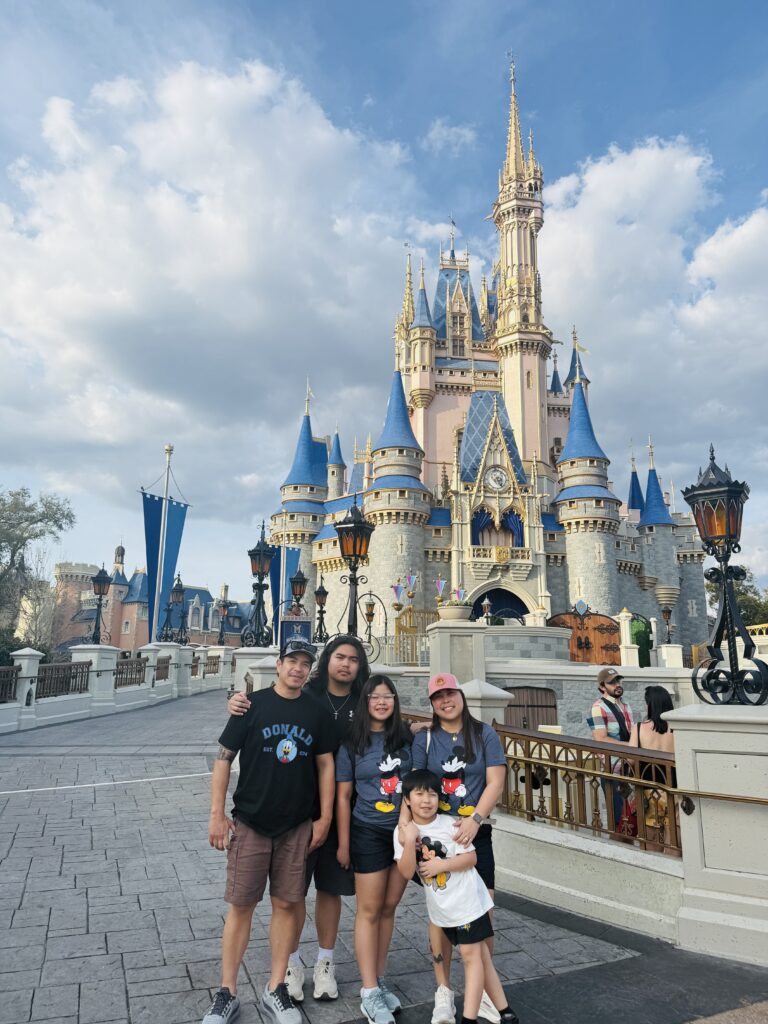
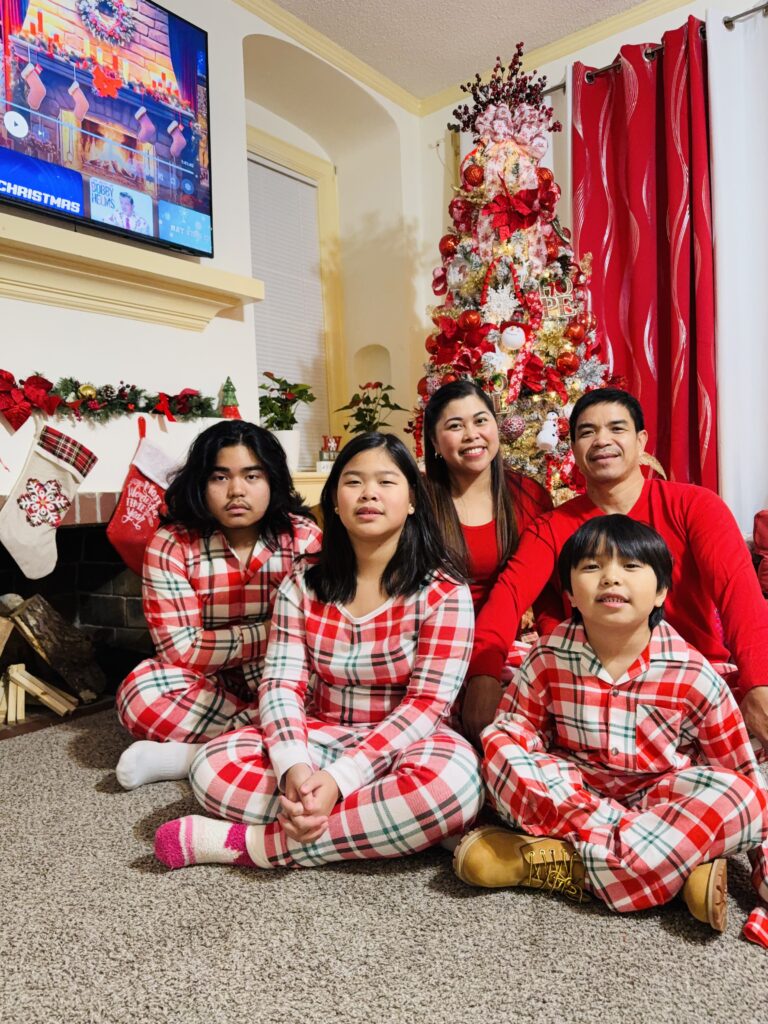
Dr. Claire did not move halfway around the world chasing a promotion. She moved to keep her family in one place. Her husband worked aboard cargo vessels, assigned to long routes through the United States and Europe—10 months away, then two months home, then gone again. For years she ran the household alone and watched her children grow up around the negative space their father’s absence left behind.
“Those years were emotionally difficult for me,” she says. “I often felt lonely and sad managing everything on my own while raising our children. More importantly, I saw how much my children needed their father’s presence as they were growing up.”
Working in the United States was the solution to a problem that had nothing to do with ambition. It was a way to gather the family under one roof and give her children both parents, daily, rather than seasonally. She describes it plainly as one of the hardest and most meaningful decisions she has ever made, and one she would make again.
That clarity about why she came shaped how she handled what came next. Settling abroad is rarely the clean fresh start the brochures promise, and hers was no exception. There was culture shock, the disorientation of unfamiliar systems and social rules. There were language barriers, less in vocabulary than in the accents, idioms, and rhythms of everyday American conversation, where a misunderstanding could leave her feeling suddenly unsure of herself. And there was discrimination, in small but real doses.
She does not dwell on the painful parts, but she does not erase them either. “While these experiences were painful, they taught me the importance of resilience, patience, and self-confidence,” she says. Rather than let those moments discourage her, she read—books about America, its history and roots and culture—so that she could understand the country she now lived in and move through it with more footing.
The family she found in Kingstree
Two anchors held during the hardest stretches. The first was faith, which she returns to often and without self-consciousness. The second was a community she did not expect to find in a small Carolina town.
She began volunteering at the Felician Center in Kingstree, where the Felician Sisters run a food pantry, clothing closet, and medical, dental, and vision support for people without insurance. The work gave her perspective; serving others reminded her that even in the middle of her own struggle, there was always someone she could help. But the relationship deepened into something more than volunteering.
“The Felician sisters became our family here in the United States,” she says. “Being far away from our relatives in the Philippines was never easy, but God blessed us with people who embraced us with love, kindness, and genuine care.”
She looked up to the sisters, she says, for their selfless dedication and unwavering faith, and credits them with teaching her the meaning of service and humility. Far from her relatives in Bicol-style distance—an ocean and a continent away—she had stumbled into a second family. It is the kind of turn her story keeps taking: a setback opening onto an unexpected source of strength.
Carrying it forward
For all her years abroad, the educator’s gaze keeps drifting toward what comes after. When her tenure in the United States ends, she wants to keep building, particularly in inclusive education—strengthening support systems, training teachers, and raising awareness for children with special needs wherever she lands next. She is especially drawn to mentoring teachers new to special education, the ones standing where she once stood, unsure and learning.
Service runs underneath those plans too. Her time at the Felician Center deepened a commitment to underserved families, and she has been quietly supporting Mary’s Immaculate Heart Missionaries, a community of Catholic religious women in the Philippines focused on youth ministry and spiritual formation. Nurturing the spiritual lives of young people, she believes, is part of building a more compassionate next generation.
Her advice to fellow kababayans abroad comes from someone who has lived the lonely version of the dream, not just the highlight reel.
“Behind every success story are sacrifices, struggles, loneliness, and silent battles that many people do not see,” she says. She tells them to manage money wisely and plan for the long term, to keep learning at work, to choose their circles carefully, and above all not to isolate themselves. Find a community, she urges—a church, a volunteer group, a real friendship—because a support system changes everything. Then comes the line that has carried her through nine years away from home, the one she keeps returning to: “Stay strong, stay grounded, and never lose faith in yourself and in God.”
She measures the journey not by the doctorate or the Teacher of the Year plaque, though she is grateful for both, but by something harder to frame on a wall.
“At the end of the day, I want my life to reflect not just what I achieved,” she says, “but how I treated people, how I served others, and how I remained faithful to God’s calling.”
The spark that startled her years ago turned out to be a beginning. It pointed her toward the students who would become her life’s work—and toward the conviction, tested across nine years and one ocean, that with faith, hard work, and grace, no dream is out of reach.
