



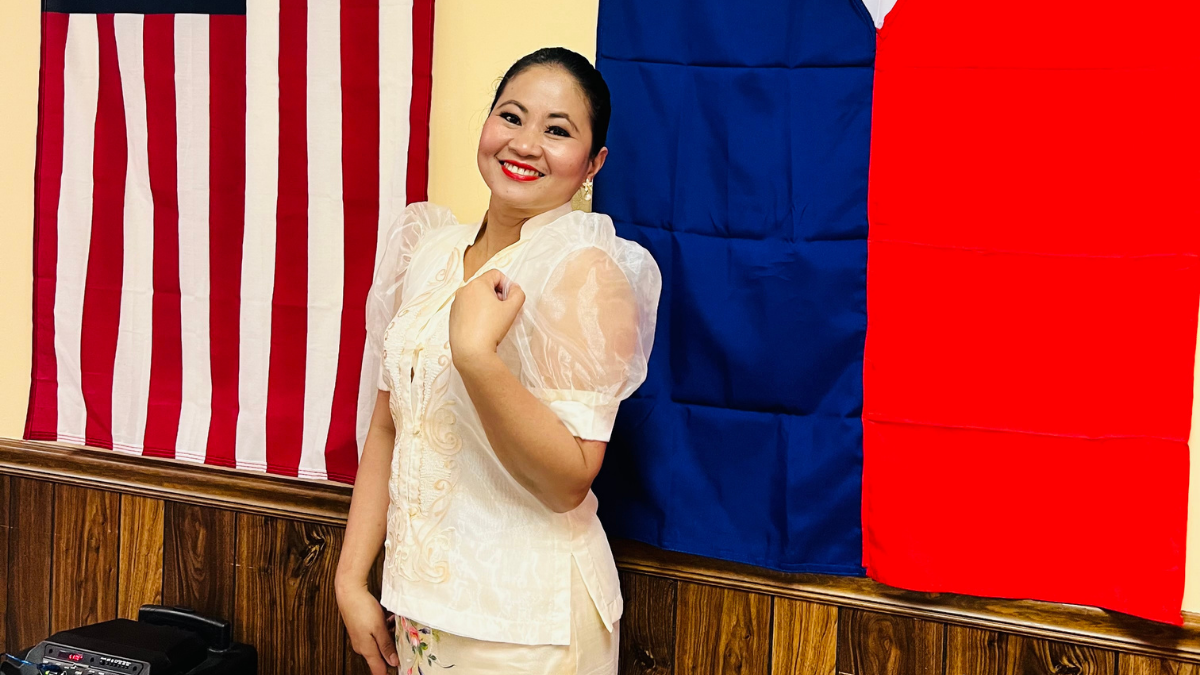

Every classroom in America looks familiar until you’re the one standing in front of it. The whiteboard, the rows of small desks, the restless faces waiting to be won over — it all reads as universal, right up until the moment you realize the entire system behind it runs on rules you were never taught. That is the gap Dr. Jenalyn Bartolome-Abad stepped into in 2022, when she carried more than eighteen years of Philippine public-school teaching across an ocean and discovered that experience, however deep, does not automatically translate.

She was not starting over. But she was, in a very real sense, starting again — a Master Teacher with a doctorate, a wall of awards, and a coaching record most educators would envy, now learning a new curriculum, a new vocabulary, and a new set of expectations as a 5th grade teacher at Forest Park Elementary School in Winston-Salem, North Carolina. It was her first job outside the Philippines. Four years later, the results speak in a language every school system understands: numbers.
From a Philippine kindergarten to a doctoral dissertation
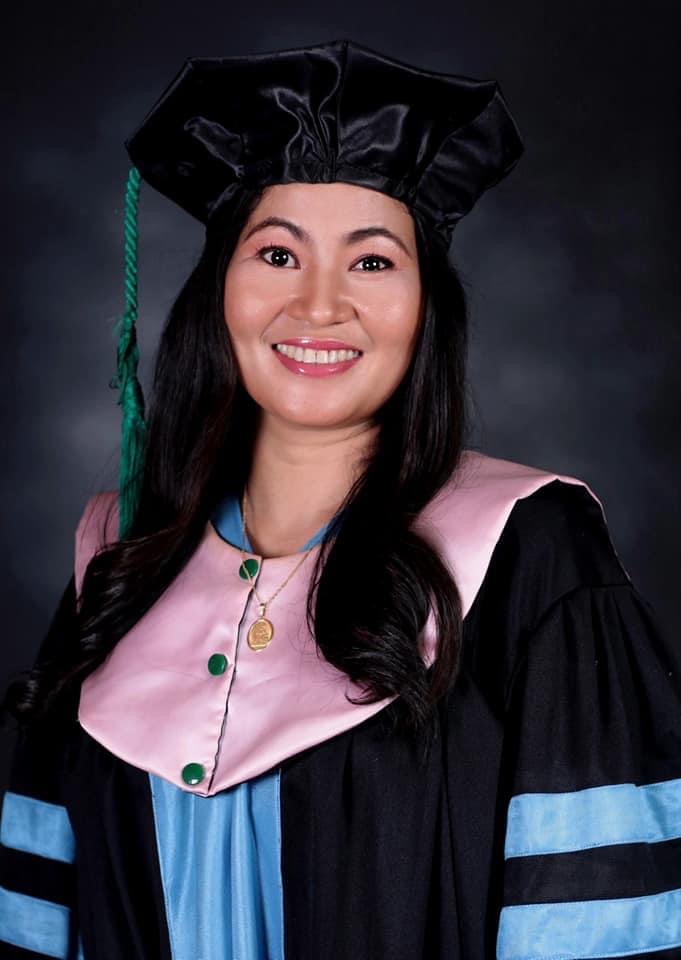
Long before North Carolina, there was 2004, and a young teacher standing in front of kindergarteners and primary graders in the Schools Division of Isabela. Dr. Jenalyn’s career did not arrive fully formed; it was built grade by grade, title by title. She moved from Kindergarten Teacher to Elementary School Teacher I and III, and eventually to Master Teacher I — the rank that marks a Philippine public-school educator as both an instructor and a mentor to other instructors.
The classroom was only ever half of it. She took on the roles that keep a school running and rarely make it onto a résumé’s first page: grade-level chairman, subject-area coordinator, School Information Coordinator, Youth for Environment in Schools coordinator. She organized in-service trainings, science fairs, leadership workshops. As a resource speaker and facilitator, she trained the people who trained students.
“My work as a Master Teacher allowed me to contribute not only as an instructor but also as a mentor, trainer, organizer, and advocate for continuous improvement in education,” she shares with TGFM. It is a sentence that could sound like a job description, except that her record backs every clause of it.
Then there was the coaching. This is where the former Isabela teacher’s story gets loud. She prepared students for competitions in science and mathematics, campus journalism, essay writing, science feature writing, news writing, literary events, and folk dance — and her students kept winning. First-place finishes at the district, division, and regional levels. Champion folk dance performances. Top placements in science and news writing that turned nervous kids into competitors.
“These experiences benefited students by developing their confidence, communication skills, creativity, leadership abilities, teamwork, and academic competitiveness,” she explains. The awards followed her, too: multiple Most Outstanding Teacher recognitions, including Most Outstanding Teacher (Elementary) in 2019.
Somewhere in all of this, she was also writing. Dr. Jenalyn completed and published a master’s thesis on improving Grade VI pupils’ communicative competence through content-area reading, then a doctoral dissertation examining science instruction in public elementary schools. She contributed articles on classroom management, environmental education, and the role of Master Teachers to The National Educators Journal, where she served on the editorial staff. By the time she looked toward the United States, she had been a teacher, a coach, a researcher, a trainer, and a published author — often all at once.
Why leave a career you’ve already mastered
Here is the part that puzzles people. Why would someone at the top of her profession — a Master Teacher, an award winner, a doctorate holder — leave to become, in effect, the new teacher in the building? The instinct is to assume she was chasing something the Philippines couldn’t offer. Her own answer is more interesting than that.
“I felt ready to take on a new professional challenge,” she says. “After many years of teaching and serving in leadership roles in the Philippines, including my experience as a Master Teacher, I felt ready to apply my knowledge and skills in an international setting.” The move wasn’t an escape from stagnation. It was a decision to be a beginner again on purpose.
What she wanted, she explains, was to widen the frame — to work inside a different educational system, absorb new instructional strategies, and collaborate with educators who had been trained in entirely different traditions. But the exchange ran both directions. She saw international teaching as a chance to give as much as she took.
“I also saw international teaching as an opportunity to share my own experiences and contribute the knowledge and expertise I gained from my years of service in the Philippine education system,” she says. She wasn’t arriving empty-handed to learn the American way. She was arriving with two decades of hard-won practice, ready to fold it into a new room.
The adjustment nobody warns you about
Adapting to a new country is easy to romanticize from the outside and exhausting to live through from the inside. For all her preparation, the Filipina educator still had to absorb a new culture, a new educational system, unfamiliar workplace expectations, and a different rhythm of daily life — all while being fully responsible for a class of American fifth graders.

Her strategy was less about grand reinvention and more about steady humility. “I overcame these challenges by staying open-minded, seeking feedback, learning from colleagues, participating in professional development, and treating each difficulty as an opportunity to grow,” she recalls. She leaned on the professional-learning tools she now had access to — training in the Science of Reading, English language arts, mathematics, collaborative planning — and treated her own decades of expertise as a foundation to build on rather than a script to defend.
The support came from the ordinary places that matter most: family, friends, colleagues. And she watched the veterans around her. “I also looked up to experienced educators and mentors whose professionalism, patience, and dedication inspired me to persevere,” she says. Between their example and her own stubborn belief in what she could do, the adjustment slowly stopped feeling like survival and started feeling like a career.
For the former Isabela Master Teacher, the passion underneath it all never wavered, because it was never really about the setting. “My passion for education is rooted in the belief that every child can learn and succeed when provided with appropriate support, encouragement, and opportunities,” she says. The most satisfying moments, she insists, have nothing to do with borders or systems — they happen at a single desk, with a single student.
“The most satisfying aspect of my work is seeing students make progress — particularly when a student who initially struggles with a concept eventually understands it and gains confidence,” she says. “Their growth, both academically and personally, is more rewarding to me than any professional recognition.”
When the numbers finally caught up
Recognition, though, has a way of finding teachers who earn it — and in North Carolina, it arrived in the form of data that’s hard to argue with. In May 2026, Dr. Jenalyn received a Principal’s Award for achieving 100% student proficiency in Mathematics and Science at Forest Park Elementary School. Alongside it came a Certificate of Achievement for exceeding expected growth in Mathematics, Science, and overall student growth measures, drawn from North Carolina Department of Public Instruction data and the EVAAS Growth Model.
That was the culmination, but it wasn’t the start of the American chapter’s honors. In March 2025, she earned recognition tied to a North Carolina state bonus for Grades 4–5 teachers ranking in the top 25% for Reading. Two months later, she was recognized for excellent teaching performance in Literacy through Educational Partners International. In four years, the teacher who had to relearn how an American school works had become one of its measurably strongest performers.
She is careful, though, about who owns those results. “These accomplishments reflect the collective effort of my students, their families, my colleagues, and myself,” she says. It’s a Master Teacher’s instinct — the awards go on her wall, but she keeps handing the credit around the room.
There’s a quiet vindication in this stretch of her story. The doubt that shadows every mid-career migration — will any of what I built still count over there? — got answered in the one currency a school district can’t dispute. Her Philippine experience didn’t just survive the translation. It produced 100% proficiency.
What she wants to build next
Dr. Jenalyn has no interest in coasting on those numbers. Her plans point forward, and outward. She intends to keep teaching in the United States, keep growing professionally, and keep pushing past the classroom’s four walls into the causes she’s championed her whole career.
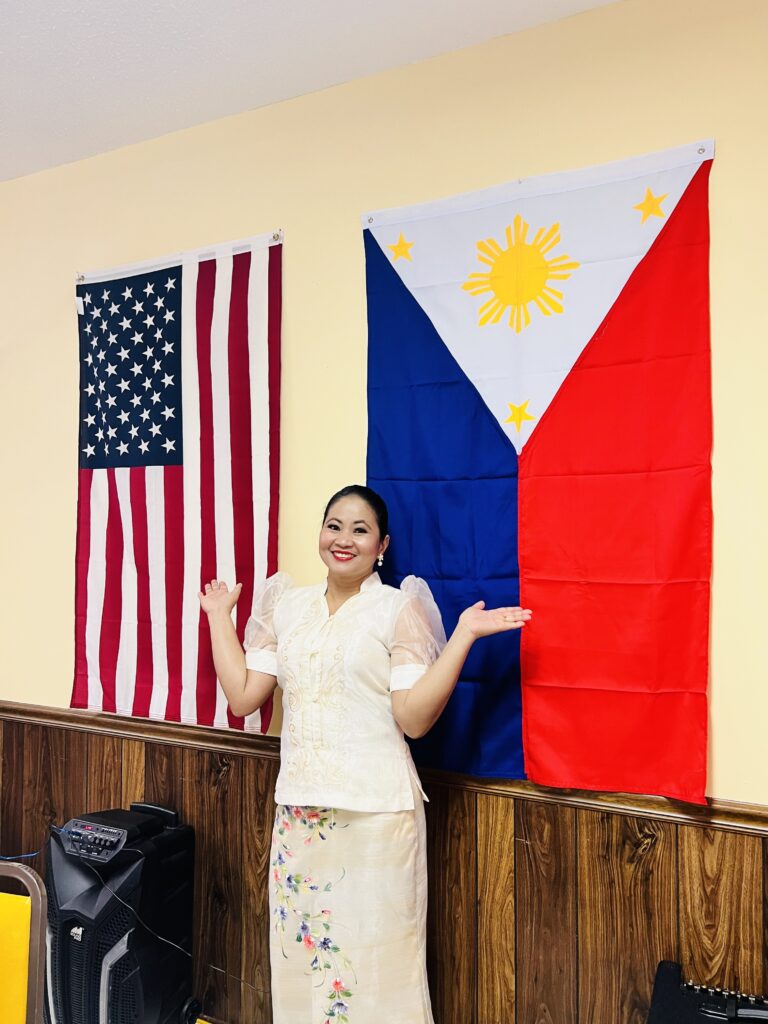
“I aim to be a catalyst for positive change by supporting advocacies that promote quality education, literacy, STEM learning, environmental awareness, student leadership, and inclusive opportunities for children,” she says. She wants to draw on every role she’s ever held — teacher, coach, researcher, leader — to mentor other educators and argue for the practices that actually move student outcomes. “My goal is to leave a lasting positive impact,” she says, “not only through the students I teach, but also through the educational initiatives and communities I help strengthen.”
For the Filipinos abroad who are still in the hard, early part of the journey — the part she remembers — she offers counsel shaped by faith and by experience in equal measure. Stay patient, resilient, and grounded in your values, she urges. Make wise decisions, manage your finances responsibly, protect your personal information, and surround yourself with people you can trust.
“Never lose faith, compromise your dignity, or give up on your dreams,” she says. “Success abroad is not measured only by financial stability or career achievements, but also by the life we build, the people we inspire, and the positive difference we make.”
Looking back at the arc — from a kindergarten room in Isabela in 2004 to a fifth-grade class in Winston-Salem with perfect proficiency scores — she resists reducing any of it to trophies. “I see my achievements not simply as awards or recognitions, but as the result of years of hard work, perseverance, faith, and a genuine passion for teaching,” she says. The lesson she draws from her own story is the one she’d most want a struggling kid, or a struggling kababayan, to hear.
“Our circumstances do not define our potential,” she says. “Our determination, faith, and willingness to keep learning do.” It’s the kind of thing a teacher says. It lands differently when the teacher has the record to prove it.
