



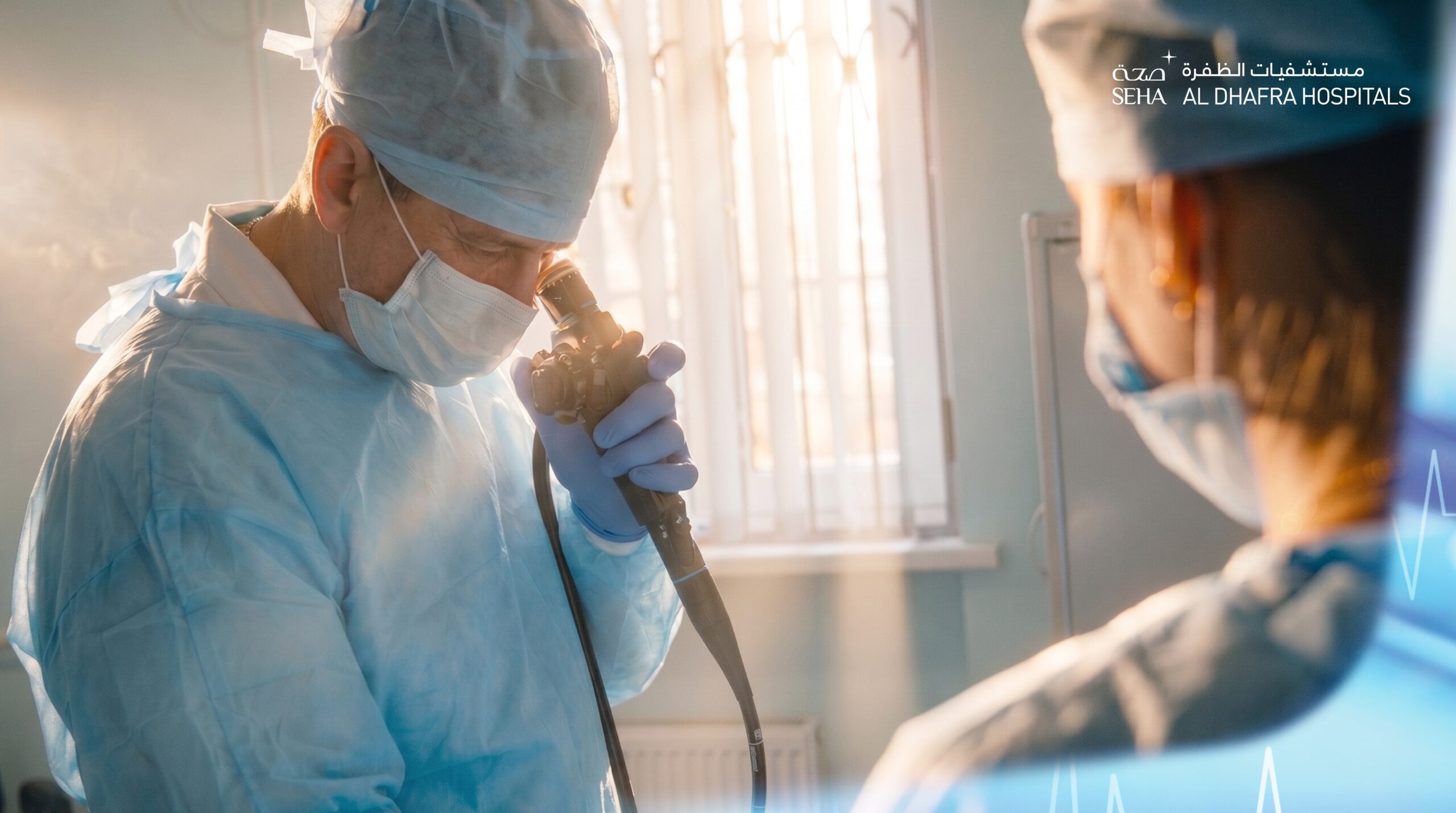

A bed-ridden patient living with a tracheostomy has avoided major surgery after specialists at SEHA’s Madinat Zayed Hospital extracted a feeding tube that had become lodged in the stomach wall over five years.

The patient relied on a percutaneous endoscopic gastrostomy (PEG) tube for nutrition, but the device eventually stopped working altogether. The cause was buried bumper syndrome, a condition where the tube’s internal portion grows embedded into surrounding stomach tissue. Earlier assessments had pointed toward laparotomy as the likely route to remove it, an operation that carried significant danger given the patient’s fragile health.
Rather than proceed with open surgery, the hospital’s gastroenterology team turned to advanced endoscopic methods. The work unfolded over three separate sessions, each mapped out in advance. Clinicians built a mucosal tunnel to reach the buried PEG plate, then withdrew the old apparatus before fitting a replacement PEG/J tube. No complications arose, and the new system restored the patient’s nutritional support.

Dr. Mohammed Hejazi, Consultant Gastroenterologist and Advanced Endoscopy Specialist at SEHA’s Madinat Zayed Hospital, said: “This case demonstrates how advanced therapeutic endoscopy can offer safer, less invasive options for patients who may not be suitable candidates for major surgery. Through careful planning and specialised technique, we were able to remove a complex embedded PEG system while reducing procedural risk and supporting the patient’s long-term care needs.”
The patient’s respiratory condition added a further layer of difficulty, requiring input beyond the endoscopy team alone. Dr. Ayman Anis, Consultant Anaesthesiologist at the same hospital, said: “Managing this case required close coordination across clinical teams, particularly given the patient’s respiratory status and increased procedural risk. The successful outcome reflects the value of multidisciplinary planning in safely delivering advanced interventions for vulnerable patients.”
SEHA, a subsidiary of PureHealth, described as the largest healthcare group in the Middle East, has been broadening specialised treatment options throughout the Al Dhafra region. That push covers therapeutic endoscopy, complex PEG/J management, ERCP, EUS and other minimally invasive procedures aimed at patients who face elevated risk in conventional operations.
