



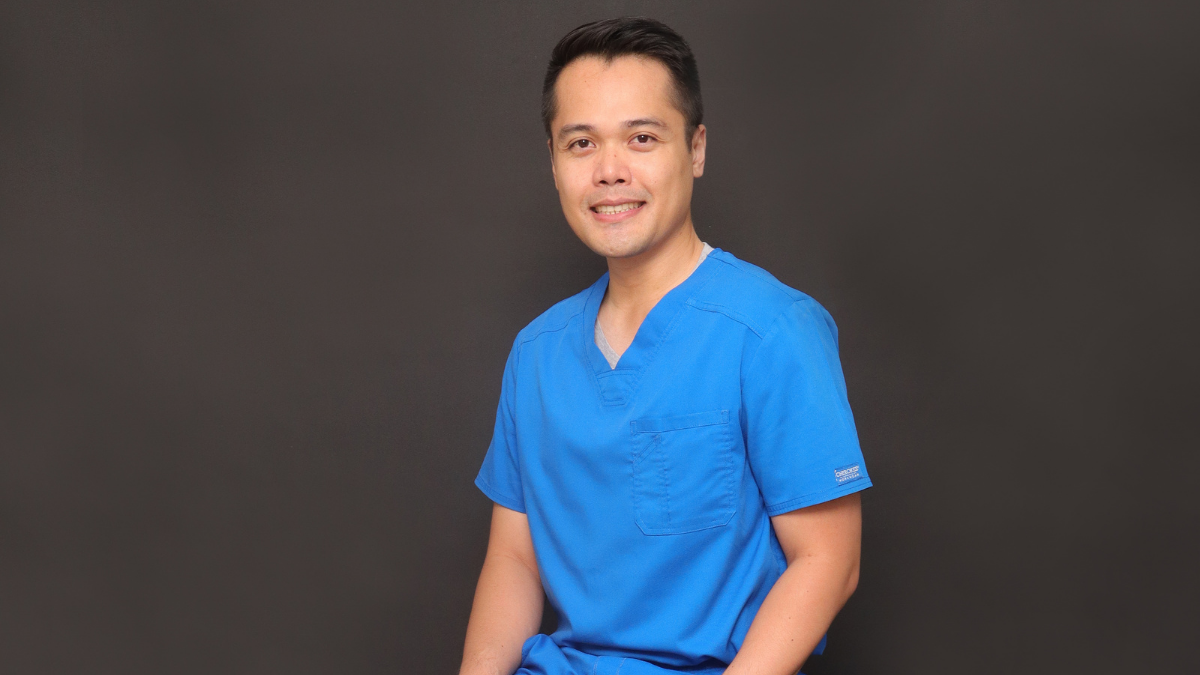

Everyone knows the feeling of working hard while quietly wondering if the effort will ever lead somewhere better. For Job Marconi J. Mascardo, that uncertainty once defined his early years as a nurse, long before he would become a healthcare leader shaping systems across the United States and its territories.

There was a time when his future felt hazy, when prosperity seemed distant and the path ahead unclear. Newly licensed in the Philippines, he entered the profession filled with hope, only to confront a reality familiar to many Filipino nurses: scarce jobs, volunteer posts, short-term contracts, and wages that barely matched years of training. Employers demanded “local experience,” a requirement that too often became a gateway for exploitation rather than opportunity.
“In my early twenties, I went along with the flow,” Mascardo recalls. “I had few expenses and many dreams.” But as the years passed, that acceptance gave way to a quieter reckoning. Staying put—financially and professionally—meant risking stagnation. Something had to change.
Waiting, studying, and holding on to belief
After earning his nursing license, it took more than a year before Mascardo became gainfully employed. Still, his conviction never wavered. He believed that working overseas could change his life—not in an instant, but in a way that truly mattered.
That belief came with steep demands. He studied relentlessly for the NCLEX-RN and English proficiency exams while navigating U.S. visa retrogression, a period that left thousands of internationally educated nurses suspended in uncertainty. Progress was slow, patience constantly tested.
When his U.S. visa was finally approved, he landed in Montana—beautiful, remote, and entirely unfamiliar. The transition was humbling. He failed his first driving test. He struggled to understand the financial system. And despite what social media often suggests, success did not arrive overnight. “Building a stable future meant lifting heavy weights—literally and figuratively—and laying one block at a time toward financial security,” he says.
Finding purpose before finding pay
Long before the move overseas, Mascardo found meaning where compensation was absent. During his uncertain years in the Philippines, he volunteered with the Red Cross Cebu Chapter, a decision that would shape his professional philosophy for years to come.
“What began as unpaid work became one of the most formative chapters of my life,” he shares. Responding to disasters, supporting trauma survivors, and working alongside volunteers instilled lessons no classroom could offer—humanity, brotherhood, and resilience. Those values, he says, remain central to how he leads today.
To survive financially, he took on other roles in government and call center work. The pay was modest, but he treated every job as a learning ground. Each skill, each mentor, felt like preparation for a future still out of sight.
Rebuilding abroad, step by step

Life in the United States demanded reinvention. Mascardo retook—and passed—his driving exam. He immersed himself in financial literacy, retirement planning, and long-term investing, eventually building what he describes as a sustainable, generational-minded portfolio.
Education remained a constant. While working full time, he earned both a Master of Business Administration and a Master of Arts in Nursing through distance learning. He pursued national certifications in nursing leadership, clinical case management, and healthcare quality, not as titles, but as tools to validate growing expertise.
“Contrary to what people think, success abroad is built, not gifted,” he says.
Improving systems, not just outcomes
Today, Mascardo specializes in analyzing healthcare systems to improve quality and patient outcomes. Now based in Guam, he is board-certified in nursing leadership, clinical case management, and healthcare quality, with experience spanning bedside care, systems design, and enterprise-wide improvement initiatives.
Across a 14-year career, his work has touched thousands of lives—often indirectly, but no less impactfully. In Guam, he helped lead hospital-wide quality initiatives and implemented the International DAISY Awards Program, bringing long-overdue recognition to nurses in the island’s only government hospital system. In Texas, he supported post-discharge medication reconciliation within managed care workflows, reducing readmissions and improving continuity of care. In Montana, he balanced operational improvements in a skilled nursing facility with frontline bedside care during the height of the COVID-19 pandemic.
A message rooted in experience
Mascardo speaks candidly about the systemic barriers many Filipinos face at home—nepotism, limited opportunities, and talent left unseen. His advice is direct: “Do not be afraid to take a leap.”
He urges young professionals to educate themselves strategically, choosing paths aligned with real-world demand and mindful of automation and AI. While he acknowledges his bias, he remains firm in his belief that nursing continues to be one of the strongest global pathways, with Filipino caregivers respected worldwide.
“Wherever life takes you, stay grounded,” he says. “Be proud of who you are and where you come from. Trust God’s process, even when the waiting is long.”
Mascardo often returns to a line from José Rizal: “He who does not know how to look back at where he came from will never reach his destination.”
