



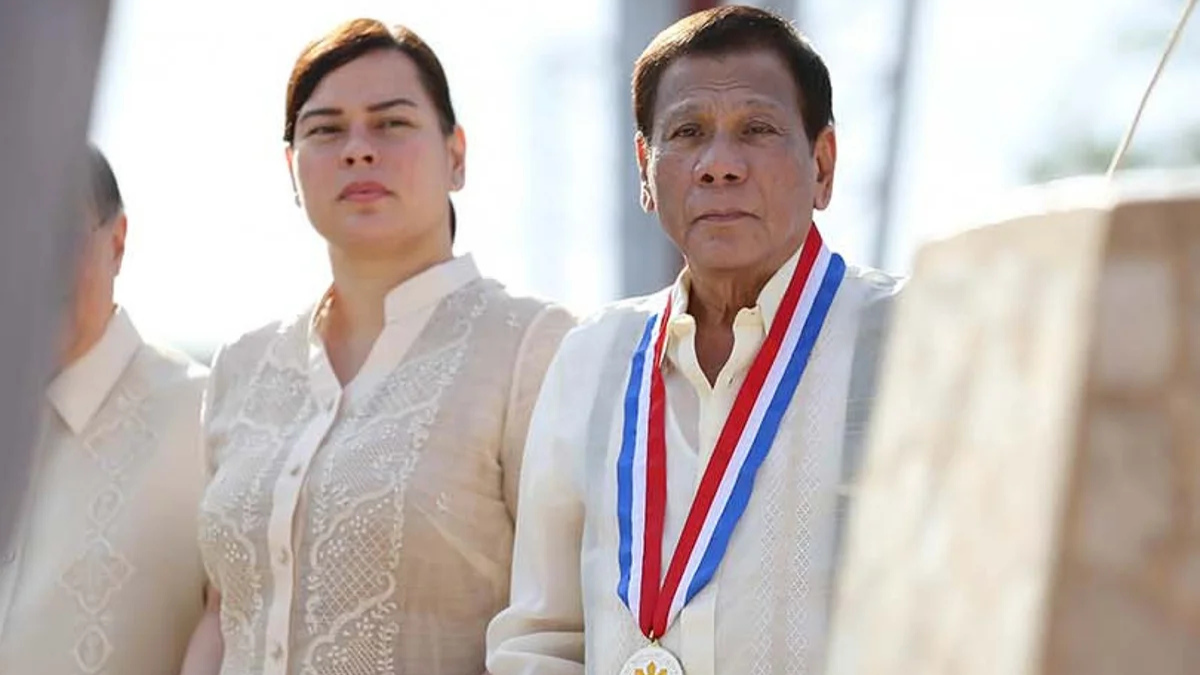

In a landmark ruling that reverberated from The Hague to Manila, the International Criminal Court confirmed on April 22 that it has jurisdiction over former Philippine president Rodrigo Duterte’s drug war crimes case — the same day his daughter, Vice President Sara Duterte, faced intense scrutiny at the House of Representatives over allegations of unexplained wealth.

The twin legal battles unfolding simultaneously on both sides of the world marked one of the most consequential days in recent Philippine political history.
ICC confirms it can try Rodrigo Duterte
According to the International Criminal Court, the Appeals Chamber — by majority — rejected the entire appeal brought by Duterte’s defence counsel and confirmed Pre-Trial Chamber I’s decision of 23 October 2025. That earlier ruling had established that the court may exercise jurisdiction over alleged crimes committed on Philippine territory from 1 November 2011 to 16 March 2019, the period during which the Philippines was still a State Party to the Rome Statute.
In its ruling, the Appeals Chamber held that articles 12 and 13 of the Rome Statute — read together with article 127, which governs the effect of a State’s withdrawal — preserve the court’s authority over crimes that occurred while the country was still a member.
The ICC stated that it would be “incompatible” with the Statute’s object and purpose — which is to end impunity for the most serious international crimes — to allow a State Party to evade its responsibilities simply by filing a withdrawal notice once its nationals or territory come under prosecutorial examination.
At the same time, the court acknowledged the need for balance, ruling that its jurisdiction does not extend indefinitely after a State withdraws, and that a clear timeline must govern how far a preliminary examination can reach.
Duterte was not present in the courtroom. He had previously waived his right to appear, and was represented by his defence counsel. The judgment was delivered in open court by a five-member panel presided over by Judge Luz del Carmen Ibáñez Carranza, alongside Judges Tomoko Akane, Solomy Balungi Bossa, Gocha Lordkipanidze, and Erdenebalsuren Damdin.
The ruling clears the way for the next critical step in the case. According to reports by Rappler and The Manila Times, the ICC Pre-Trial Chamber is expected to issue a separate decision — by around April 28 — on whether to confirm the charges of crimes against humanity against the former president and proceed to a full trial.
Rodrigo Duterte, 81, faces three counts of murder as an “indirect co-perpetrator” in the killings linked to his government’s war on drugs. He has been held at the Scheveningen detention facility in The Hague, Netherlands, since March 2025.

Sara Duterte faces wealth probe at the House
In Manila, Sara Duterte’s impeachment hearing entered its third day before the House Committee on Justice — also on April 22 — with lawmakers zeroing in on allegations of unexplained wealth, one of the charges laid against her.
In a report by The Manila Times, the committee summoned former senator Antonio Trillanes IV, Ombudsman Jesus Crispin Remulla, Bangko Sentral ng Pilipinas Governor Eli Remolona Jr. in his capacity as chairman of the Anti-Money Laundering Council, and officials from the Bureau of Internal Revenue and the Securities and Exchange Commission.
According to Inquirer.net’s live coverage, the Office of the Ombudsman confirmed that Sara Duterte declared no cash on hand or bank deposits in her Statements of Assets, Liabilities and Net Worth from 2019 to 2024 — a disclosure that drew sharp questioning from lawmakers. Manila 3rd District Rep. Joel Chua was among those who raised doubts about the completeness of her filings.
The vice president did not attend the hearing. Committee chair Rep. Gerville Luistro reiterated, according to The Manila Times, that the panel was the “proper forum” for Duterte to answer the allegations against her.
According to Rappler, the committee is eyeing April 29 as the target date to conclude public hearings, after which a committee report may be transmitted to the plenary when the House reconvenes on May 4. A one-third vote in the plenary would send the case to the Senate for a full impeachment trial.
A historic day for the Duterte name
April 22, 2026, is a date that Filipinos — at home and across the world — are unlikely to forget soon. For the millions of overseas Filipino workers in the UAE and the broader Gulf region who lived through the Duterte years, the day carried particular weight: a father’s fate inching closer to an international trial, and a daughter’s political survival hanging in the balance before a domestic panel.
Neither proceeding delivered a final verdict. But both moved the arc of accountability measurably forward — and for the families of drug war victims watching from afar, that movement matters.
