





The classroom is the destination almost nobody plans for. Ask a room of Filipino high school students what they want to be and the answers skew toward engineering, accountancy, medicine — the professions that promise a way out. Teaching is what happens when the other doors close.

That’s exactly how it began for Maria Glynna Joy Dela Cruz-Victoriano. She wanted to be an engineer. Or an accountant. What she got instead was a slot at a local state university in Capiz, the only degree her family could afford, in a field she hadn’t chosen.
Twelve years later, she holds teaching licenses in four jurisdictions — the Philippines, Nevada, Ontario, and New Zealand — and teaches Calculus at Forest View High School under New Zealand’s Ministry of Education. The door that closed turned out to be the wrong one to mourn.
“Financial constraints permanently derailed my dreams of becoming an engineer or an accountant, forcing me into a local state university for an education degree,” Glynna says, “which then ended up to be my ticket to where I am now.”


A childhood spent doing arithmetic that mattered
Long before she taught anyone about limits and derivatives, the 37-year-old was running her own numbers. She grew up without a father. Her mother worked far from home, sending money back to keep two daughters in school. Glynna lived with her grandfather until her second year of high school, and through elementary and those early secondary years she sold goods to put away whatever she could.
“My life has been an unbroken chain of survival,” she says, “where every chapter forced me to grow up too soon to outrun a poverty that always seemed to catch up.”
The math was never abstract. It was inventory and margins and the small daily calculation of what could be spared.
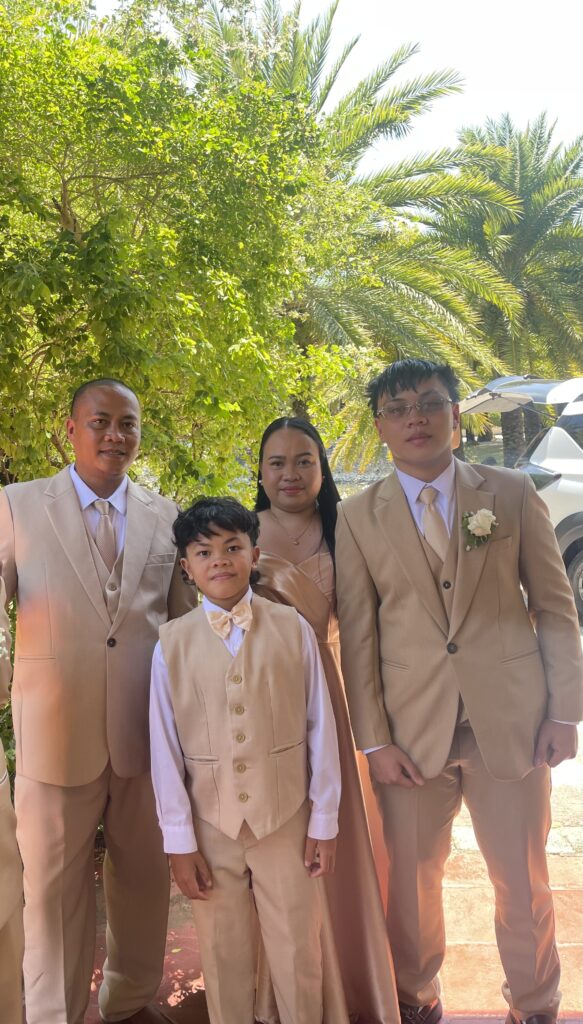
Her mother, she is careful to note, raised both daughters alone and got them both through college. That fact sits underneath everything that came after — including the decision, years later, to build a life on the other side of the world partly so that woman could finally rest.
The Capiz State University graduate took her first teaching post at the university’s Dumarao Campus in December 2010, handling college mathematics for education majors, science courses, and even psychology for veterinary medicine students. By 2012 she was chairing socio-cultural affairs. She was 22.
The business that failed, and the debt that followed
At 24, she tried to change the equation entirely. She launched a business.
Three years later it collapsed, and she was left carrying debt she had no realistic path to clear on a Philippine teacher’s salary. She returned to the classroom in 2016 at Mambusao National High School, teaching mathematics in both the Science, Technology and Engineering curriculum and the regular track, coaching for the Mathematics Teachers Association of the Philippines, serving as a critic teacher.
The work was good. The arithmetic still didn’t close.



“Returning to teaching to regain my losses proved utterly insufficient against the crushing weight of my financial reality and the cruel social bias that came with it,” she says.
What finally moved her wasn’t the debt itself. It was something quieter and harder to sit with — the way her children had begun to accommodate the shortage.
“The true heartbreak was watching my own children adapt to our shortcomings by never asking for anything. Their unspoken longings are visible only in their eyes.”
That, the Filipina educator says, is what put her on a plane.
Leaving with almost nothing
She left the Philippines in 2020. “I left with almost nothing,” she says. “We do not even have our own house.”
The exit was anything but clean. She financed her application with a high-interest loan. COVID-19 delayed her flights repeatedly. When she finally reached the United States, pandemic-related processing backlogs left her without work for two months — two months of no income, in a country where she knew almost no one, against a debt clock that never stopped.
She started at Mojave High School in the Clark County School District in Las Vegas in February 2021, teaching Algebra 1 and working with English Language Learners struggling in math. She picked up the Summer Acceleration Program and Extended School Year APEX courses.
Then the trajectory steepened. By August 2022 she was teaching Advanced Placement Calculus and Pre-Calculus, and leading the Professional Learning Community for College Preparatory Math. By August 2023 she had added Dual Enrollment Math 126, 127, and 120 — actual university coursework, delivered under the University of Nevada, Reno, to students in Grades 11 and 12 — and was leading the PLC for both College Preparatory and AP Mathematics.
Students walked out of her classroom with college credits already banked. The teacher who couldn’t afford the degree she wanted was now clearing that obstacle for other people’s children, one course at a time.

She is direct about what carried her through the J1 years. “Being a J1 Teacher was never easy, but having a highly supportive administration made a massive difference, while the Missionary Families of Christ and my real friends served as my ultimate anchor during my time in the United States.”
What a balanced schedule actually buys you
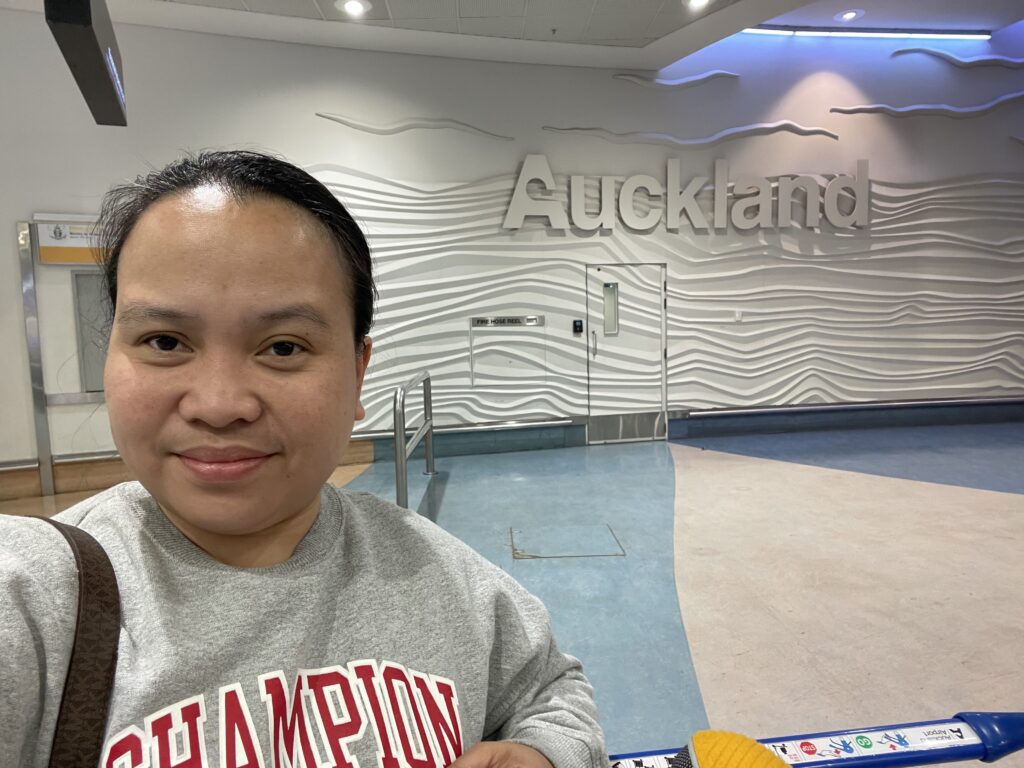
In 2025 she moved again, this time to New Zealand — and this time she brought everyone.
She now teaches Calculus NCEA Levels II and III, Statistics NCEA Level II, and Year 9 and 10 mathematics at Forest View High School, preparing students for internal assessments, derived exams, and national NCEA examinations. She also serves as Arataki Tutor for Year 9 Arapuni, monitoring students across every area of school life.
The school day runs 8:45 a.m. to 3:00 p.m.
That detail sounds minor until you hear how she describes the difference. “My days now start without the usual frantic rush,” she says — a schedule that leaves her with energy and daylight still to spend.
The Ministry of Education provided a relocation grant. The school and ministry provided heavily discounted housing. Her husband moved into the local workforce without difficulty. Her two children entered an education system that costs nothing from preschool through high school and feeds them daily, morning tea through lunch.
“We do not have to worry about our younger son who bikes to school everyday,” she says. Doctor’s visits are free; medicine costs little.
Weekends are spent driving into the wilderness, where the family camps for free.
“Between the subsidized healthcare and the profound, world-class safety of our new community, a weight has been lifted off our shoulders.”
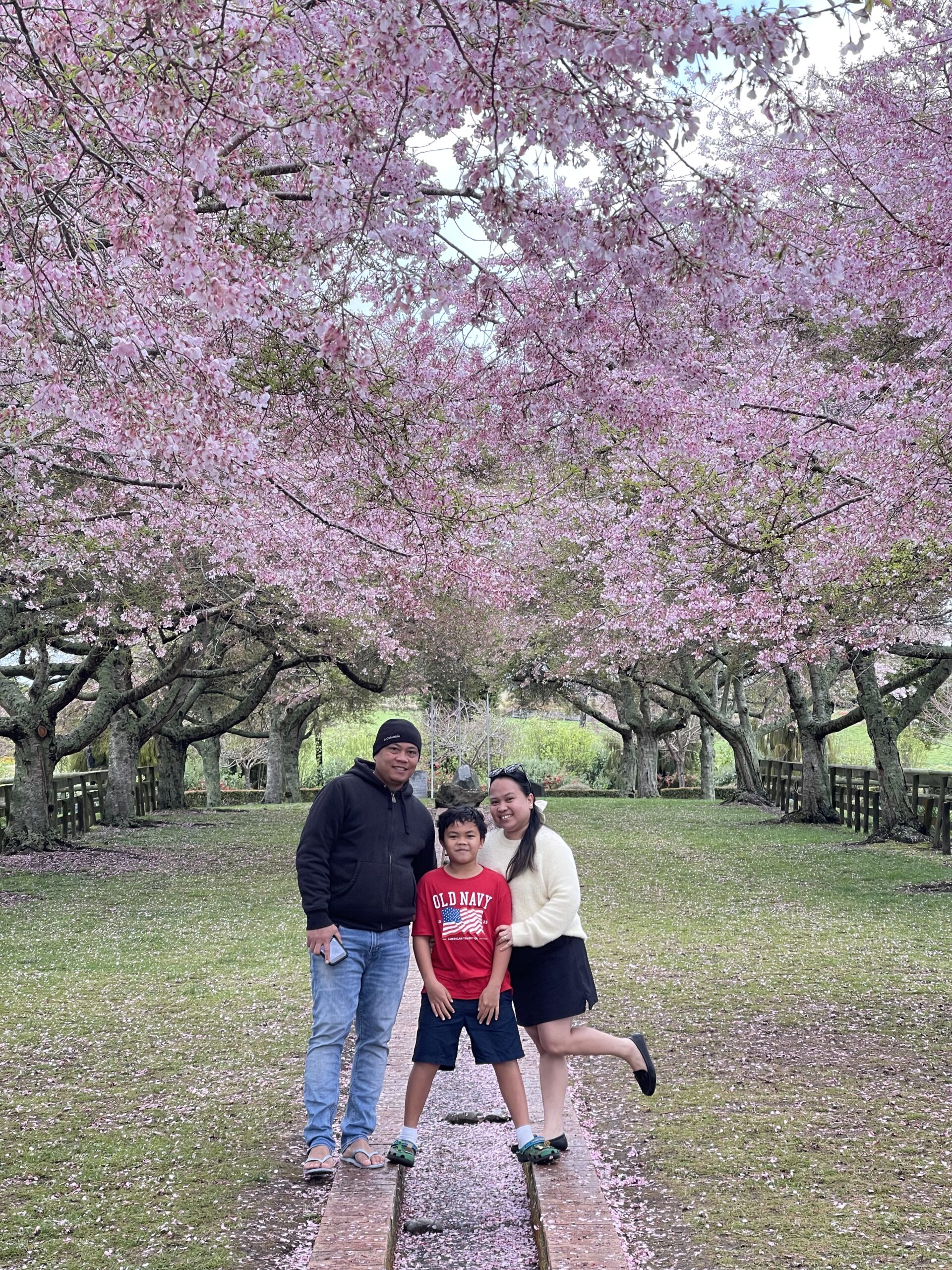
For someone who spent decades calculating what could be spared, the arithmetic of not having to calculate is its own kind of luxury.
Love first, teach second
Her mantra is four words: Love first, teach second.
It explains the shape of her career better than any license list. She could have optimized for money alone — plenty of overseas teachers do, and nobody blames them. Instead she keeps talking about the classroom itself.
“There is nothing more rewarding than helping students uncover the practical, real-world applications and value of Mathematics,” she says. “Seeing the students build confidence in Math applications feels very rewarding.”
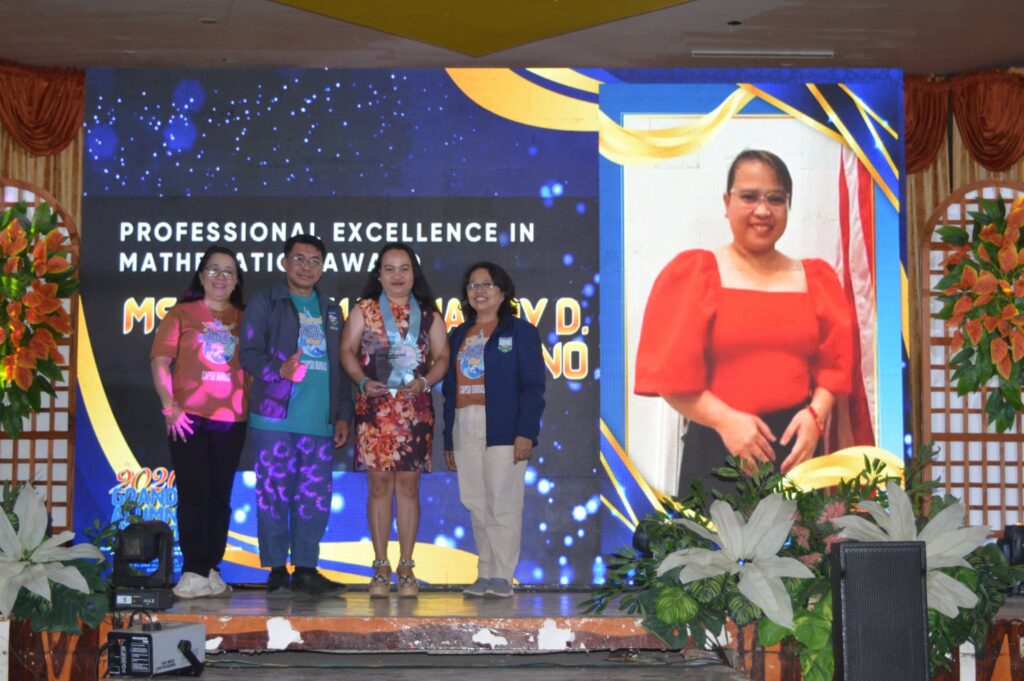
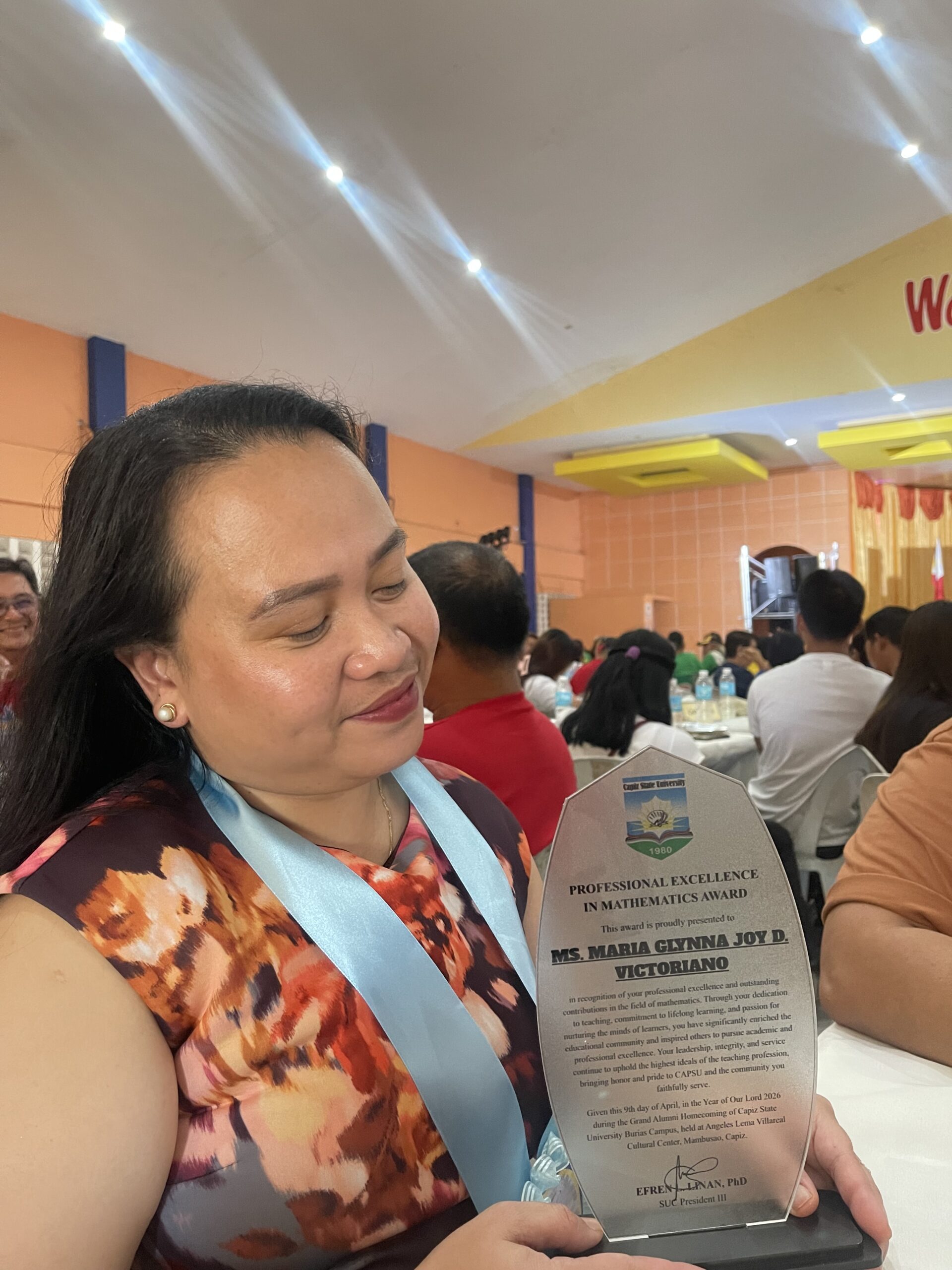
The recognition has followed. Capiz State University, Burias Campus, recently awarded her its Professional Excellence in Mathematics Award. She holds a Master of Arts in Teaching majoring in Mathematics from Filamer Christian University in Roxas City, completed the coursework for a Master in Management major in Educational Management, and is now preparing her dissertation for a Doctor of Education in Educational Management at Capiz State University Graduate School.
The advice she offers other Filipinos abroad is unsentimental, which is what you’d expect from someone who has watched money fail her more than once.
“Working and living abroad is a finite opportunity (for most of us) that requires immense sacrifice,” she says. “Make it vital to manage your money wisely from day-one by budgeting strictly and living below your means.”
Know the laws of the country you’re in. Protect your own well-being alongside your family’s future. And then this, the line that lands hardest because every OFW has heard it in their own head: “Enjoy your hard-earned income responsibly without draining your savings for every outside request. The ‘deserve ko to’ doesn’t work all the time.”
The farm
Ask her what comes next and the answer isn’t another promotion.
She wants her children through university and standing on their own. She and her husband want a farm in New Zealand — a homestead where extended family can visit and see the country that took them in. She wants to travel, starting with a return to the Philippines.
It’s a modest list for someone who left with nothing six years ago and now teaches university-level calculus on the other side of the Pacific. But modest is the point. The woman who spent her childhood selling goods to save a little, and her twenties buried under a failed business, isn’t chasing the next escape.
She already made it out. Now she’s just choosing where to stand.
