



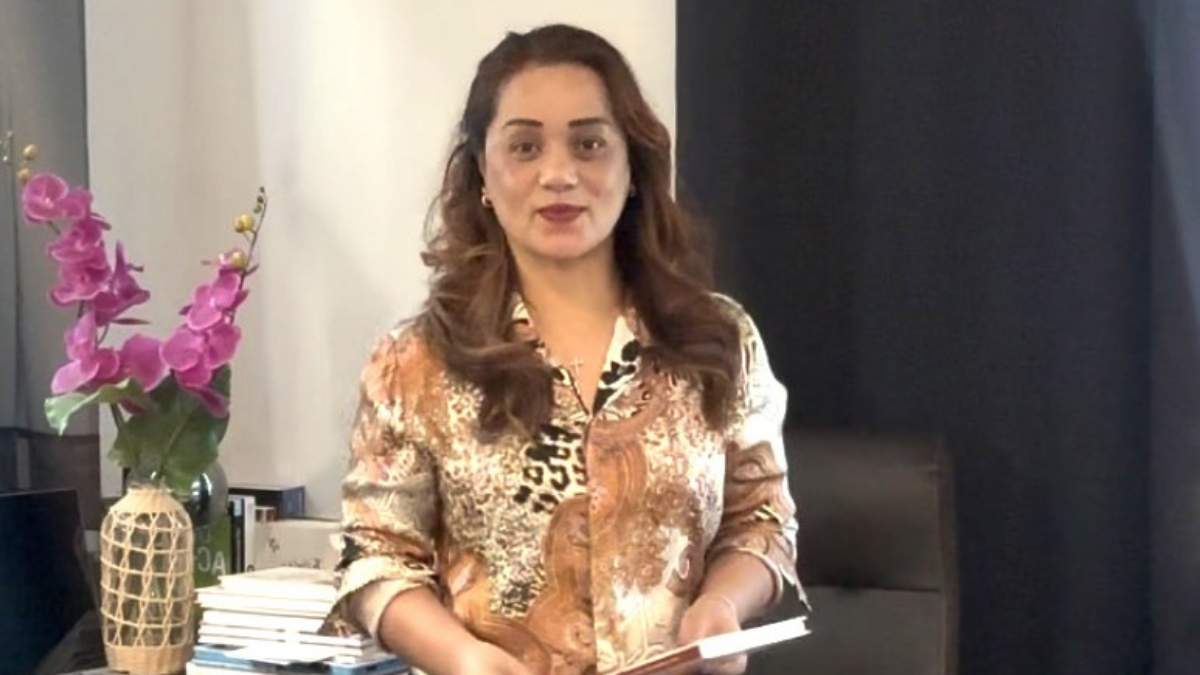

Ask any teacher what keeps them in the profession, and few will point to the students who arrive already confident. The ones who stay — the ones who build careers out of it — are usually chasing a harder reward: the child who walks in certain they cannot, and walks out proving otherwise. Dr. Vevian D. Salahid has spent nearly three decades chasing exactly that, first in Philippine classrooms, then as a school principal, and now inside a resource room in Las Vegas, Nevada.

She teaches sixth to eighth grade English Language Arts as a Special Education resource teacher with the Clark County School District, working with students whose learning needs are as varied as their backgrounds. It is a long way from where she started, and by her own account, the distance is the point.
From principal’s office to resource room
Before Las Vegas, Dr. Vevian was a Principal 1 in the Philippines — a title earned after years as a classroom teacher, administrator, trainer, and mentor. The recognitions accumulated: national and regional Brigada Eskwela awards for her school, a regional citation for disaster risk reduction, benchmark status for school-based management. On a personal level, she was named an Outstanding School Head and took a Best Paper award for research.
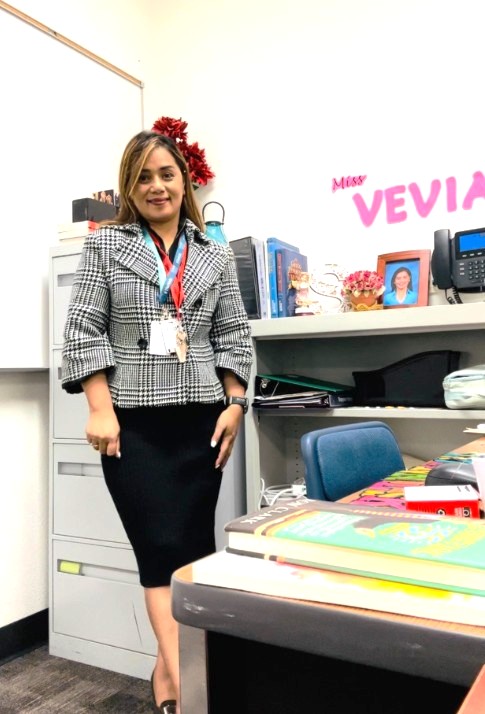
She is quick to redistribute the credit. “These recognitions were never about personal achievement alone,” she says. “They reflected the collective dedication of our teachers, students, parents, and community partners who worked together to create a school where every child could learn, grow, and succeed.”
Then, in 2021, she left all of it. Trading a principal’s authority for a resource teacher’s caseload is not the usual trajectory for someone at the top of her local field — but the former school head frames the move less as a step down than a return to the work itself. “Working with students who have diverse learning needs,” she says, “has further strengthened my commitment to inclusive education.”
The decision, and the cost of it
The reason she gives for leaving is one thousands of Filipino families would recognize instantly. Like many overseas workers, she went abroad in search of steadier professional ground and financial security for her family — and, she is candid, it nearly broke her to do it.
“Although leaving my family and homeland was one of the most difficult decisions I have ever made,” she recalls, “it also became one of the most rewarding.” The early stretch abroad brought loneliness, homesickness, and the disorientation of learning an entirely different educational system from scratch. She names her sources of strength plainly: faith, family, and the teaching itself.
Her sense of what carried her through has hardened into something close to a creed. “Perseverance is not about never falling,” she says. “It is about choosing to rise every time life knocks you down.” It is the kind of line that could sound rehearsed coming from someone else; from a woman who restarted her career on another continent at forty-five, it reads more like a field report.

The other life, in books
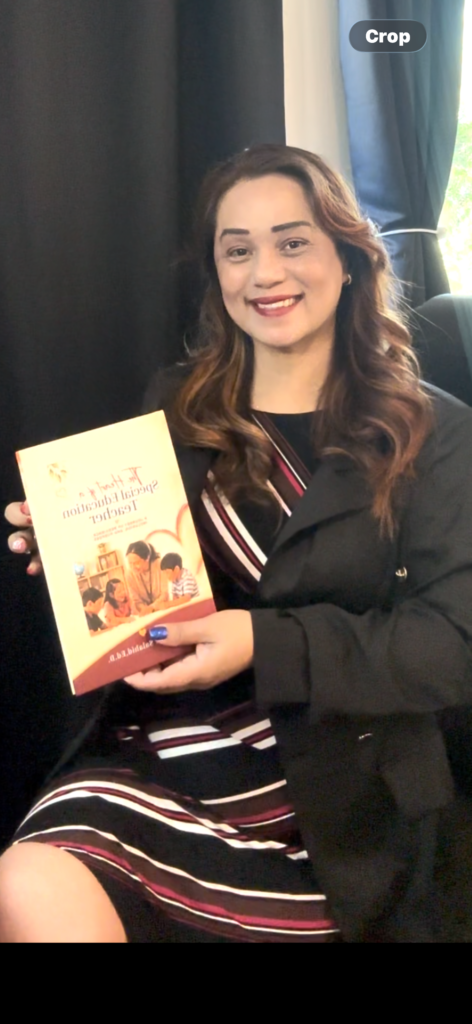
Somewhere between lesson plans and IEP meetings, Dr. Vevian became a published author. Her memoir, The Heart of a Special Education Teacher, earned a Readers’ Favorite 5-Star Review, and she has kept writing — children’s stories and books built around resilience, education, family, and hope.
The two vocations feed each other. What she witnesses in the classroom becomes material; what she writes circles back to why she teaches. “Every book I write carries a piece of my journey,” she says. The through-line, whether she is standing in front of students or filling a page, does not change — to inspire hope, to encourage perseverance, and to remind people that every dream begins with someone willing to believe in them.
That belief is not abstract for her. It is the daily mechanics of the job. Many of her students arrive doubting they can do the work at all. “Seeing them believe in themselves, celebrate their progress, and discover their strengths,” she says, “is the most rewarding part of being a Special Education teacher.” She chose the field, she explains, because every child deserves someone in their corner — “especially when they struggle to believe in themselves.”
What she would tell the next one leaving
For the kababayans weighing the same decision she made, or already abroad and struggling with it, her advice is unsentimental. Save wisely. Guard your mental and emotional health. Keep learning. Surround yourself with people who make you better. And underneath all of it, one non-negotiable: “Never lose sight of who you are.”
Success, as she measures it, was never only about the remittance. “Success is not measured only by financial achievements,” she says, “but also by the lives you touch and the legacy you leave behind.”
She is not finished. She wants to grow her collection of children’s books, keep advocating for inclusive education, and eventually build literacy programs for children and teachers in underserved communities. The ambition has scaled up, but its logic is the same one that started her in a Philippine classroom years ago — the conviction, tested on two continents now, that a beginning does not get to decide the ending.
“My story is proof that where you begin does not determine where you can go,” she says. “Dreams may be delayed, but with faith, perseverance, and a heart willing to serve, they can become reality.”
