



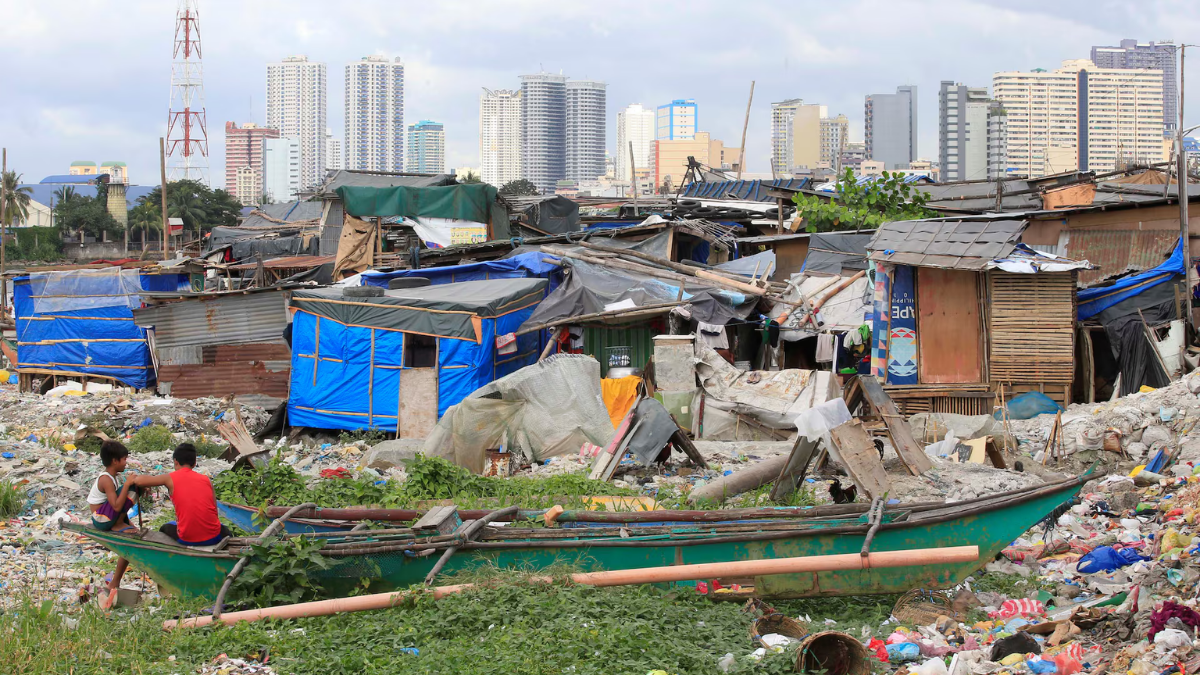

A widening gap between families able to put food on the table and those still slipping into poverty defined the second quarter of 2026, according to OCTA Research’s latest Tugon ng Masa survey.

Self-rated poverty climbed to 39 percent in July, up from 35 percent in March. That translates to roughly 10.3 million families who considered themselves poor, compared with about 9.2 million earlier in the year.
Hunger followed a similar upward path. The share of families reporting involuntary hunger reached 21 percent, a jump from 17 percent in March. In raw numbers, that means about 5.6 million families went hungry, some 1.1 million more than the previous quarter.
Yet the picture was not uniformly bleak. Self-rated food poverty actually eased, dropping three percentage points to 28 percent from 31 percent. The result points to a split experience among households: fewer families felt unable to afford enough food, even as more reported stretches of going without it and a broader sense of being poor.
Of the families that went hungry, 87 percent said it happened only once or a few times, suggesting most episodes were sporadic rather than a constant condition. Still, for those who continued to see themselves as food-poor, the strain deepened. The median monthly gap between what these households had and what they needed for food widened to P5,000 from P4,000.
Geography shaped much of the disparity. Balance Luzon saw self-rated poverty surge by seven percentage points, the steepest climb nationwide, and also registered the highest incidence of hunger. Mindanao carried the heaviest poverty and food poverty burden overall, with increases of three points in poverty ratings, while the Visayas rose two points. The National Capital Region moved the other way, with self-rated poverty falling three points.

Regional figures underscored the divide. Northern Mindanao topped self-rated poverty at 63 percent, trailed by Central Visayas at 62 percent, the Bangsamoro Autonomous Region in Muslim Mindanao at 61 percent, the Davao Region at 59 percent, and both the Zamboanga Peninsula and Soccsksargen at 56 percent. At the opposite end, the Cordillera Administrative Region posted the lowest rating at 12 percent, with NCR next at 18 percent.
For hunger, the Bicol Region stood far above the rest at 56 percent. Northern Mindanao came next at 37 percent, followed by Calabarzon at 34 percent, Caraga at 29 percent, and Eastern Visayas at 28 percent.
Class differences were just as sharp. Among the poorest Class E households, 62 percent rated themselves poor, against 37 percent of Class D and 20 percent of Class ABC families. Hunger reached 35 percent of Class E families, compared with 20 percent among Class D and 8 percent among Class ABC. Food poverty stood at 38 percent for Class E, 28 percent for Class D, and 14 percent for Class ABC.
OCTA attributed the overall rise in self-rated poverty mainly to deteriorating conditions outside the capital, singling out Balance Luzon as the primary driver.
The survey landed amid persistent economic anxiety among Filipino households. An earlier OCTA poll released in July identified keeping the prices of basic goods and services in check as the nation’s foremost concern, with raising workers’ wages placing second.
Conducted face-to-face from July 4 to 11, the Tugon ng Masa survey drew on 1,200 adults aged 18 and older chosen through probability sampling. National estimates carry a margin of error of plus or minus three percentage points at a 95 percent confidence level, rising to plus or minus six points for major geographic areas, with regional figures subject to wider margins that warrant careful reading.
