



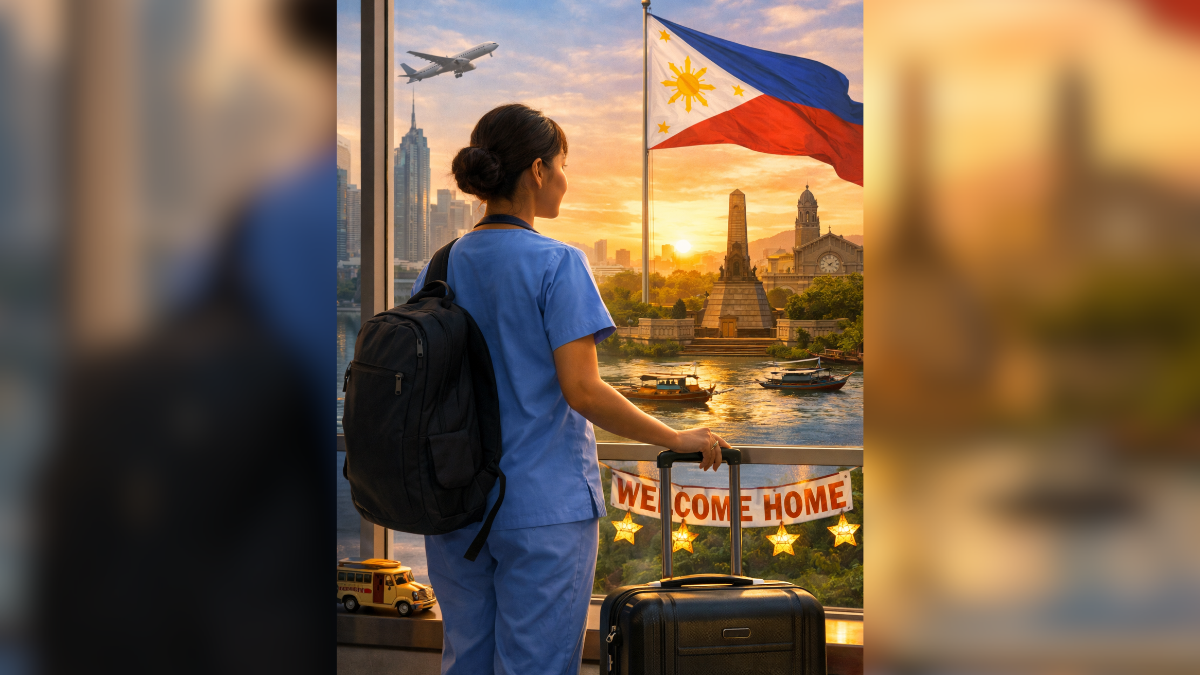

For decades, the image of the Filipino nurse has been inseparable from migration.

From Riyadh to London, Dublin to New York, Filipino nurses have become fixtures of global healthcare systems-trusted, respected, and often indispensable. Their departure has long symbolized both the excellence of Philippine nursing education and the painful reality of a country unable to retain its own healthcare talent.
But amid the continuing outflow of nurses seeking greener pastures abroad, a quieter narrative is emerging-one that deserves far greater national attention:
Many Filipino nurses are coming home.
Not for vacation.
Not for temporary leave.
But to return permanently or for the long term.
And if the Philippines pays attention, this wave of return migration may become one of the most important opportunities for national healthcare transformation in the coming decade.
The Return Journey Is Not a Retreat-It Is a Reinvestment
Too often, returning overseas Filipino nurses are viewed through a simplistic lens: as professionals who “came back” after their time abroad.
But return migration is not merely the end of a foreign employment contract.
It is the return of globally trained professionals carrying years, sometimes decades, of advanced clinical expertise, leadership experience, intercultural competence, and exposure to world-class healthcare systems.
“When Filipino nurses return, they do not come home empty-handed—they return with global knowledge, leadership maturity, and the power to transform healthcare.”
These are not simply balikbayans.
They are potential educators, policy influencers, innovators, administrators, entrepreneurs, and healthcare reformers.
The question is not whether Filipino nurses are returning.
The question is whether the Philippines is ready to harness what they bring.
Why Nurses Choose to Return
Contrary to public perception, migration is not always the permanent dream many imagine it to be.
Yes, overseas employment provides financial security, better compensation, and career advancement. But behind every successful migrant nurse story lies a quieter truth: migration comes at a cost.
Years away from spouses.
Children growing up through phone screens.
Parents aging in absence.
Milestones missed.
Roots stretched thin.
For many nurses, there comes a point when the question shifts from “How much more can I earn abroad?” to “What am I still sacrificing to stay away?”
Others return because of burnout, discrimination, migration fatigue, or the realization that financial gain alone cannot compensate for emotional and cultural displacement.
Still others come home because they believe their global experience can now be used to serve the country that trained them.
That decision deserves not skepticism, but recognition.
The Philippines Has Focused Too Much on Export, Too Little on Return
For years, national discourse on Filipino nurse migration has centered almost exclusively on deployment, recruitment, and retention.
We debate how many nurses leave.
We calculate remittances.
We negotiate bilateral labor agreements.
Yet rarely do we ask:
What happens when they come back?
There remains no comprehensive national reintegration strategy specifically designed for returning healthcare professionals.
No robust pathways to absorb globally experienced nurses into leadership roles.
No structured incentives for returnees to enter academe.
No coordinated national framework for leveraging their expertise in policy, hospital administration, research, or healthcare innovation.
In many cases, returning nurses encounter a painful irony:
They are celebrated abroad—but underutilized at home.
“The Philippines has mastered exporting nurses. It has not yet mastered welcoming them back strategically.”
From Brain Drain to Brain Gain
Return migration presents an opportunity to reverse one of the country’s most persistent healthcare challenges: brain drain.
If properly integrated, returning nurses can generate what experts call brain gain-the transfer of global knowledge, skills, and innovation back into domestic systems.

Imagine the possibilities:
- Former ICU nurses from top U.S. hospitals improving critical care protocols in provincial facilities
- UK-trained nurse educators modernizing simulation-based nursing education
- Middle East nurse leaders strengthening hospital management systems
- Europe-based nurses introducing evidence-based staffing and patient safety models
- Internationally experienced clinicians mentoring newly licensed Filipino nurses
This is not hypothetical.
It is already happening-informally, quietly, and without systemic support.
The tragedy is not that Filipino nurses leave.
The tragedy is when they return and their expertise is wasted.
Why Some Returnees Leave Again
Unfortunately, many returning nurses do not stay.
After encountering low salaries, bureaucratic inefficiencies, outdated systems, limited autonomy, and poor recognition of their overseas experience, some nurses choose to migrate again.
This revolving-door phenomenon reflects a critical policy failure.
Without meaningful reintegration and professional opportunities, return migration risks becoming temporary rather than transformative.
Welcoming nurses home is not enough.
The system must give them a reason to stay.
What Must Be Done
If the Philippines wishes to convert return migration into healthcare advancement, several reforms are urgently needed:
1. Create National Reintegration Programs for Returning Nurses
Dedicated reintegration initiatives should support employment matching, credential recognition, and career transition pathways.
2. Prioritize Returnees for Leadership and Academic Roles
Hospitals, nursing schools, and regulatory bodies should actively recruit returning nurses into positions where their global expertise can influence systems.
3. Develop Incentives for Healthcare Entrepreneurship
Returning nurses should be supported in establishing healthcare businesses, consultancies, home care agencies, and educational enterprises.
4. Include Returnee Voices in Policy Discussions
No workforce policy on migration should be made without listening to nurses who have lived the migrant experience.
Redefining What It Means to “Make It”
For too long, Filipino society has equated migration with success—and staying abroad with having “made it.”
But perhaps success should not be measured solely by how far one goes.
Perhaps it should also be measured by what one brings back.
The Filipino nurse who returns home after years abroad is not stepping backward.
They are bringing the world back with them.
And in an era where the Philippine healthcare system faces persistent shortages, educational reform needs, and growing demands for modernization, those returning nurses may represent one of the nation’s most valuable-and least utilized-resources.
Final Thoughts
Filipino nurse return migration is more than a workforce trend.
It is a national opportunity.
An opportunity to transform brain drain into brain circulation.
To convert migration experience into institutional reform.
To transform returning professionals into nation-builders.
Because sometimes, the most powerful journeys are not the ones that take people away
But the ones that bring them back home with the power to change everything.
