



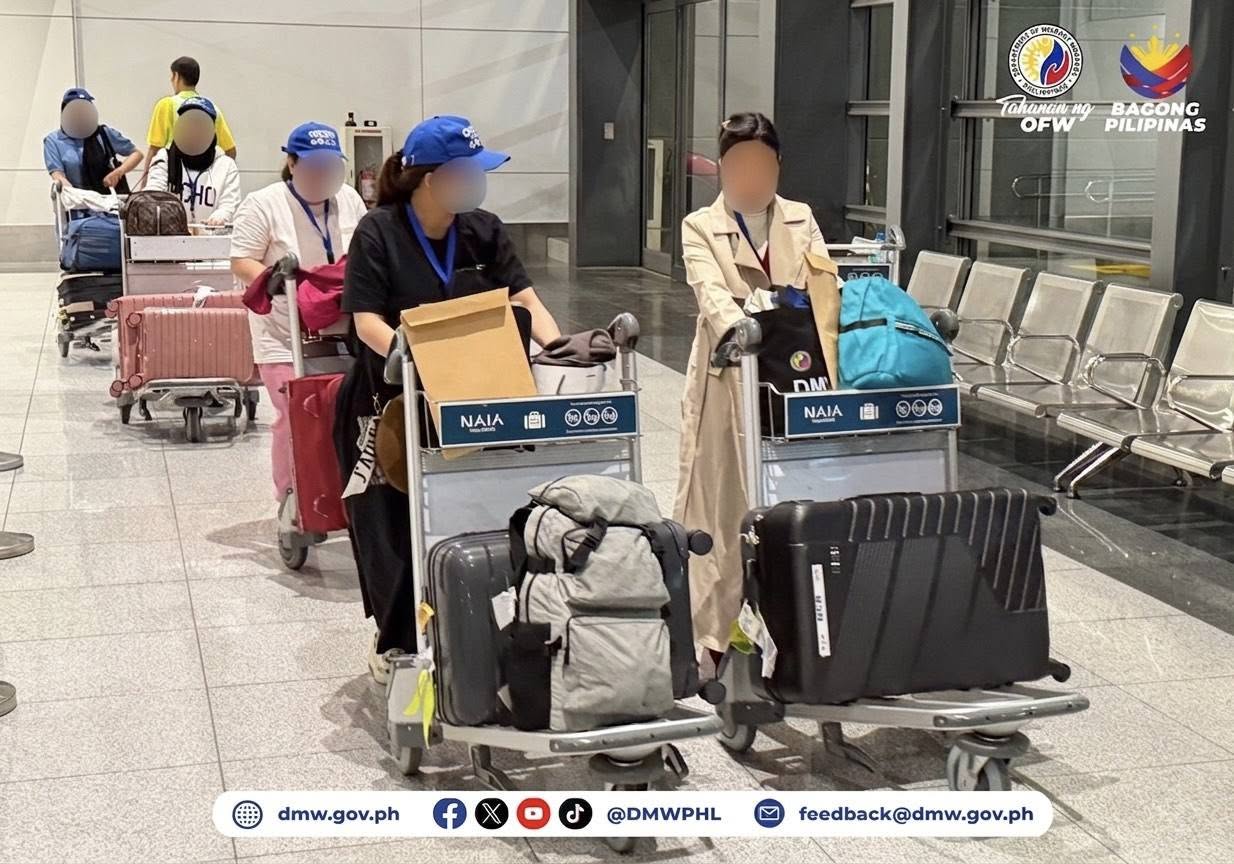

Demand from Filipino workers seeking to leave the Middle East has eased in recent weeks, the Department of Migrant Workers (DMW) reported, marking a shift several months into the regional conflict.

Migrant Workers Secretary Hans Leo Cacdac said the slowdown is most evident in several Gulf states. “The repatriation efforts continue. But, in most parts, in UAE, Qatar, Bahrain, the requests for repatriation are subsiding,” he told reporters at a briefing on Sunday, June 7, 2026.
Kuwait stands apart from that trend. Cacdac identified it as the only origin point in the region still generating active repatriation requests, a situation he linked directly to the recent assault on the country’s main airport. A group of 162 OFWs is set to depart next, traveling overland into Saudi Arabia before boarding flights home from there. “Because there are Kuwait attacks, there is still a request for repatriation. The next batch is the 162 OFWs from Kuwait crossing to Saudi Arabia. They will fly out of Saudi Arabia,” he said.

Three Filipinos were hurt in last week’s drone strike on Kuwait International Airport, all of them employed at the facility, according to Cacdac. He said their injuries were minor and that all have recovered. One worker required hospital treatment for smoke inhalation and was later released. The remaining two were treated as outpatients, with one needing stitches for wounds to the arms and scalp and the other affected by smoke.
“There were no Filipino fatalities during the attack. There was a sole fatality but not of Filipino nationality. However, three OFWs were injured. But the good news is they are now out of harm’s way,” Cacdac said. The single death recorded in the strike, attributed to an Iranian drone, was among more than 60 casualties reported at the airport.
To date, the agency counts 10,178 Filipinos brought back from the Middle East, a figure that includes 8,034 workers alongside 1,782 dependents.
