



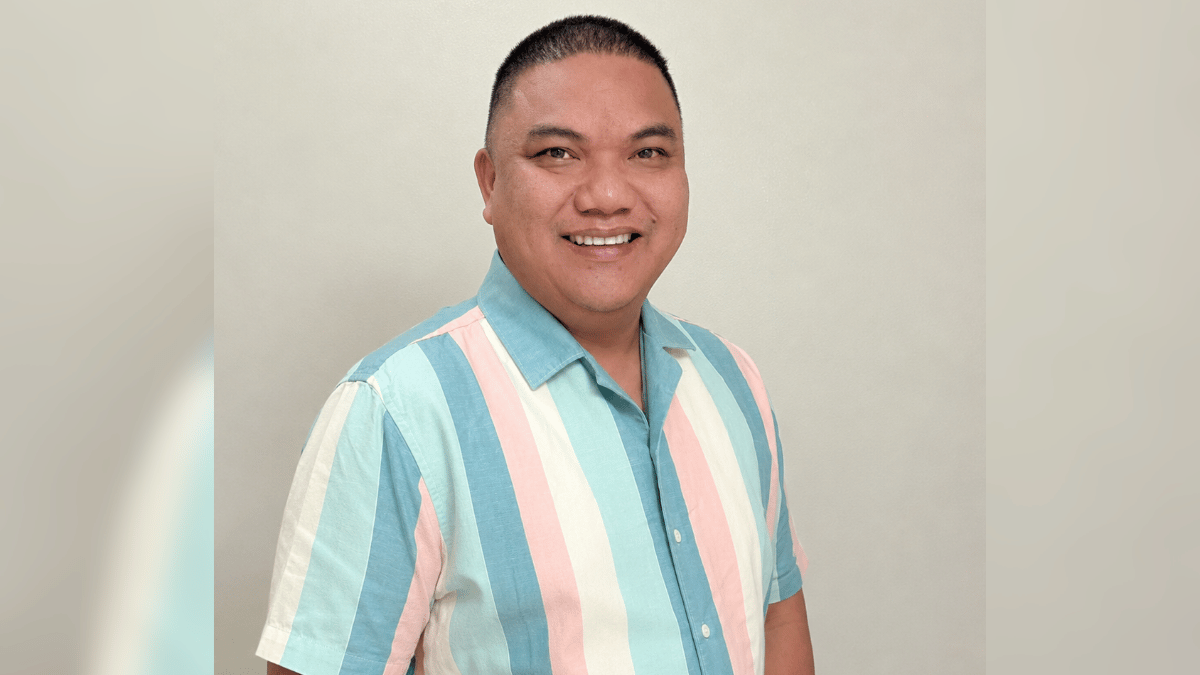

Ask a room full of students what subject scares them most, and math will win almost every time. In a middle school in rural North Carolina, that fear had a specific cause: many of the children had gone years without a consistent math teacher at all, a casualty of chronic staffing shortages. Into that gap walked Warren Visaya Gragasin, a 38-year-old Filipino educator who had crossed an ocean to teach the subject most of them had already decided to hate.

He didn’t see a problem. He saw the reason he’d come.
“Mathematics is often viewed as a difficult subject, but that is what makes Mathematics more satisfying to teach,” he says. “I enjoy helping students overcome fear and develop confidence through engaging, meaningful, and interactive lessons.”
That confidence — his and theirs — did not come easily. It was assembled, piece by piece, from a life that rarely moved in a straight line.
The boy who enrolled in ten universities
Long before he was an award-winning teacher, Warren was a teenager unsure of nearly everything. His parents separated before he finished high school, and the emotional fallout left him adrift about what came next.
What followed reads less like a résumé than a search party. He enrolled in ten different colleges and universities, cycling through Architecture, Nursing, Hotel and Restaurant Management, Philosophy, and Information and Communications Technology, among others, before education finally caught and held him.
He refuses to file those years under failure. “Looking back, I do not consider those years failures,” the former wanderer says. “They taught me empathy and resilience.”

It’s a lesson that would return later, in a classroom full of kids who had also been counted out.
His teaching career began in a private school in June 2011, then moved to the Department of Education in September 2012. For more than a decade, he taught math in the Philippine public system — but he rarely stayed inside the math lane. In small, remote schools, he explains, a teacher has to be everything at once, and he leaned into it hard enough to earn the nickname “Jack of All Trades.”
The list is almost comically broad. Alongside math, he coached cultural dancers, athletes, journalism teams, speech contestants, scouts, and academic competitors across subjects. Two efforts sit closest to him. He led school-and-community arts volunteer work that delivered wins for his town in Giant Parol Making and Belen Making, coverage that reached radio, television, and national newspapers. And as a sports coach, he mentored student-athletes who competed at the provincial, regional, and national levels.
He also founded ALGNG_I.N.A. — read as “Alagang Ina” — a youth volunteer organization that helps underprivileged but deserving students earn money for their education through arts and cultural projects and government-supported summer work. It is, in miniature, everything he now says he wants to do at scale.
Why a settled teacher started over
By any local measure, he had made it. He was named an Outstanding Teacher at San Jose National High School, at Gerona Western National High School, and across the entire municipality of Gerona, Tarlac. Going abroad had never crossed his mind.
Then the pandemic arrived and rearranged his sense of what security meant.

“I received three recognitions as a teacher in the Philippines, but I realized that recognitions are just bonuses and these will mean nothing when my family and I were strucked by CoVid virus,” he recalls. The awards suddenly looked like what they were — nice, but no help in an emergency.
His reasoning from there is disarmingly plain. “I want to have more, and I want to be more,” the Filipino educator says. He wanted to provide for his family through emergencies, especially medical ones, and the confidence those earlier awards had given him made the leap feel possible rather than reckless.
In September 2025, he arrived in the United States and reported to Hertford County Middle School in Hertford County, North Carolina — his first teaching post outside the Philippines. His job description is dense: standards-based instruction, differentiated lesson design, integrating technology and artificial intelligence into learning, mentoring students, collaborating with colleagues, and building a room where every learner feels capable. His self-description is more memorable. He once called himself, he says, “a ‘rusted nail’ on a sailboat” — worn from past use, yet still holding something larger together.
The winter he almost went home
Arrival was not arrival at the end of struggle. It was the start of a new one.
The first months in North Carolina brought a stack of difficulties at once: depression, an unfamiliar educational system, a different culture, and the distance from everyone he loved. It got heavy enough that he set a deadline to quit. There were moments, he admits, when he had “already have decided to go back home at the end of February” — a return ticket in his mind, if not yet in his hand.
He stayed. The reasons were people. Supportive administrators, colleagues, friends, and the local Filipino community talked him through each low point until the low points thinned out. The experience, he says, deepened a specific commitment — to reach the students “who are the least, the least, and the lost, because I once walked that path myself.”
The math itself started to move. Within his first school year, the recognitions came fast: Staff of the Month in March, Outstanding International Teacher of Hertford County Middle School for 2025-2026, and a place among the district’s “Of the Year” awardees in the International Teacher category. He treats them the way he treats everything now — as confirmation of a principle, not a trophy. “These recognitions remind me that passion, perseverance, and genuine care for students transcend borders,” he says.
What he actually savors is smaller and harder to frame. “Every smile after understanding a challenging concept reminds me why I became a teacher,” the middle school math teacher says.
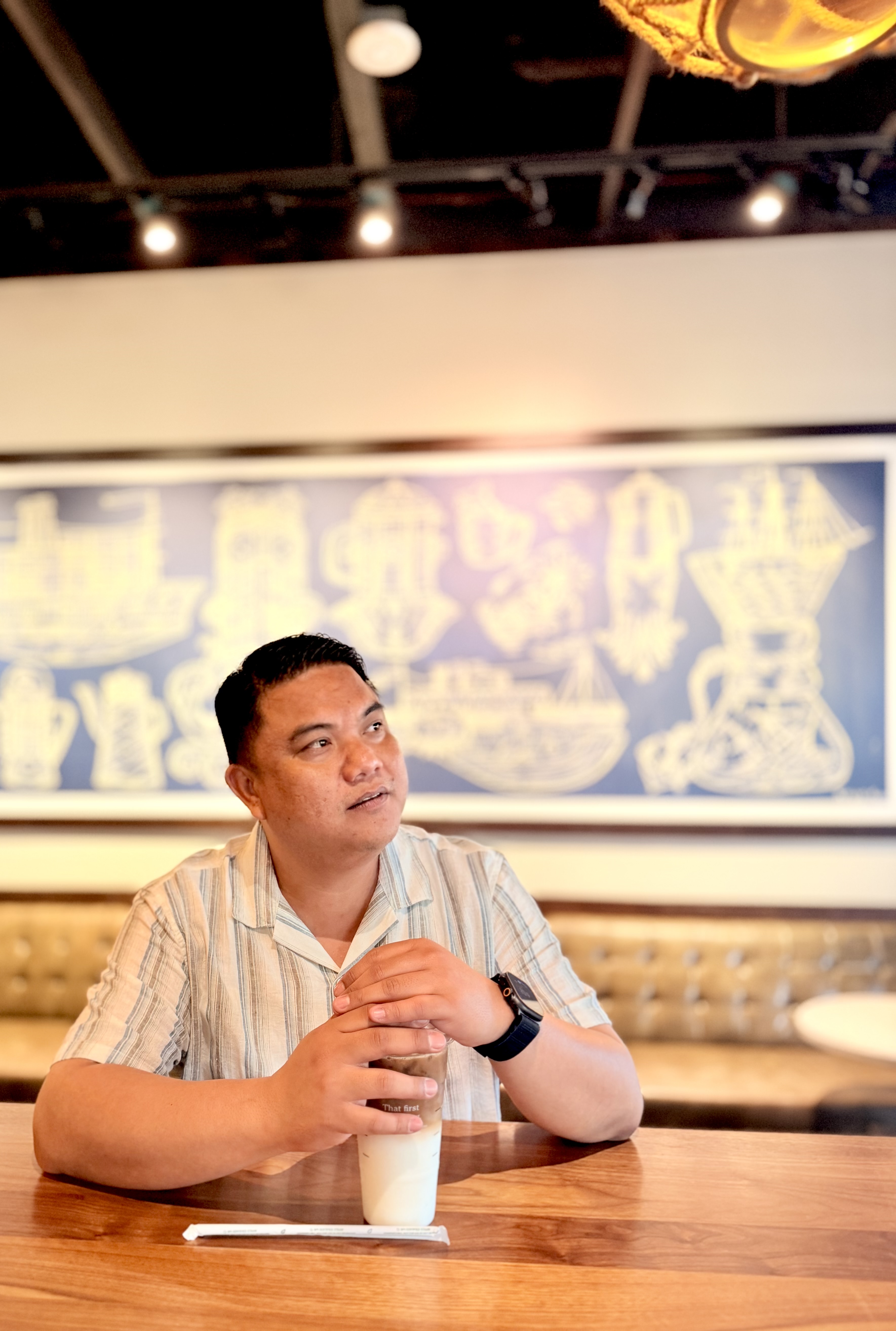
What the water taught him
He keeps returning to a single image. “Water sinks a ship, but water also floats a ship,” he offers — the same force capable of destroying a vessel or carrying it home, depending entirely on how it’s met.
His plans read like a man who intends to keep floating. He wants to finish a Doctor of Philosophy in Educational Leadership and Management, develop new educational programs, and — whether he stays in the US or eventually returns to the Philippines — become a leader who mentors teachers and fights for equitable education. He wants to grow ALGNG_I.N.A. into something far larger than one town could hold.
For kababayan struggling abroad, his advice is worn smooth from personal use. “Never forget why you left home,” he says, before adding the harder truth beneath the cliché — that the work rewards you and costs you at the same time, in patience, humility, and long stretches of loneliness. Stay financially responsible, keep learning, respect the host culture, and hold onto Filipino values, he urges, because compassion and hard work translate anywhere.
He ends where he began, with the young man who couldn’t pick a college now standing at the front of a room full of kids who remind him of exactly that boy. His mission, stripped to its core: “To educate minds, inspire hearts, empower dreams, and ensure that no student feels forgotten, especially those who are lost, the least, and the last.”
The rusted nail, it turns out, was never the problem. It was the point.
