



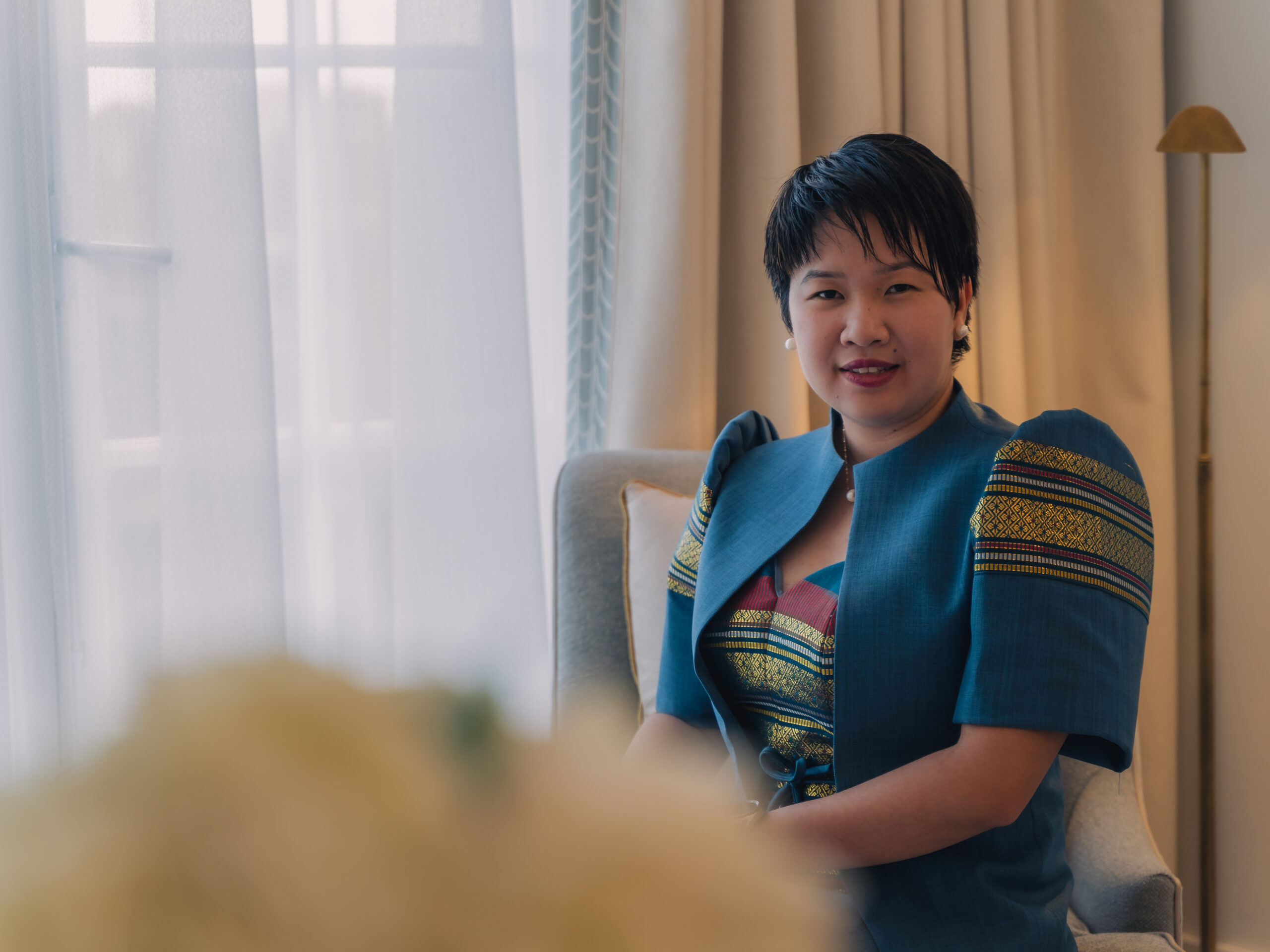

Every year, thousands of Filipino nurses leave home for the promise of a hospital ward somewhere far away, and the story tends to get told the same way: hard work, sacrifice, a paycheck sent back to family. What the story rarely captures is the strange second life some of them build — the one where the ward gives way to a screen, and the patient at the bedside becomes a line of data that has to mean something. Robylin Tweetie Diya, who goes by “Tweetie,” has lived both lives, and she has spent the last few years trying to make sure the first one doesn’t disappear inside the second.

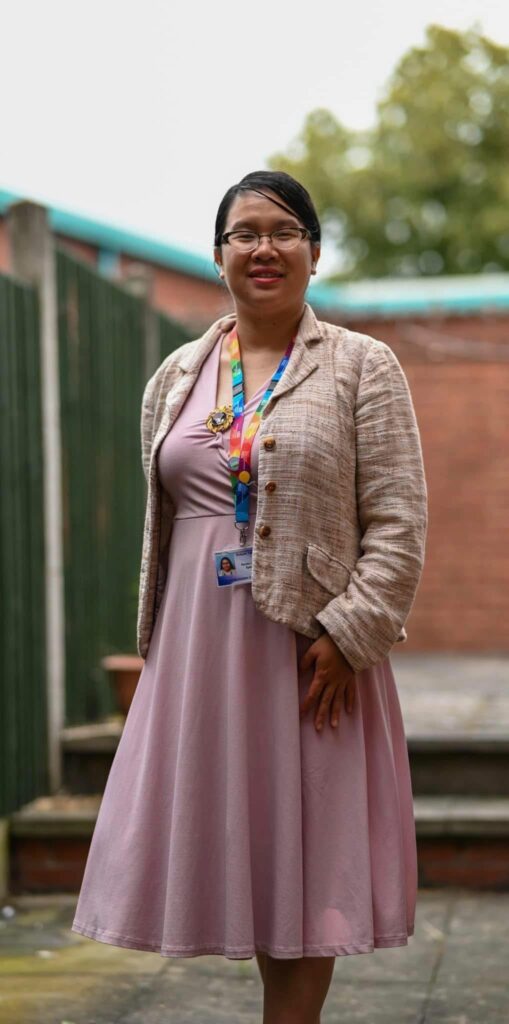
At 37, she is a Senior Systems Specialist in Pathology IT for an NHS Trust in the United Kingdom, fourteen years into a career abroad that began, improbably, with almost a year of work for no pay at all.
From an unpaid ward to Saudi Arabia
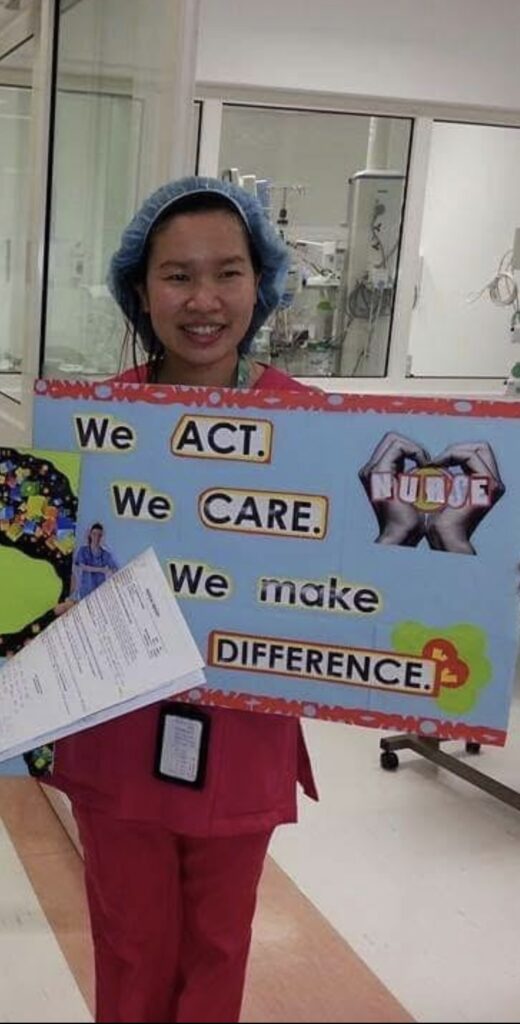
When Tweetie qualified as a nurse in the Philippines, there were more new nurses than there were jobs to hold them. So she did what many of her generation did: she volunteered. For nearly a year she worked as a nurse without a salary, simply to keep her hands in the profession she had studied so hard to enter.
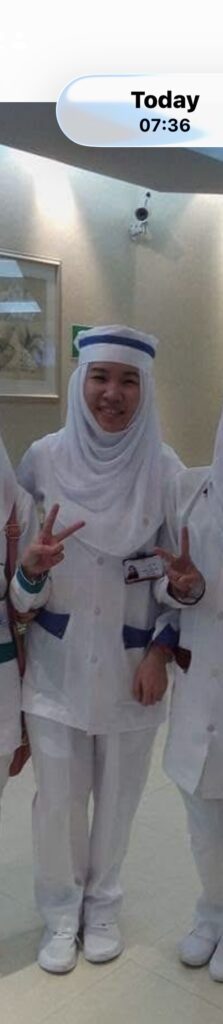
“Like many Filipino nurses of her generation,” she puts it, the decision to leave was less a dream than an arithmetic — limited opportunities at home against the possibility of professional growth and financial stability somewhere else. Saudi Arabia became her first chapter as an OFW. The United Kingdom came later.
She is careful, though, not to reduce those years to a transaction. Living inside different cultures and healthcare systems, she says, taught her something she hadn’t expected — that Filipinos abroad “can contribute not only through their hard work, but also through their ideas, leadership and professional knowledge.” It is a distinction she keeps returning to, because it maps almost exactly onto the turn her own career would take.
When the nurse became the patient
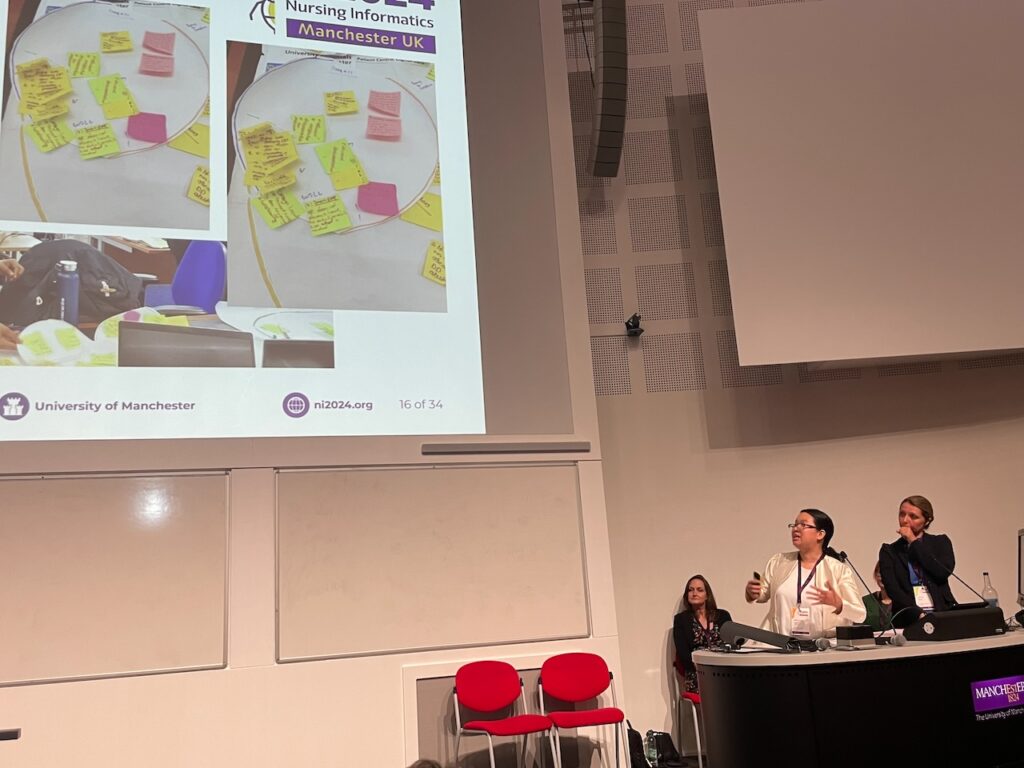
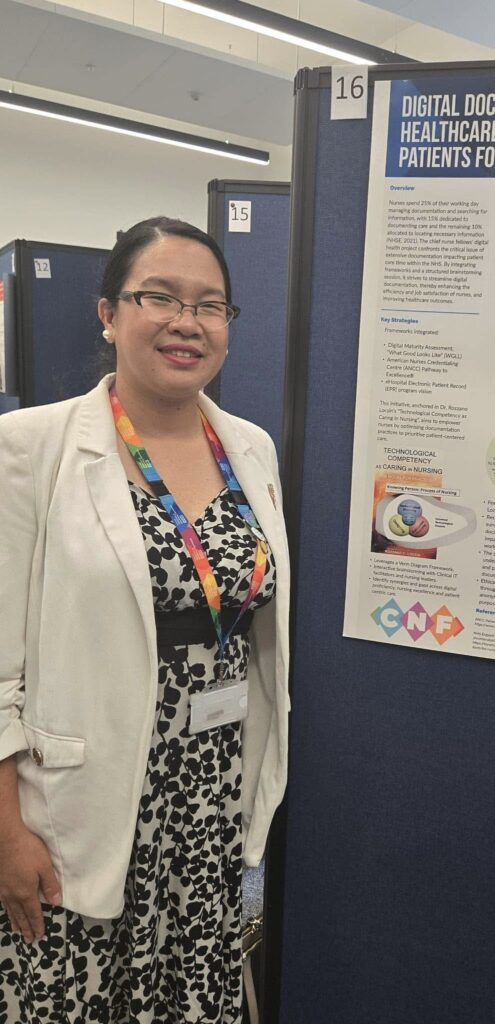
For a while, the arc looked like a steady climb. Bedside nursing in three countries. A growing curiosity about the systems humming behind patient care. A move into health informatics within the NHS, then a place as an NHS Chief Nurse Digital Fellow, exploring how digital transformation could actually serve nurses rather than bury them in admin. That fellowship work won First Prize at the launch of her Trust’s Institute for Excellence in Healthcare and was presented at the International Medical Informatics Association’s Nursing Informatics gathering in 2024.
Then the ground shifted, in the most personal way possible.
After the birth of her first child in the UK — what should have been the happiest stretch of her life — Tweetie became critically unwell following what she describes as a failed hospital discharge. She nearly died. For a nurse who had spent her career on the other side of the bed rail, the experience of being the patient, dependent and frightened, changed something that no fellowship or promotion could.
“It made patient safety deeply personal,” she says, and it hardened a conviction that now runs underneath everything she does: that good healthcare depends “not only on good people, but also on safe systems, continuity, communication and having the right information available when it matters.” She had spent years thinking about data as a professional problem. Now she had felt, in her own body, what happens when the right information isn’t where it needs to be.
She credits her husband and child as the center of her resilience through that period — and through the long stretch of evenings and weekends since, spent balancing NHS work, motherhood, postgraduate study, research and volunteering. Her faith, she adds, carried her through the moments when the road ahead was hard to see.

Keeping the nurse visible inside the machine
What emerged from all of this is a research question that sounds almost deceptively plain. As healthcare becomes more digital and more shaped by artificial intelligence, how do you make sure the knowledge and judgment of nurses don’t quietly vanish from the record?
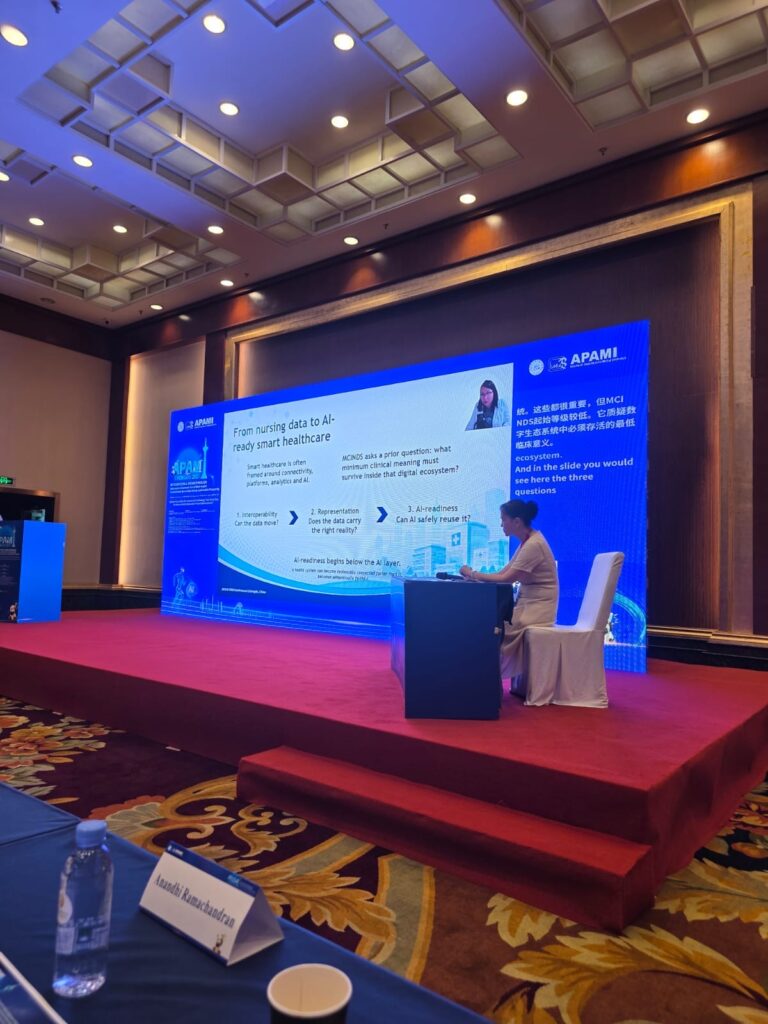
This is the heart of the MSc dissertation in Health Informatics she is now completing. Her work centers on what she calls the Minimum Core International Nursing Data Set, an emerging concept asking which essential pieces of nursing information and meaning must be protected as patient records move between systems and increasingly interact with AI. Put simply: when the machines start talking to each other, she wants to be certain the nurse’s voice is still in the conversation.
It is not an abstract worry for her. “Technology should never become the purpose of healthcare,” she says. “Technology should help professionals provide safer, more connected and more compassionate care.” She still sees herself, first and last, as a nurse — one who happens to work in clinical systems and data rather than at a bedside. The most satisfying part of the job, she insists, isn’t the technology at all. It’s knowing that improving a system or the way health information is represented might help some other clinician, somewhere down the line, make a safer call for a patient.
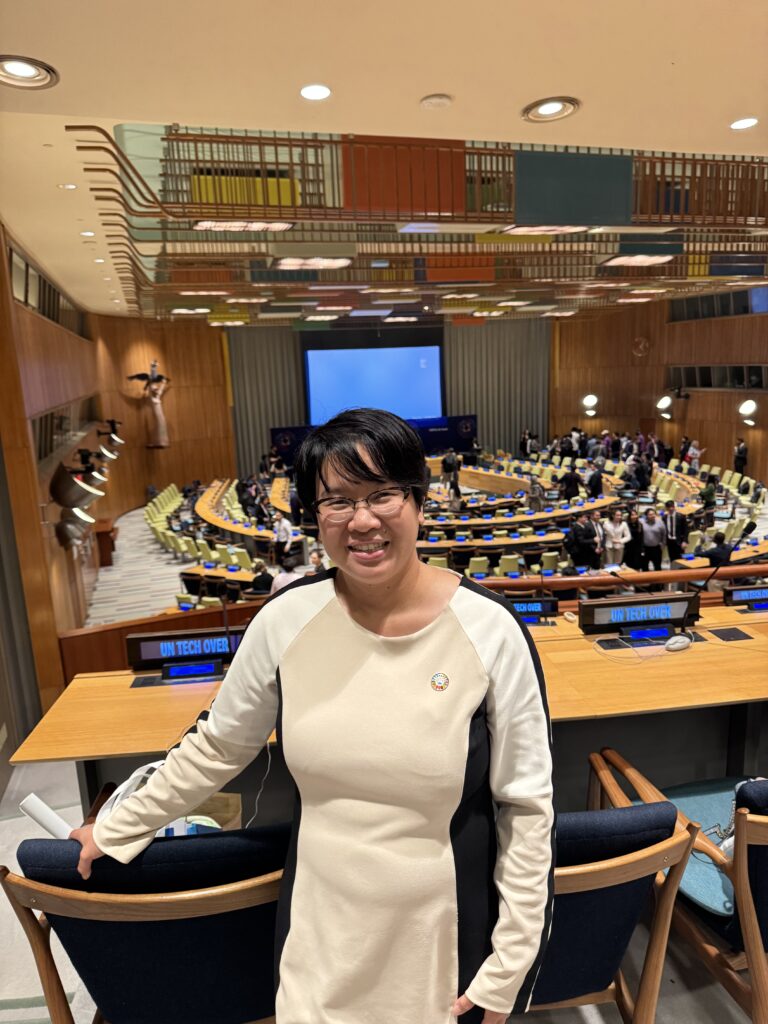
The research has traveled further than she once could have imagined. Her MSc work has been accepted for presentation at international conferences across Asia, Europe and Australia, within some of the major standards communities in health informatics — SNOMED CT International, HL7, and the International Medical Informatics Association. A separate piece, on teaching nurses to question, explain and safely use AI, has been accepted at the 10th International Nurse Education Conference (NETNEP 2026), taking place in Edinburgh, Scotland, this November. She has also contributed to United Nations Open Source Week at the UN Headquarters in New York, joining wider conversations about open technologies and digital development.
Holding the door open
For someone whose calendar now includes UN sessions and international standards bodies, Tweetie spends a striking amount of energy on people who haven’t gotten there yet. She co-chairs the Filipino Informatics Nursing Collaborative, building a community for Filipino nurses drawn to informatics and digital health, and volunteers as the UK Ambassador for the Global Nursing AI Alliance, pushing for safe and responsible AI in nursing. These roles matter to her precisely because the pathways she now walks were invisible when she started. She is, in effect, drawing the map she never had.
Her advice to fellow OFWs is shaped by that same awareness of what the glossy version leaves out. Don’t measure your life against someone else’s timeline, she warns — social media shows the promotions and the awards, not the rejections, the loneliness, the failed applications and the late nights behind them. Her own beginning, after all, was an unpaid volunteer post with no obvious route to anywhere.
“Keep learning. Protect your integrity. Choose trustworthy people around you. Be wise with money. Do not be ashamed to begin again,” she says. And then the line that reads like the quiet thesis of her whole journey: “Do not allow your current circumstances to convince you that they are permanent.”
She is quick to say her story isn’t really about the awards or the conference invitations. It’s about possibility — the distance between where a person starts and where they might end up. A young nurse once worked a year for nothing. She crossed three countries, survived a trauma that nearly took her life, became a wife and mother, and kept studying through all of it, until she found herself helping to shape international conversations about the future of care.
“Your beginning does not have to determine your destination,” she says. Longer-term, she hopes to pursue doctoral study and to keep bringing what she has learned back toward the Philippines — but the ambition underneath the credentials is simpler than any of them. Sometimes, as she tells it, progress isn’t a promotion or a title at all. Sometimes it’s just the courage to keep going for one more day.
