



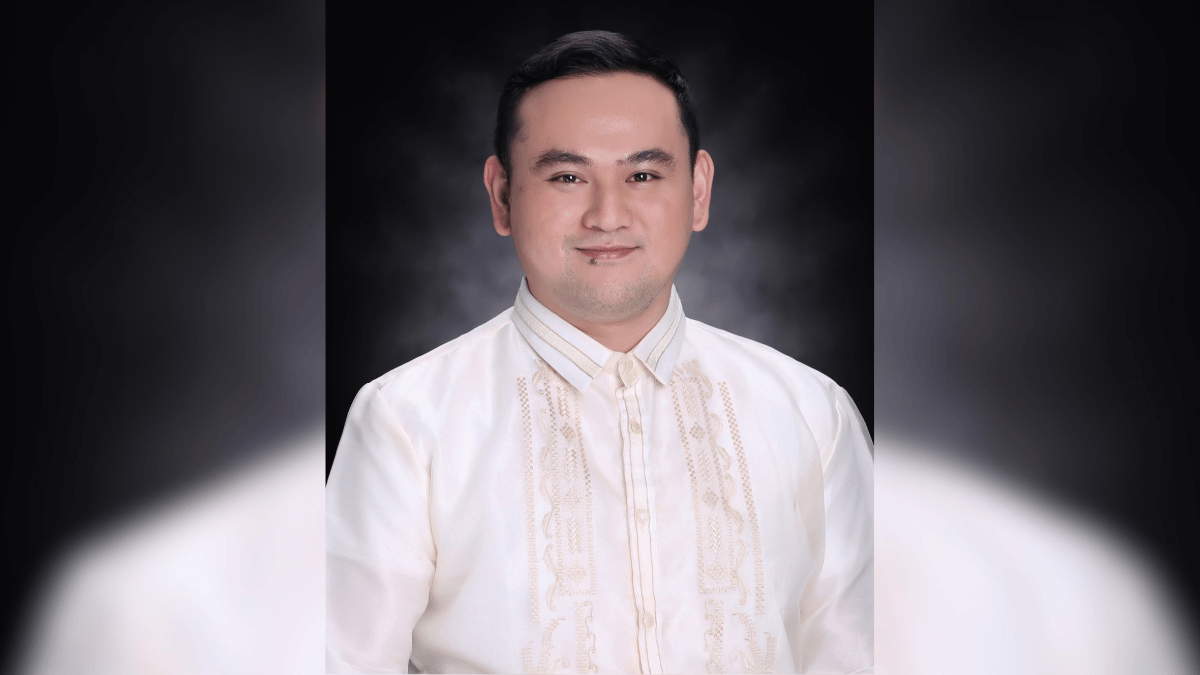

The advice came wrapped in worry, the kind only a mentor gives. A colleague caught him before he could go — still new to the profession, barely broken in at his first government teaching post — and pressed him on why he was in such a hurry to leave. Kabago-bago mo pa lang, aalis ka na kaagad? Mag-stay ka muna sa DepEd para gumaling ka! — “You’re still new, and you’re leaving already? Stay in DepEd for a while longer so you can gain more experience and become better.”

Jay Ar Cipriano heard her out. Then he boarded a plane for Arizona.
That was 2018. Today, at 31, he stands at the front of an Algebra 1 classroom at Piñon High School, deep in the Navajo Nation, in his seventh year of teaching on American soil. Most of his students are Native American. The teacher who worried he was leaving too soon would, a year after that conversation, tell him how proud she was. But that reversal is getting ahead of the story.

The reason he left
Ask most people why they moved halfway around the world, and the answer arrives dressed up in ambition. His is plainer than that, and heavier.
“My decision to work abroad was deeply rooted in my love and responsibility for my family,” he shares with TGFM. He is the breadwinner. When he left the Philippines, his mother was a housewife and his father had been driving a tricycle for more than two decades — honest work that still never quite stretched far enough. There was a sister in college who needed support. And there was the house itself, which told the truest version of the family’s situation. “Whenever it rained, water would come through the many holes in our roof,” he recalls, “but we did not have enough money to repair or improve the house.”
The dream he carried onto that plane was not complicated. He wanted his parents to stop lying awake over food and bills. He wanted, eventually, for his father to set down the tricycle for good. “I wanted to give back to my parents for all the sacrifices they had made for us,” he says.
His first job overseas was not the high school post he holds now. In Yuma, he worked as a K–5 Math Interventionist at Harvest Preparatory Academy, sitting with the youngest students who were already convinced numbers were not for them, coaxing them back one small group at a time. It was humble, foundational work, and it set the pattern for everything that followed — the belief that a struggling student is not a lost cause but a puzzle worth the patience.
Then, in 2020, the pandemic arrived and rearranged the meaning of the whole endeavor. Being the one family member abroad with steady work suddenly felt less like a sacrifice and more like a lifeline. “I was grateful that I was in a position to continue supporting my family during such a difficult time,” he says, “and I was also able to extend help to relatives who were struggling.” The distance that had always ached now came with a cruel condition: he could not go home even if he wanted to.

Learning to belong
The homesickness was the easy part to name. The harder adjustments were the ones nobody warns you about.
His first year teaching in the United States tested every assumption he had brought with him. There was a new educational system to decode, new classroom expectations, unfamiliar school policies, and a different rhythm to how teachers, parents, and administrators talked to one another. English was not the obstacle — he had taught in it for years — but the texture of it abroad was. “Even though I could communicate in English, there were times when I struggled with pronunciation, expressions, and cultural differences,” the former DepEd teacher admits. “It was a major adjustment both personally and professionally.”
There were nights when he questioned the whole decision. He wondered, in his own words, “if I had made the right decision to leave home.”
What kept him upright was not grit alone but people. The Filipino communities in Yuma and later in Piñon became a piece of home transplanted onto Arizona soil — familiar faces, familiar food, familiar humor. His faith carried its own weight. A proud member of Iglesia ni Cristo, he found in his church a second family that folded him in when his own was thousands of miles away. “My churchmates welcomed me, supported me, and helped me feel that I was not alone,” he says.
And there was Messenger, that unglamorous little app doing the quiet, essential labor of keeping a family intact across an ocean — the calls, the check-ins, the reminders that people back home still believed in him. “Knowing that they believe in me gives me the strength to keep moving forward,” he says. He came out of that first hard year with a lesson that has nothing to do with mathematics: “Overcoming challenges does not mean facing them alone. Sometimes it means allowing people to become part of your journey.”

His path did not run in a straight line, either. In 2020 he joined Piñon Unified School District and spent three years teaching middle school math, throwing himself into student life as a Student Council, STEAM, and Chess Club sponsor. Then, from 2023 to 2025, he went back to the Philippines to teach at Malayan High School of Science — a Mapúa school in Manila — reconnecting with the system that had made him before returning to Piñon in July 2025. The Navajo Nation, it turned out, was where he wanted to be.
More than the right answer
A math teacher is an easy figure to picture and an easy one to misunderstand. From the outside, it looks like a person delivering formulas to be memorized and tested. The Filipino educator wants none of that.
“I do not want my students to simply memorize formulas,” he says. “I want them to understand why those formulas work and how mathematics connects to their everyday lives.” So he brings in games, songs, hands-on activities — whatever it takes to make an abstract subject feel like it belongs to the student rather than to the textbook. He teaches to the room in front of him, adjusting for the range of abilities and needs on any given day.

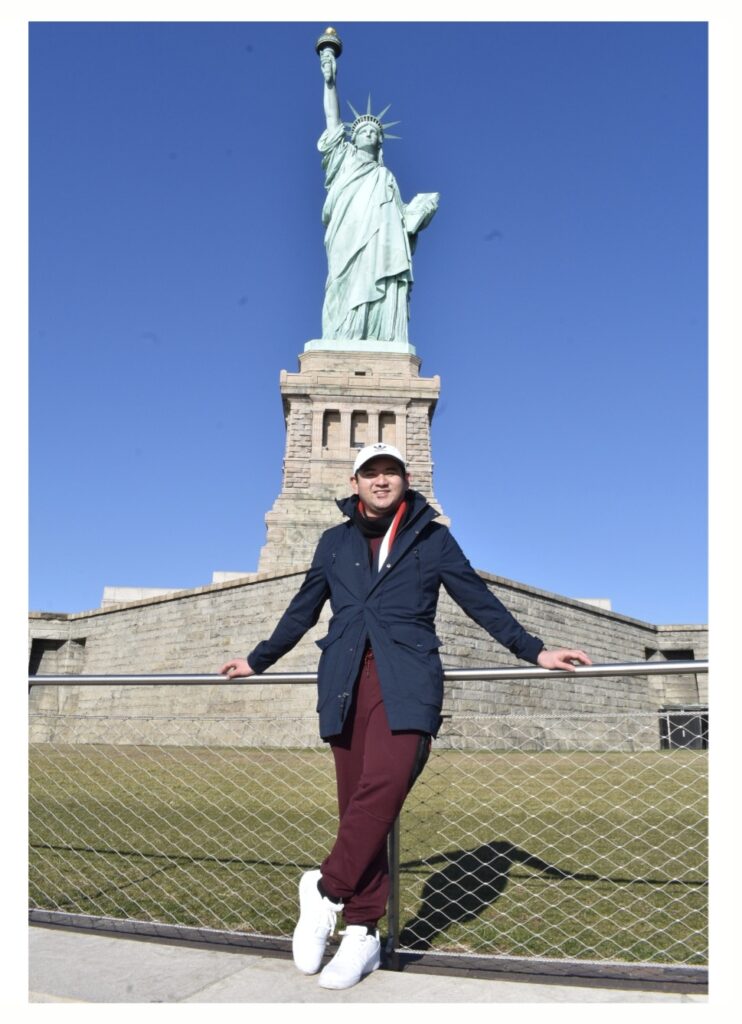
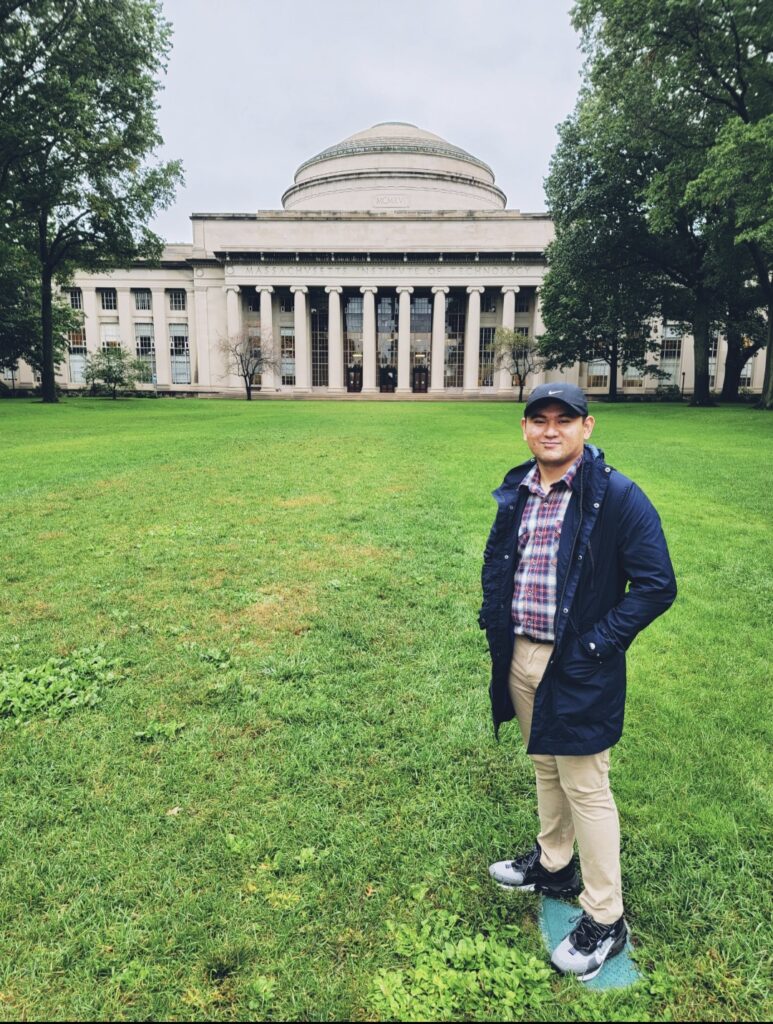
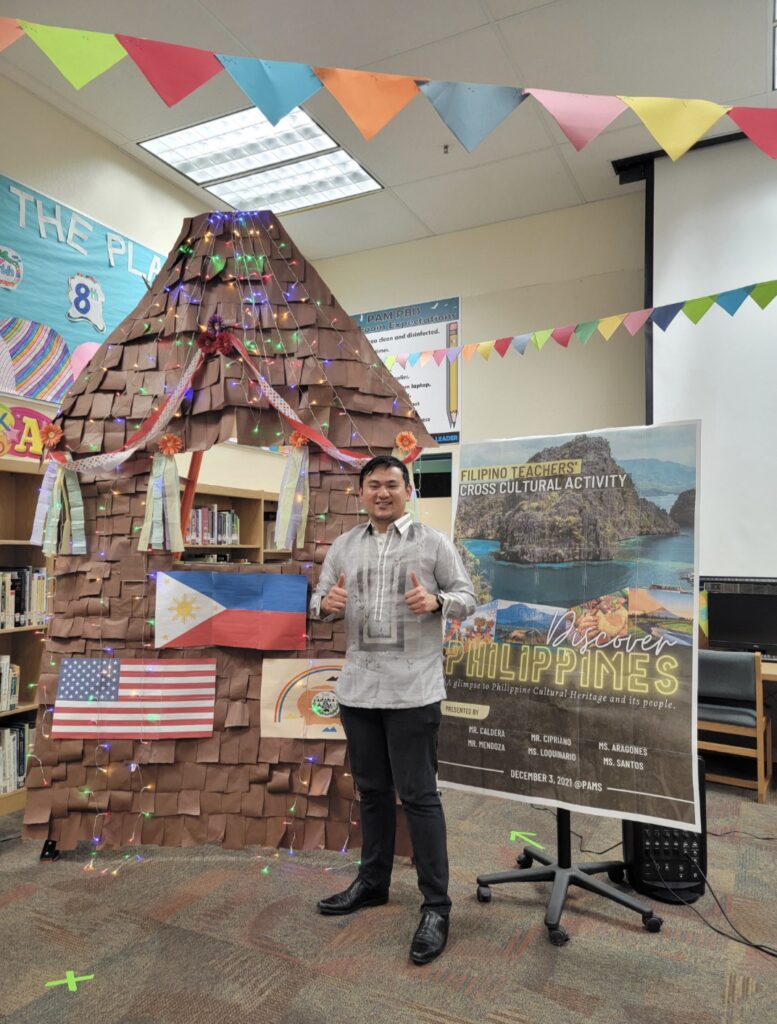
Teaching in the Navajo Nation sharpened that instinct into something closer to a calling. Beyond the algebra, he found himself learning — about Navajo culture, traditions, and community — and offering his own Filipino heritage in return. He came to see the classroom as a two-way exchange. “Education is about more than academics,” he says. “It is about building meaningful relationships, respecting culture, and empowering students to recognize their own potential.” The reward he chases is not the highest score. It is the shift in a student who once decided math was beyond them and slowly discovers it is understandable, useful, even fun.
The numbers, when they come, are real. Last year, 72 percent of his students showed growth on their district assessment — a figure he cites not with a boast but with the specificity of a teacher who knows exactly what it cost. One goal had been to move students out of the Red performance category toward Yellow, and most of them did. Not everyone reached proficiency, and he is honest about that. But the trend line told him the interventions were working.
Still, if you ask him for the single moment that keeps him in the profession, he does not reach for a statistic. “The greatest reward in teaching is not simply seeing students get the right answer,” he says. “It is seeing the moment when they realize, ‘I can do this.'” That flicker of self-belief in a teenager who arrived certain of the opposite — that is the thing he is actually teaching.
It runs in the blood. His grandmother was a teacher; so are many of his relatives. Education was the family trade long before it became his own, which may explain why he treats it less like a job and more like an inheritance to be honored.
Changing the story
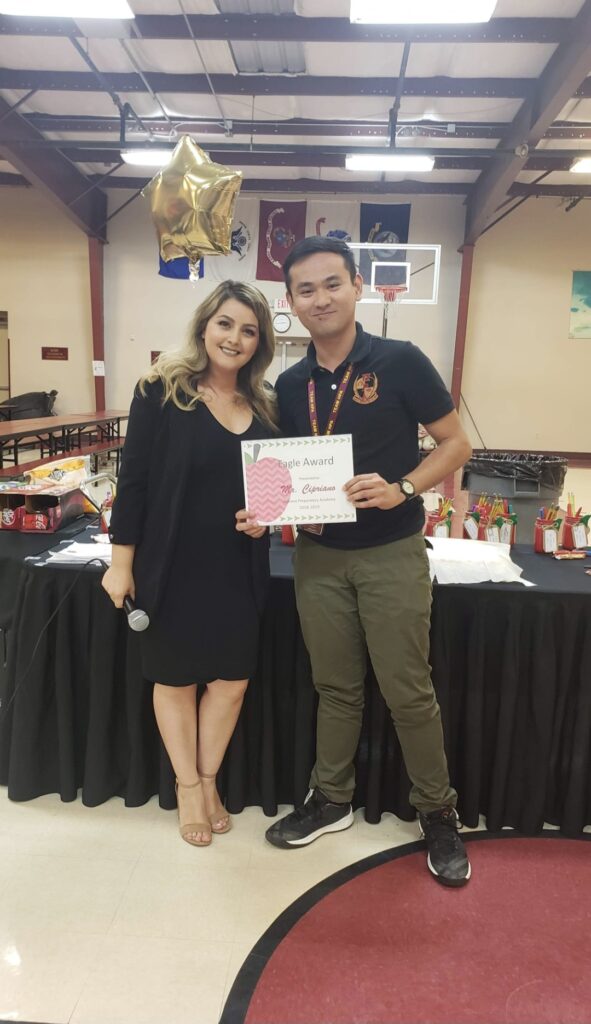
Here is where the arc bends back on itself. The colleague who had worried he was leaving too soon watched him finish his first year in the United States, saw the award his school gave him, and told him how proud she was. The doubt had done its quiet work — not by discouraging him, but by daring him. “Being new does not mean we are not ready,” he says of that stretch. “It simply means we are still growing, learning, and becoming the person we are meant to be.”
The dreams that pushed him onto that first flight have, one by one, come true — and this is the part he tells with the most feeling. The family now has a real home, the one he pictured through the holes in that old roof. His sister, whom he helped put through college, has graduated and is now a Registered Electrical Engineer. Together they took their first international trip as a family, to Singapore — the kind of memory that once sat far outside the realm of the possible for the household of a tricycle driver.
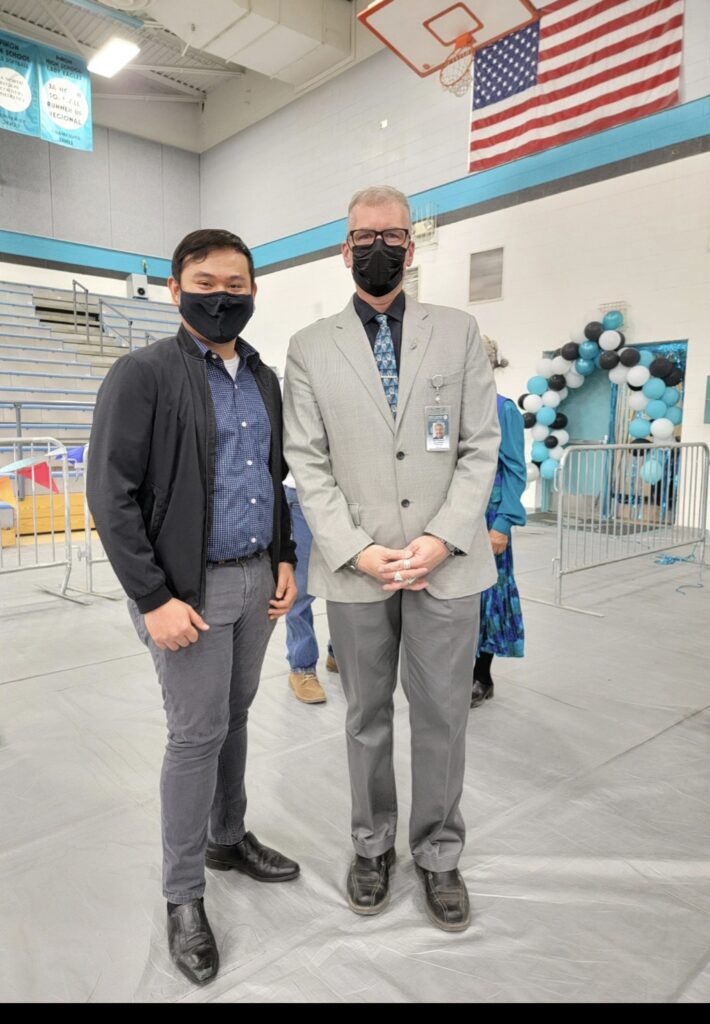
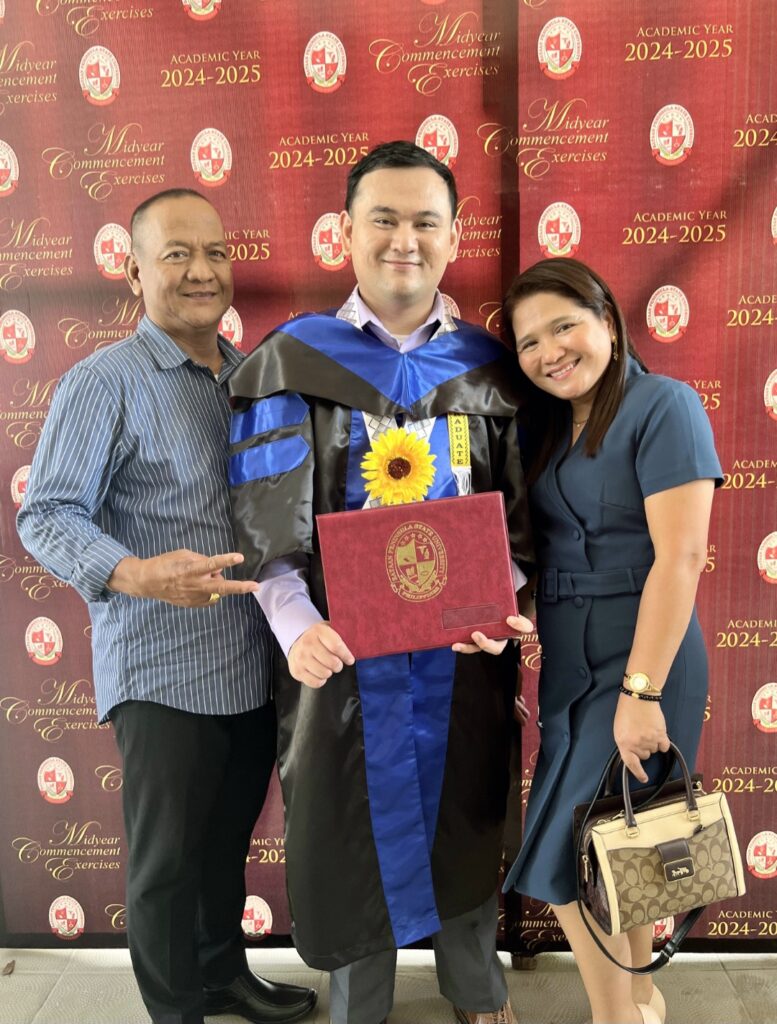
He is not finished. Piñon Unified School District is supporting him through the process of obtaining his employment-based green card, and he is quick to name the people behind that faith — his principal, Timothy Nelson, and the district that wanted him to stay. He already holds a Master of Arts in Education in Mathematics Teaching, and he is now pursuing a PhD in Educational Management at the University of Perpetual Help System DALTA, with an eye toward becoming the kind of educational leader who can push for stronger math instruction and better support for students who fall behind. He has not forgotten where his foundation was built, either, and he hopes to keep sharing what he has learned abroad with teachers back in the Philippines.
For the kababayan wrestling with the same loneliness he once felt, his counsel is direct: “Always remember the dreams and purpose that brought you abroad.” Manage your money wisely, keep learning, choose trustworthy people, and hold on to your family, your values, your faith, and your roots. And then the flourish, offered without irony from a man who has earned it: “Wherever life takes you, carry the Filipino spirit with pride.”
He returns, in the end, to the image he cannot shake — the son of a tricycle driver, standing at a whiteboard in one of the most remote corners of the American Southwest, making his own name. “My success will always be connected to my family,” he says. “They are the reason I started, the reason I persevered through the difficult times, and the reason I continue to strive for more.”
The teacher who once told him to wait was not wrong to worry. She just did not yet know what he was about to prove.
