



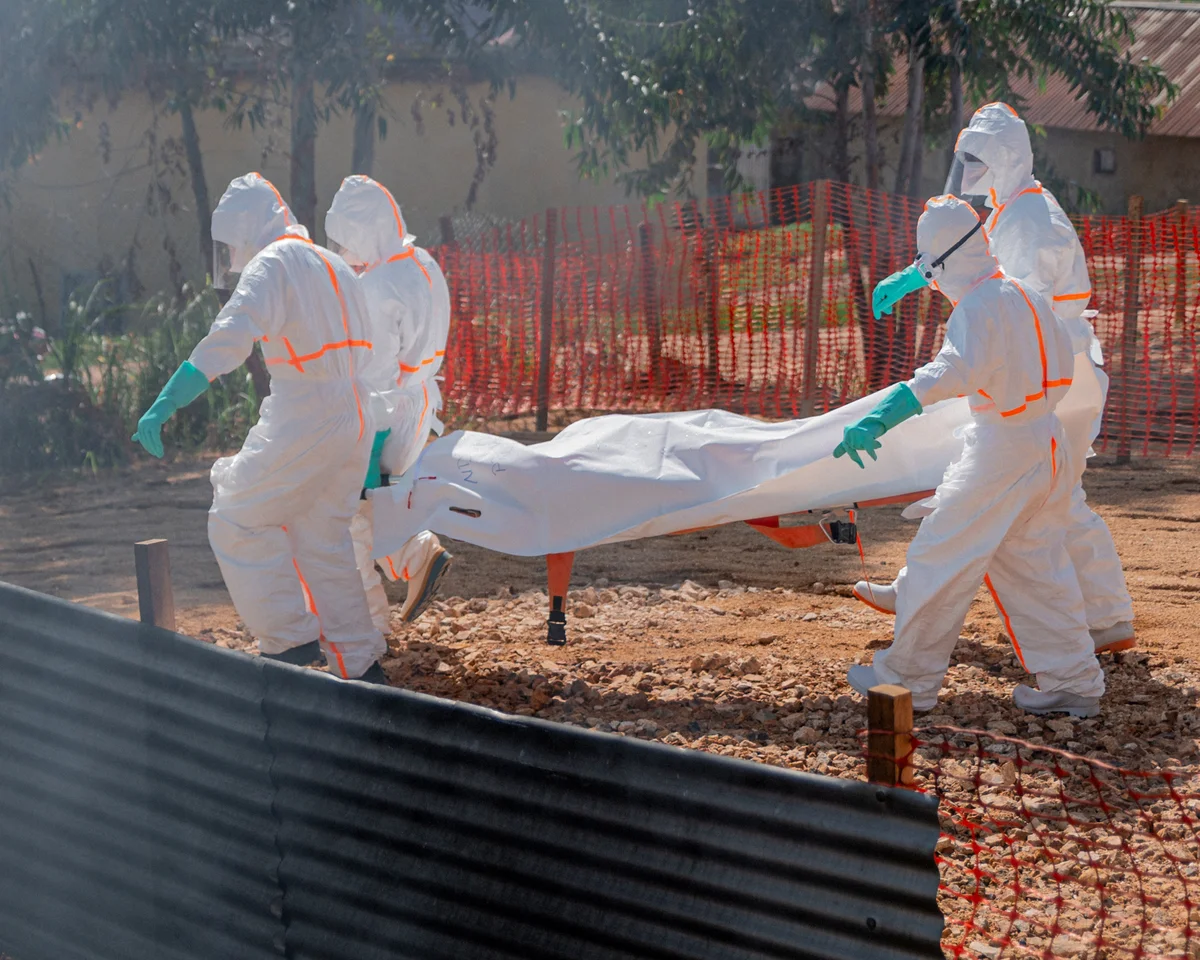

Health authorities in the Democratic Republic of the Congo are now tracking 837 laboratory-confirmed Ebola infections, with the outbreak’s confirmed death toll reaching 196, according to figures the country’s health ministry reported through the European Centre for Disease Prevention and Control as of 15 June.

The current wave is driven by the Bundibugyo strain of the virus, a form for which no licensed vaccine or dedicated treatment exists. Of those infected, 376 patients remained in isolation units undergoing care, the ministry’s data showed. The latest tally added 29 fresh confirmations and four additional deaths over a single reporting cycle.
Ituri remains the epicentre of the crisis. The northeastern province accounts for 767 of the confirmed cases, spread across 20 separate health zones. Transmission has also reached neighbouring territories, with North Kivu logging 67 confirmed infections across 10 health zones and South Kivu recording three cases in a single zone. No new health zones were flagged as affected in the most recent update.
The virus has not stayed within Congolese borders. Uganda has confirmed 19 of its own cases, two of them fatal, with infections there linked epidemiologically to the Congolese outbreak through both imported infections and onward spread among contacts and frontline medical workers.

The World Health Organization declared the outbreak a Public Health Emergency of International Concern on 17 May, days after the DRC’s Ministry of Public Health, Hygiene and Social Welfare publicly confirmed the flare-up in Ituri. It marks the 17th Ebola outbreak the country has faced since the virus was first identified there in 1976, and arrives barely five months after the previous outbreak was declared over.
The response is unfolding under difficult conditions. The affected zone sits within a wider humanitarian emergency, and a long-running ethnic conflict in Ituri, heavy cross-border movement, and mining-related travel have all complicated efforts to trace those who have been exposed. Health workers responding to the outbreak have also come under attack.
The Bundibugyo virus, which takes its name from a Ugandan district where it surfaced in 2007, carries an estimated fatality rate of between 25 and 50 percent. Researchers have weighed whether Ervebo, the vaccine cleared for the Zaire strain of Ebola, might offer partial protection, though questions remain over how well a product built for a different virus would perform.
