



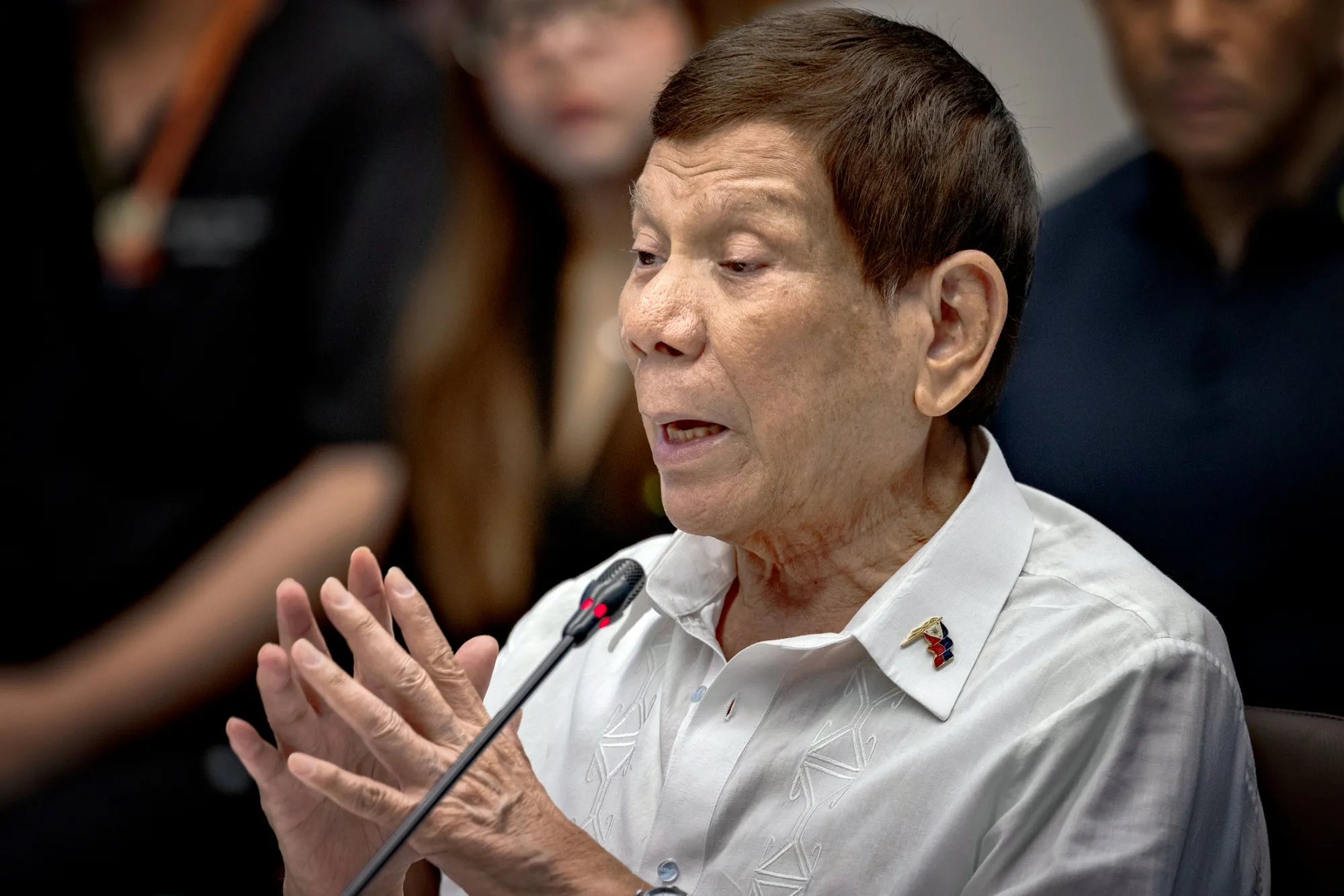

For the families of thousands of Filipinos killed in Rodrigo Duterte’s drug war, April 23, 2026 was the day they had waited years for. For the 81-year-old former president sitting in a detention cell in Scheveningen, it was the day the door to a full international criminal trial swung open — and shut behind him.

Pre-Trial Chamber I of the International Criminal Court unanimously confirmed all three counts of crimes against humanity against Duterte that Thursday, committing him to trial before a new Trial Chamber. The judges found substantial grounds to believe he was criminally responsible — as an indirect co-perpetrator, and through ordering, inducing, and abetting — for murders and attempted murders carried out across the Philippines between November 2011 and March 2019, spanning his time as Davao City mayor and as president of the republic.
The case covers 49 specific incidents involving 78 identified victims, including six children, according to Asia Times. The charges, however, represent only a fraction of the total lives lost. Police figures put the drug war death toll at around 6,000; human rights groups put it closer to 30,000.
How it came to this
The ICC’s Office of the Prosecutor opened its investigation into the Philippines in September 2021, covering alleged crimes committed up to March 16, 2019 — the day before Manila’s formal withdrawal from the Rome Statute took effect. That withdrawal, initiated by Duterte himself, was long seen as a shield. It turned out not to be one.
On April 22 — one day before the confirmation ruling — the ICC Appeals Chamber rejected Duterte’s challenge to the court’s jurisdiction, his last avenue to have the case thrown out entirely. The appeals chamber ruled that the ICC retains full authority over crimes committed while the Philippines was still a member of the Rome Statute, per Human Rights Watch. That settled it.
Duterte was arrested in Manila on March 11, 2025, by Philippine authorities acting on an ICC warrant, and flown to The Hague the following day. He has been held at the Scheveningen Prison ever since.
What happens now
The ICC Presidency will constitute a new Trial Chamber — three judges separate from those who handled the pre-trial phase. Once formed, the chamber will hold closed-door status conferences with prosecutors, the defence, and the legal representatives of 539 recognized drug war victims who have been granted standing to participate in proceedings.
These preparatory sessions will not be public, according to ICC Assistant to Counsel Kristina Conti, who told GMA News that the trial proper could begin anywhere between October 2026 and February 2027. Duterte’s own defence counsel, Nicholas Kaufman, offered a similar window. “If the confirmation goes against the defence, we are in for a trial, and that trial may probably start at the beginning of 2027,” Kaufman said in an interview on April 22, a day before the ruling came down.
ICC-accredited lawyer Gilbert Andres, one of the counsels for the victims, told Philippine Tribune the earliest start could be October 2026, though based on previous cases, preparations could stretch to a year and a half.
Once it begins, the trial will likely run for years. Conti told GMA News that ICC trials typically last around three years, though some have gone on for a decade.
Will Duterte show up?

That question remains unresolved. Under Article 63 of the Rome Statute, an accused is generally required to be present during trial proceedings. International law professor Evecar Cruz-Ferrer told Philstar.com that Duterte “needs to be present during the trial proceedings” under the statute. The ICC does allow for some flexibility — including attendance via videolink in limited circumstances — but an accused cannot obstruct proceedings in bad faith by refusing to appear, Conti said.
Duterte waived his right to attend the confirmation of charges hearing in February. His camp has consistently argued he is too mentally and physically frail to follow proceedings.
That argument took a battering before it even reached the trial stage. In January 2026, an independent panel of three medical experts appointed by the ICC — not by either side — unanimously concluded that Duterte possesses the functional mental capacity to understand the charges, follow proceedings, and instruct his counsel, according to the American Society of International Law. The panel noted disagreements over specific diagnoses but was unanimous on the question of fitness. The pre-trial chamber accepted that finding and rejected the defence’s request for an indefinite adjournment.
The defence’s pivot
With the jurisdiction argument exhausted and the fitness challenge overruled, Kaufman has signalled the defence will shift its focus to attacking the prosecution’s evidence.
“The evidentiary weaknesses we identified will be the very weaknesses that will lead to his acquittal,” he told Philippine Tribune after the jurisdiction ruling. He also challenged the basis of the pre-trial chamber’s confirmation decision itself. “I had a look through this decision and I can’t even see one piece of evidence cited in the footnotes,” he said.
Kaufman also argued the prosecution had “cherry-picked” his client’s public statements. Duterte, he said, never intended to incite violence — that the inflammatory remarks prosecutors quoted as proof of a common plan to kill were taken out of context, per Al Jazeera.
Duterte himself, after being informed of the confirmation ruling, reportedly turned to Kaufman and asked: “What’s the evidence? What’s the evidence to show that I actually committed those murders which they say I committed?”
The stakes
The trial comes at a fraught moment for the ICC itself. The United States under President Donald Trump has imposed sanctions on the court’s prosecutor and several of its judges. A Russian court has convicted ICC personnel in absentia. The Duterte case, say human rights observers, has taken on an added dimension as a test of whether the institution can function under sustained political pressure.
“Moving the Duterte case to trial reaffirms the ICC’s critical role as a court of last resort to investigate and prosecute the most serious crimes,” Human Rights Watch’s Vignoli said in a statement.
For Duterte, the man who once told police to “kill, kill, kill” and publicly praised officers who shot suspects dead, the road ahead ends in a courtroom in The Hague, with 539 victims’ families watching. He is, as the ICC now formally designates him, no longer a suspect. He is the accused.
