



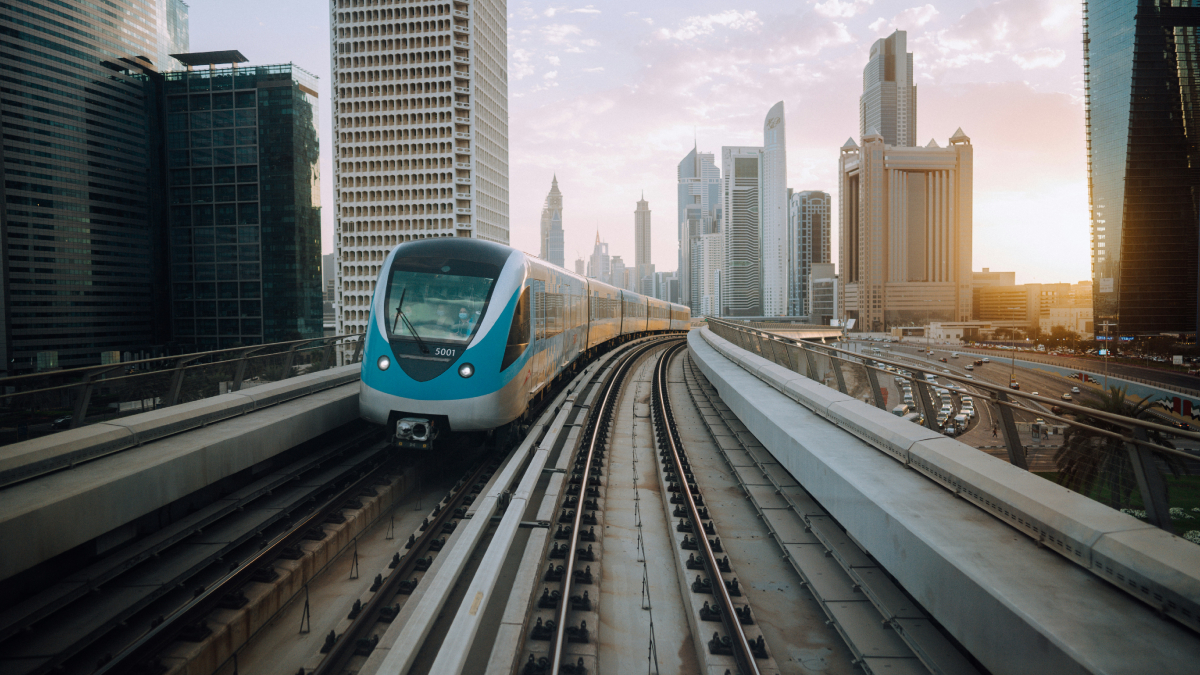

Dubai’s public transport system continues to gain momentum, with the Roads and Transport Authority (RTA) reporting a total of 395.3 million commuters from January to June 2025—a 9 percent jump compared to the same period last year.

The figure includes passengers using the Dubai Metro, Tram, public buses, marine transport (abras, ferries, water taxis, and water buses), e-hailing services, smart car rentals, Bus-On-Demand, and taxis. Daily ridership averaged 2.18 million, up from 1.98 million in the first half of 2024.
Dubai Metro and taxis were the most popular transport modes, accounting for 36.5 percent and 26 percent of total ridership, respectively. Public buses followed with a 24 percent share. The highest monthly ridership was recorded in May, with 68.8 million users.
Mattar Al Tayer, Director General and Chairman of the Board of Executive Directors of the RTA, said: “Dubai’s public transport network has undergone a major transformation, driven by advanced infrastructure and a diverse range of transit options that now form the backbone of mobility for residents and visitors across the emirate.”

He also noted the remarkable rise in the share of public transport and shared mobility journeys, which increased from just 6 percent in 2006 to 21.6 percent in 2024.
Dubai Metro recorded approximately 143.9 million riders across its Red and Green Lines. BurJuman Station led in usage with 8.6 million passengers, followed by Al Rigga (6.8 million) and Union Station (6.6 million). The Red Line’s busiest stations included Mall of the Emirates (5.6 million), Burj Khalifa/Dubai Mall (5.4 million), and Business Bay (5.3 million). On the Green Line, Sharaf DG Station topped the list with 5.1 million riders.
Other transport modes also showed strong usage: Dubai Tram carried 4.9 million passengers, public buses moved 95.7 million, and marine transport saw 9.7 million riders.
Shared mobility services, including app-based vehicles, hourly rentals, and on-demand buses, served 37.6 million commuters. Meanwhile, taxis transported 103.5 million riders during the six-month period.
