



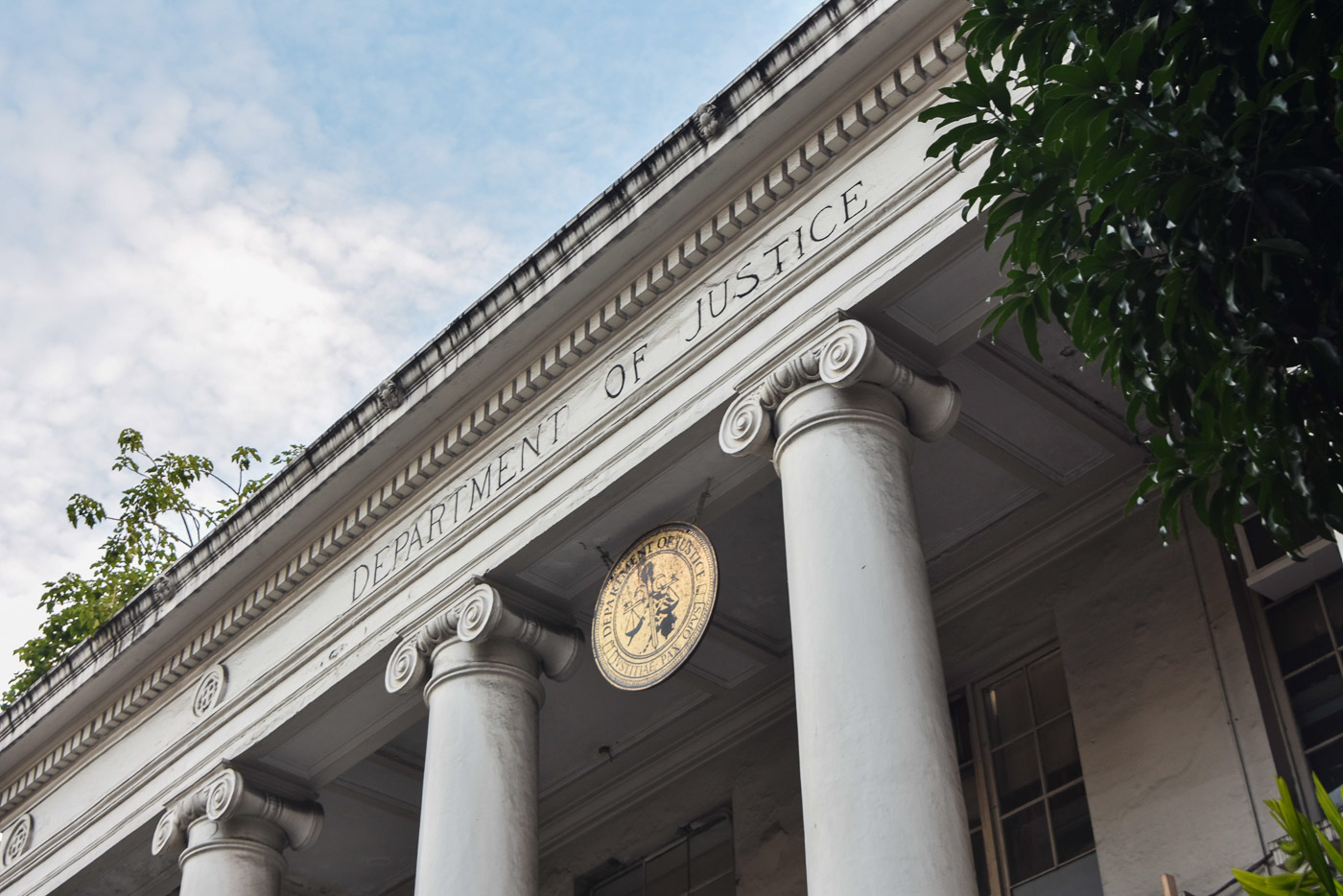

The Department of Justice has zeroed in on who may have instructed Acting Senate Sergeant-at-Arms Mao Aplasca to discharge the opening shots during the May 13 standoff at the Senate compound — though investigators are withholding the name pending final verification of evidence.

Justice Secretary Fredderick Vida told reporters Tuesday that the department has identified the individual who may have given that order, but cautioned that a premature disclosure would compromise the integrity of the ongoing probe. Findings from both the Philippine National Police and the National Bureau of Investigation have already been transmitted to a DOJ panel of prosecutors, which will determine what charges to file.
“The DOJ will not take it as is. We will check on the timelines, we will check on the source of the videos. At the end of it, what we will need is the truth,” Vida said, describing the evidence gathered so far as “compelling” but still subject to verification.
Ballistic evidence presented by PNP chief Jose Melencio Nartatez pointed firmly in one direction: all gunfire during the incident originated from within the Senate building and traveled outward. His team’s Scene of the Crime Operatives found no bullet holes entering from outside. Investigators recovered 44 fired cartridges, which examinations traced to four firearms — three operated by members of the Office of the Senate Sergeant-at-Arms, including Aplasca, and one by an NBI agent.
Interior Secretary Jonvic Remulla rejected Senate President Alan Peter Cayetano’s claim that the institution had been “under attack,” saying NBI agents never entered Senate premises. “All evidence points that there was no attack on the Senate… Please take note that none of the NBI agents had tactical gear with them. They were dressed as NBI agents clearly identified,” Remulla said.
“Take note of… the SOCO report, that… there’s no bullet hole going inside the Senate building,” Nartatez added, reinforcing Remulla’s position.
The sharpest counterattack on Tuesday came from NBI Director Melvin Matibag, who argued that if command responsibility is the standard being applied to his bureau, then Cayetano — as the head of the Senate — should be the first official placed under preventive suspension.

“If command responsibility will be the basis, then the first one who should be suspended is Sen. Alan Peter Cayetano,” Matibag said at a media forum in Manila. He noted that the Office of the Senate Sergeant-at-Arms operates under Senate leadership’s supervision, asking pointedly: “Who has command responsibility over the sergeant-at-arms? Who is the head of the Senate right now?”
Matibag, who faces calls for his own suspension, was firm about his personal accountability. “First of all, I was not the one who fired a gun there,” he said. “If I will be found to have committed any wrongdoing, I am willing to accept whatever penalty will be imposed.” He said he preferred to let the joint committee formed by Remulla and the Criminal Investigation and Detection Group proceed without interference.
The NBI chief also addressed the case of Mel Oragon, an NBI volunteer driver arrested following the incident, who tested positive for gunpowder residue despite no firearm being recovered from him. Matibag argued that the positive result did not establish that Oragon had fired a weapon, explaining that nitrate traces can transfer through contact with contaminated surfaces or persons.
“In the chain of custody, you should recover the firearm first, then subject it to examination. That is where you can initially determine if a gun was fired,” he said.
Matibag noted that Oragon had been apprehended on the fifth floor of the GSIS building, away from where the shooting occurred, and was later brought to the vicinity of the gunfire scene. “There is video showing that area where shots were fired. There was definitely gunpowder there,” he said, suggesting that physical contact with OSAA personnel who handled Oragon after discharging their weapons could explain the residue.
“Remember, the OSAA personnel fired shots, and they handled him,” Matibag said. “That is a possibility. I’m not saying that is exactly what happened, but it is a reasonable possibility because he did not have a firearm.”
On the matter of bail, Matibag said Oragon’s handler, lawyer Rick Espino, took care of the arrangements.
