



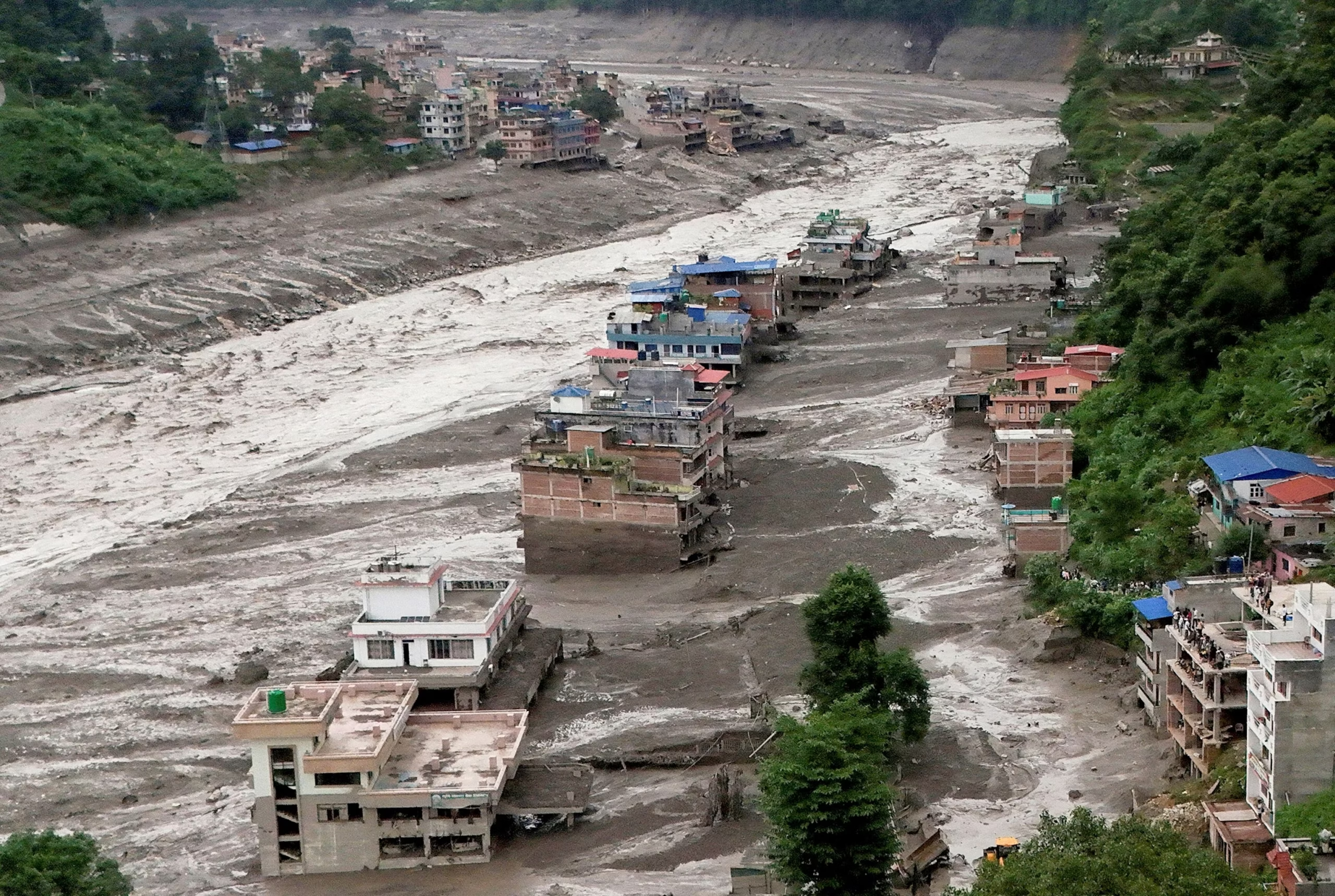

At least 157 people are confirmed dead and more than 400 remain missing after catastrophic flash floods swept through the Himalayan border region of Nepal and China on Wednesday morning, August 26, 2026, in one of the deadliest single-day disasters to strike the area in recent years.

Nepali police reported recovering at least 157 bodies by late Wednesday, with the country’s prime minister’s office having earlier confirmed 95 deaths as the toll climbed through the day. Across the border in Tibet, Chinese state media reported at least three killed and 265 people missing after a mudslide struck the Gyirong port area, with authorities describing “major casualties.”
The scale of the missing is staggering. Nepal’s Tourism Board said 403 people were unaccounted for, including 341 foreign nationals from at least 26 countries. Among them were 133 Indian pilgrims traveling to Mount Kailash, 47 Americans, 34 Australians, 33 Britons, and 24 Canadians, according to board spokesperson Sunil Sharma. At least 62 missing Nepali citizens were among locals trekking near Gosaikunda Lake, coinciding with the Janai Purnima festival.

The floods, which surged down the Bhotekoshi River around 9 a.m. local time, tore through dozens of settlements in the Rasuwa and Nuwakot districts, slamming into houses, roads, bridges, and hydropower plants. Six major hydropower and transmission facilities were damaged, disrupting power supply. Officials believe a landslide triggered the disaster, though a magnitude 4.4 earthquake recorded early Wednesday north of Kathmandu has also drawn scrutiny.
Rescue efforts have been hampered by Nepal’s steep valleys and narrow gorges, with helicopters unable to land in the hardest-hit areas of Syapru Besi and Timure. Nepal has appealed to both India and China for assistance. Chinese President Xi Jinping ordered authorities to intensify search-and-rescue operations, while Nepal’s prime minister said the search would continue overnight.
The disaster underscores the growing peril facing the region’s mountain communities and the seasonal flow of pilgrims and trekkers who cross the Nepal-Tibet frontier each year.
