




A Filipino seafarer ready to leave the sea for good should find a support system already in place, not one that has to be assembled after disembarkation, according to Department of Migrant Workers (DMW) Assistant Secretary Ma. Regina Galias. She argued that reintegration has to move past standalone programs toward linked pathways that sustain both a seafarer’s career and the household that depends on it.

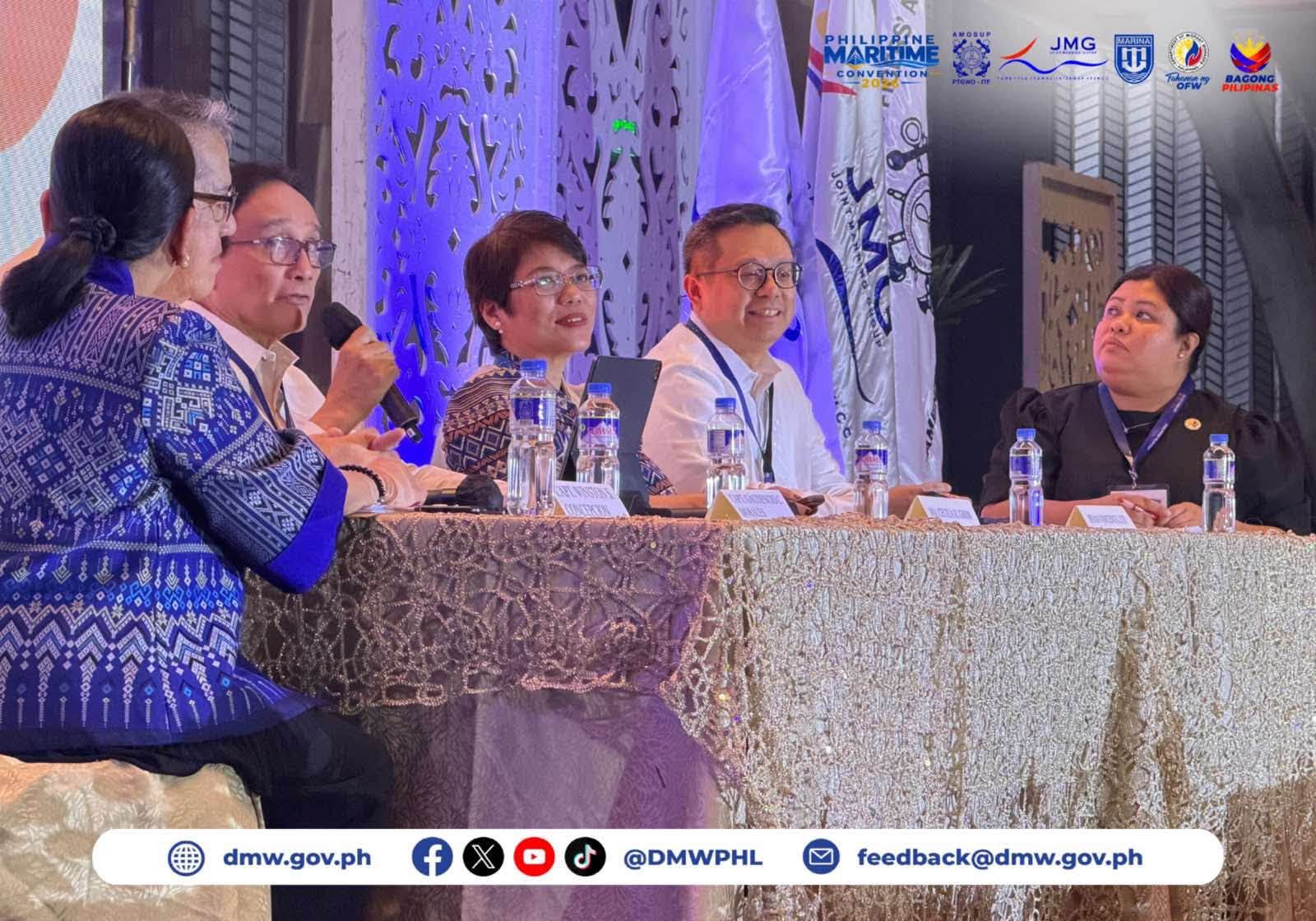
Galias moderated a September 23 learning session on reintegration and post-employment support at the Philippine Maritime Convention 2026, held at the Manila Hotel. There, the DMW presented its National Reintegration Program, which it describes as inclusive and covering the full migration cycle.
The program is built on three streams, known collectively as KKK. Kalinga deals with welfare, psychosocial support, and social protection. Kaalaman and Kabuhayan together cover financial literacy and awareness, upskilling, livelihood training, entrepreneurship, and business mentoring.
The family dimension drew the strongest response from Ma. Cecilia Giron of Women Championing Seafarer Families (WCSF), one of the reactors on the panel.
“We should not only ask what job the seafarer will have when he or she comes home. We should also ask what kind of life the seafarer is coming home to, and whether the family is ready for that transition. This is why I particularly appreciate the Kalinga component of DMW’s KKK integration framework. Kalinga focuses on holistic welfare and support, including psychosocial support, protection, and welfare assistance for returning OFWs and their families,” Giron said.

The other reactors were Capt. Winston S. Conception, a board member of the Associated Marine Officers’ and Seamen’s Union of the Philippines (AMOSUP); Capt. Gaudencio C. Morales, who heads both the Integrated Seafarers of the Philippines and the Joint Manning Group (JMG); and Deputy Administrator Ryan Vincent L. Uy of the Overseas Workers Welfare Administration (OWWA).
The government also wants private companies involved. Through the proposed Bagong Balikbayan Act, it aims to work with the private sector on a broader and more sustainable reintegration program for overseas Filipino workers (OFWs), including seafarers and their families, one that would give them access to financial services.
DMW Undersecretary Felicitas Q. Bay said the task cannot fall on one office.
“Reintegration is a shared responsibility, and each government agency and stakeholder has a role in helping the OFWs’ successful transition. It recognizes that no single agency can address all the needs of returning OFWs. Reintegration requires collaboration among the national government agencies, maritime institutions, employers, industry partners, and other stakeholders,” Bay said.
Bay also noted that Republic Act 11641, the law that created the DMW, already counts seafarers as OFWs. Even so, she said, reintegration needs that are specific to seafarers still have to be addressed.
