



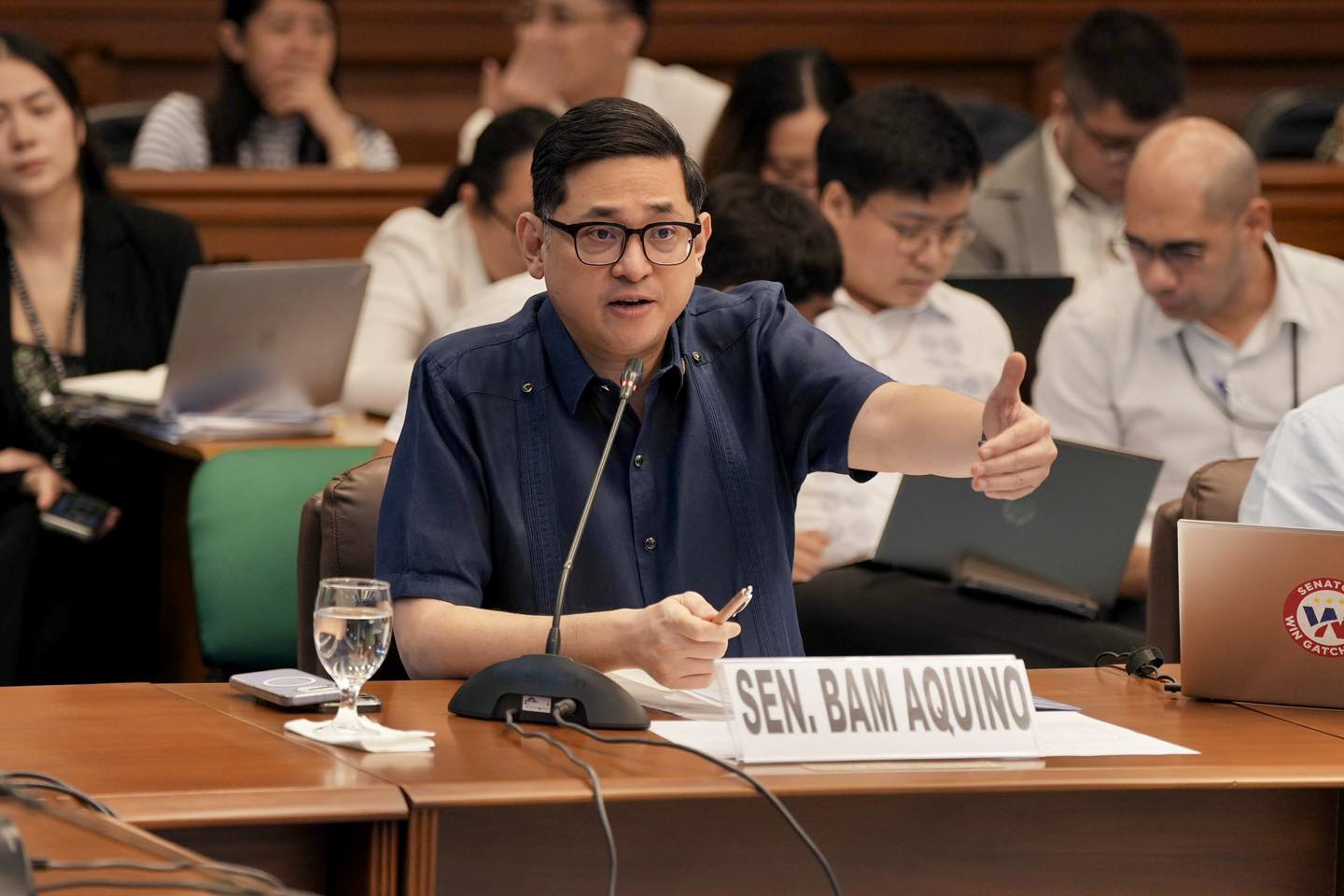

A Senate shake-up has cost Senator Bam Aquino his chairmanship of the Committee on Basic Education — a post he held for roughly ten months — but the legislator says the change in title will not alter his commitment to fixing what he describes as a long-running crisis in Philippine schooling.

Aquino vowed to continue pushing for education reforms despite the Senate leadership changes that removed him as chairperson and transferred him to the minority bloc. In a statement posted on his Facebook page, he said caring for the next generation is not something that can be measured by any position or title.
The senator outlined a seven-point agenda his committee pursued during its tenure, covering classroom shortages, learning materials, internet access in schools, teacher welfare, child nutrition, pandemic-driven learning gaps, and school-to-work readiness programs for graduating students.
Among the legislative gains he cited was a historic education allocation in the proposed 2026 national budget. Aquino helped secure a proposed ₱1.34-trillion education budget for 2026, the largest allocation for the sector in the country’s history, which includes ₱67.9 billion intended for the construction of 25,000 classrooms nationwide to address the country’s estimated 166,000-classroom backlog.

Under his leadership, several education-related measures advanced in the Senate, including the proposed Establishing GIDA and Last Mile Schools Act and the Curriculum Flexibility Act, both awaiting the President’s signature. He also spearheaded the passage on third and final reading of the Classroom-Building Acceleration Program Act and the Basic Education Voucher Program Act, while sponsoring the proposed National Nutrition Program Act.
Aquino was first elected to chair the Basic Education Committee when he returned to the Senate in 2025. He and Senator Francis Pangilinan were criticized by some colleagues for joining the majority bloc, though doing so allowed both to secure their preferred committee assignments — Aquino in basic education and Pangilinan in agriculture.
The senator acknowledged that much work remains unfinished, but argued that the progress achieved during his tenure demonstrated what is possible when political disagreements are set aside in favor of substantive legislative action.
