



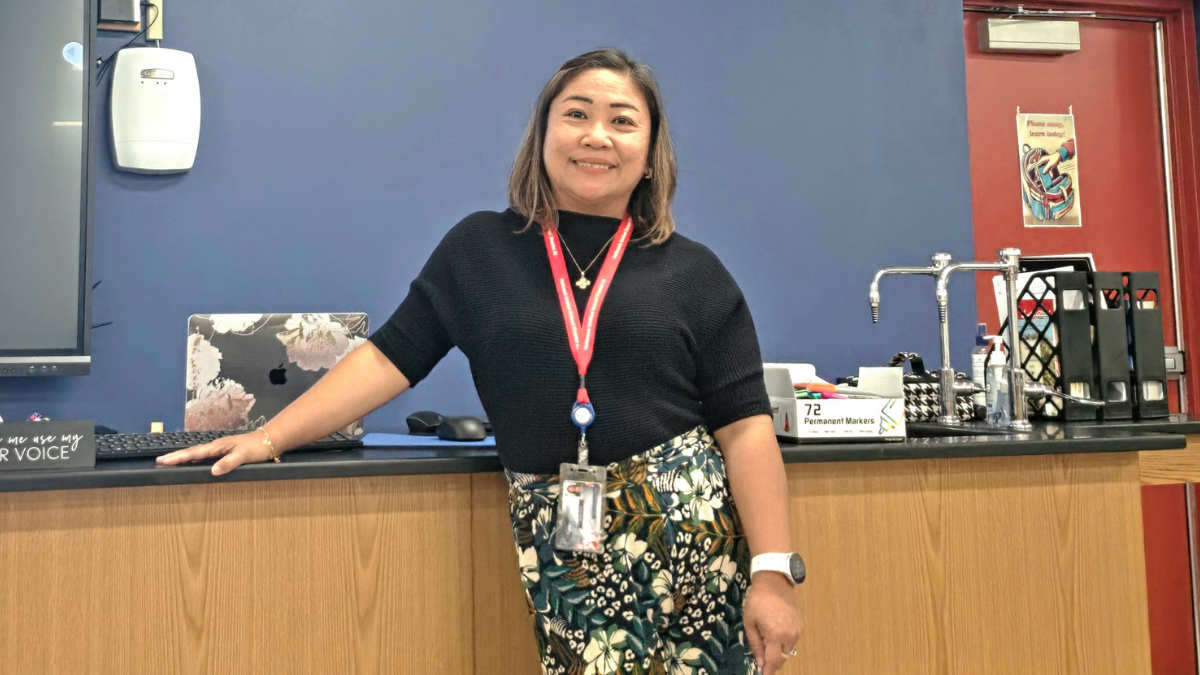

Every year, thousands of Filipino teachers weigh the same quiet gamble: leave behind the students who need them at home for a classroom halfway across the world, where their credentials count for little and they must prove themselves from scratch. Dr. Annie Christy delos Santos-Jones knows that gamble well. She has taken it more than once—and each time, she has had to learn how to teach all over again.

At 49, she teaches English Language Arts and dual enrollment courses at Holbrook High School in Arizona, where students can earn college credit while finishing their high school English requirements. Her days are built around lesson planning, assessing student learning, and preparing young people for college and careers. But the tidy job description hides a career that has zigzagged across two countries, three visas, and nearly twenty years of classrooms.
The decision she never planned to make
For most of her life, leaving was never the plan. “I never really planned to teach abroad because I felt that I was needed more in my home country,” she shares with TGFM. What changed her mind was a piece of advice from a colleague—to grab every opportunity that came her way while she was still young.

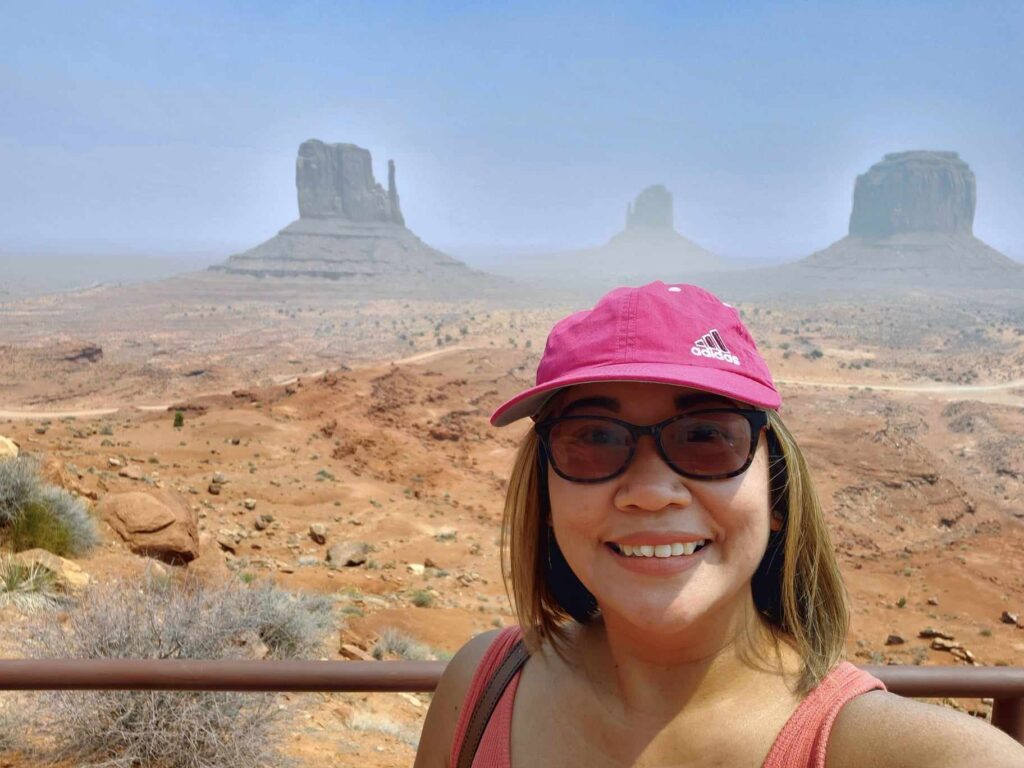
The timing forced her hand. Her mother had just retired from government service, her father was living with dementia, and Dr. Annie was raising her son alone. “I knew I needed to become financially stable so I could support my family, particularly my son’s education,” she recalls. In 2017, she left for the United States on a J-1 visa. It was, in her words, “one of the hardest decisions of my life.”
Her first overseas post placed her somewhere few Filipino teachers ever go: the Navajo Nation, where she taught English Language Arts and AP Language and Composition for five years. The assignment turned into the defining chapter of her career. Working with Native American students, she says, “allowed me to learn about their culture, build meaningful relationships, and grow both as an educator and as a person.” She still calls it one of the most rewarding experiences of her teaching life.
By then, Dr. Annie was already a seasoned educator. She had spent close to two decades in the profession, working with students from grade school to graduate school. But the American classroom humbled her quickly.
When experience isn’t enough
The first months in Arizona were harder than she expected. She had been a successful teacher in the Philippines, but the environment she walked into bore little resemblance to the one she had left. “I struggled with classroom management and student behavior,” she admits. The former university instructor had to relearn the basics—routines, procedures, expectations, and the discipline of consistent follow-through.
She did it the way she tells her own students to do things: by asking for help. She observed experienced teachers, took feedback without bristling, and leaned on her academic coach and principal. “I had to learn that effective classroom management required clearly established routines, procedures, expectations, and consistent follow-through,” she says.
The professional strain came layered over a personal one. For half a year, homesickness pressed on her constantly. “I missed my son, my parents, and everything familiar to me,” she says. “There were nights when I cried and considered packing my bags and returning to my comfort zone.” What kept her tethered were the Filipino teachers at her school, who became her support system, and the coach and principal whose confidence in her, she says, “helped shape the teacher I am today in the United States.”
The lesson she drew from that stretch has stayed with her: titles don’t travel. “Previous titles and accomplishments do not remove the need to continue growing,” she says. To survive in a new country, she had to stay humble, adaptable, and teachable.
Then, just as she had found her footing, she left again. In 2022, the terms of her J-1 visa required her to return home for two years to satisfy its residency rule.
The detour home
Back in her hometown of Bacolod, Dr. Annie stepped straight back into higher education. She taught at the university level and served as head of the Bachelor of Arts in English Language Studies program. She directed a university chorale, as she had years before—one of the ways she has long folded her interests in writing, communication, and music into her work.

It was familiar ground for a teacher whose passion had crystallized there. She had first entered the academe in 2008 after a winding start: customer service, a stint at a shipping company, a local television station, then a return to school in 2003 to complete education courses and the Licensure Examination for Teachers in 2004. Her first classroom was at a private school in Bacolod, at a modest salary she didn’t mind. A detour into the BPO industry followed, but it didn’t hold her. “I believe God had other plans for me,” she says. “After two years, I found my way back to the classroom.”
University teaching was where everything clicked. The assignments were sometimes daunting—she was occasionally handed courses she had never taught—but she pushed through, and over time took on leadership roles as program head for Communication and English Language Studies. Along the way she served as a yearbook adviser and chorale conductor, using education, as she puts it, “to create opportunities for others.”
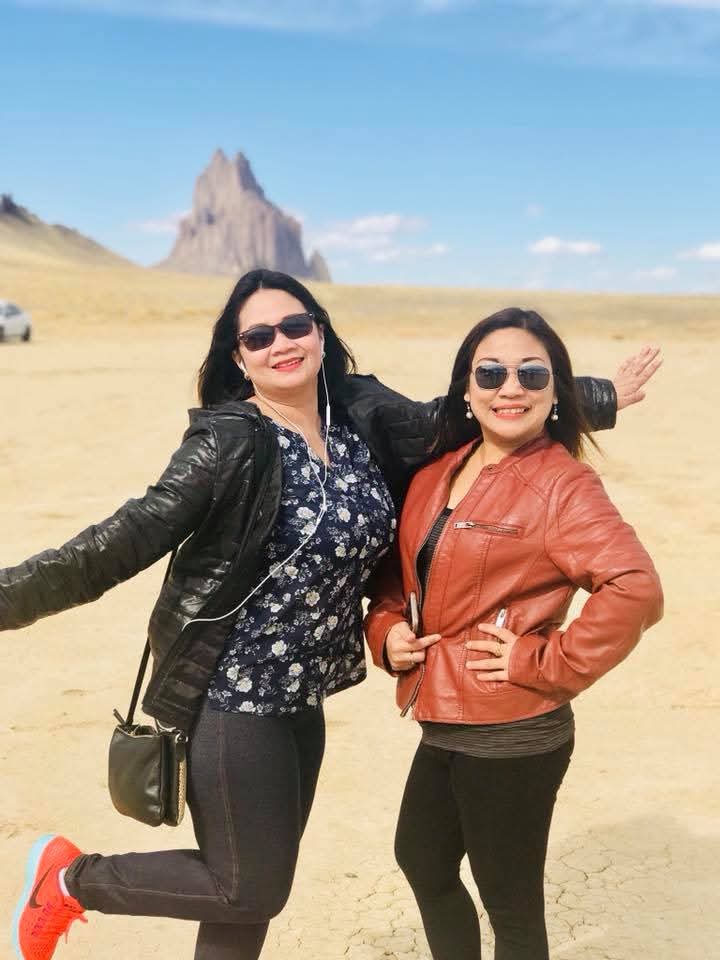
In 2024, she returned to the United States a second time, now on an H-1B visa, and settled back into an Arizona classroom—the one she teaches in today.
The proof that outlasts the paycheck
Ask her what makes the work worth it, and the answer is never the salary. She is candid that teaching “is not a lucrative profession,” and that it comes with real burdens—managing behavior, meeting the wildly different needs of learners in a single room. What sustains her is the evidence that shows up years later, unprompted.
In 2016, a parent introduced himself to tell her that his son, once in her English class, had joined the U.S. military and was stationed in Germany—and that her class had inspired him to pursue journalism and write for the military newsletter. A student she once coached for the IELTS speaking test now works for BMW in Australia and credits her for a higher band score. “These are just some of the former students who have contacted me to express their appreciation,” she says.
Sometimes the payoff is immediate. On the second day of a recent term, a student told her, “You’re my favorite teacher now.” She asked why. “Because you’re nice,” he said. The exchange stuck with her. “Moments like these remind me that students value not only what we teach but also how we treat them,” she reflects.
That conviction shapes how she thinks about her subject. For the veteran English teacher, the job was never really about grammar or literature. “It is about giving students skills they can carry into college, their careers, and everyday life,” she says—helping them “find their voices, develop confidence, and recognize their potential.”
Building a life between two countries
Working abroad has changed her, and she names the change plainly. It made her “more adaptable, open-minded, and culturally responsive,” and gave her a rare vantage point on two education systems, letting her borrow what works from each. The higher compensation matters—it is what supports her family—but she frames it as one part of a larger whole, alongside the professional growth and relationships she has built.
Her life in the United States is now on firmer ground. Married to a U.S. citizen, she recently became a permanent resident, and her plans have widened accordingly. She wants to keep teaching, mentoring, and conducting research—but she is also weighing a return to school, this time for a law degree. Combining education, communication, and language with legal training, she believes, could let her “advocate more effectively for students, educators, immigrants, and underserved communities.”
She has causes in mind, too: promoting responsible AI literacy in classrooms so teachers and students can use new tools ethically, and mentoring Filipino educators who hope to teach internationally. “I would also like to share what I have learned from working in both the Philippine and American educational systems,” she says.
To kababayans wrestling with the same loneliness she once felt, her advice circles back to where she started. “Remember why you began your journey,” she says. Stay humble and willing to learn, even if it means starting over. Be careful with money—save, avoid unnecessary debt, resist the urge to prove success through possessions. And don’t disappear into the effort. “Do not lose yourself while building a better life abroad,” she says. “Stay connected with your family, faith, and values.”
If her story carries a single lesson, it is the one she has lived at least three times over. “Starting over does not erase what they have accomplished,” she says. “Sometimes, it is simply another opportunity to learn, grow, and discover what they are capable of becoming.”
