



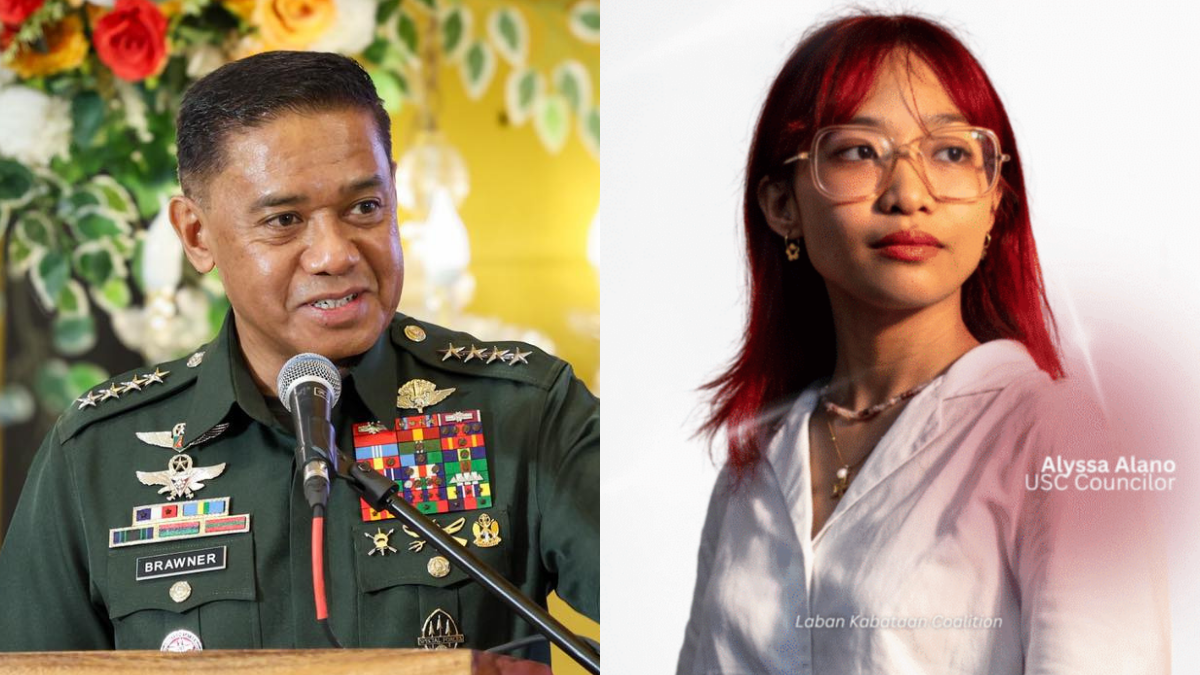

The Armed Forces of the Philippines stood by its account Friday that Alyssa Alano, a student council official from the University of the Philippines Diliman, was not an innocent bystander when she died in a military operation in Negros Occidental on April 19.

AFP Chief General Romeo Brawner Jr. pushed back against critics of the April 19 encounter in Toboso town, where 19 individuals — including Alano, who served as education and research councilor of the UP Diliman University Student Council — were killed during a clash between the 79th Infantry Battalion and suspected remnants of the Northern Negros Front, Komiteng Rehiyon-Negros (NNF, KR-N) in Barangay Salamanca.
“Are they saying she was an innocent student? No. If she is innocent and has no intention of joining the armed group, why was she found wearing a combat rig with a magazine pouch? She was armed. She was fighting,” Brawner said.
Military reports indicated the firefight lasted several hours before the rebels withdrew. Troops recovered high-powered firearms and subversive documents from the encounter site, along with the remains of those killed. At least five other suspected rebels were arrested in follow-up police operations.
To illustrate what he described as the military’s measured approach, Brawner cited the separate case of Chantal Anicoche, a Filipino-American activist discovered by Army troops at an encounter site in Abra de Ilog, Occidental Mindoro on January 8.
“Unlike in the case of Chantal in Mindoro, when she was found by troops, she was not resisting, her firearm was far from her. So what did we do? We took her into our custody. We gave her proper medical attention. We even called her parents, and she was picked up by her parents and brought back to the United States,” Brawner said.
The AFP chief drew a direct line between armed resistance and combatant status, defending the conduct of his troops.

“Our soldiers are not human rights violators. In fact, we respect human rights. But once you start fighting and firing against government forces, you are a combatant and you can become a casualty,” he said.
Human rights advocates rejected the military’s framing, describing Alano’s death as a state-sponsored killing. Supporters said she had been living among farming communities in Negros to document conditions faced by peasants dealing with land grabbing and military presence in the area.
A candlelight vigil was held at UP Diliman on Thursday, April 23, drawing students, alumni, and public figures including actress Tuesday Vargas, herself a UP alumna, who called for accountability.
“Napakabigat ng aking puso pero ako ay nagtungo sa aking paaralan upang maki-isa. Mataas na pagpugay kay Alyssa. Salamat sa iyong paninilbihan sa lahat ng mga sektor partikular na ang mga magsasaka sa kanayunan,” Vargas said.
She added: “Maraming salamat sa iyong makabuluhang buhay. Kami po ay nakikiramay sa kanyang mga ka anak at sa lahat ng mga nasawi sa Negros. Hustisya para kay Alyssa!”
Brawner’s comparison to the Anicoche case underscored the AFP’s stated position that compliance — not armed engagement — determines how troops respond when encountering individuals at rebel sites.
