



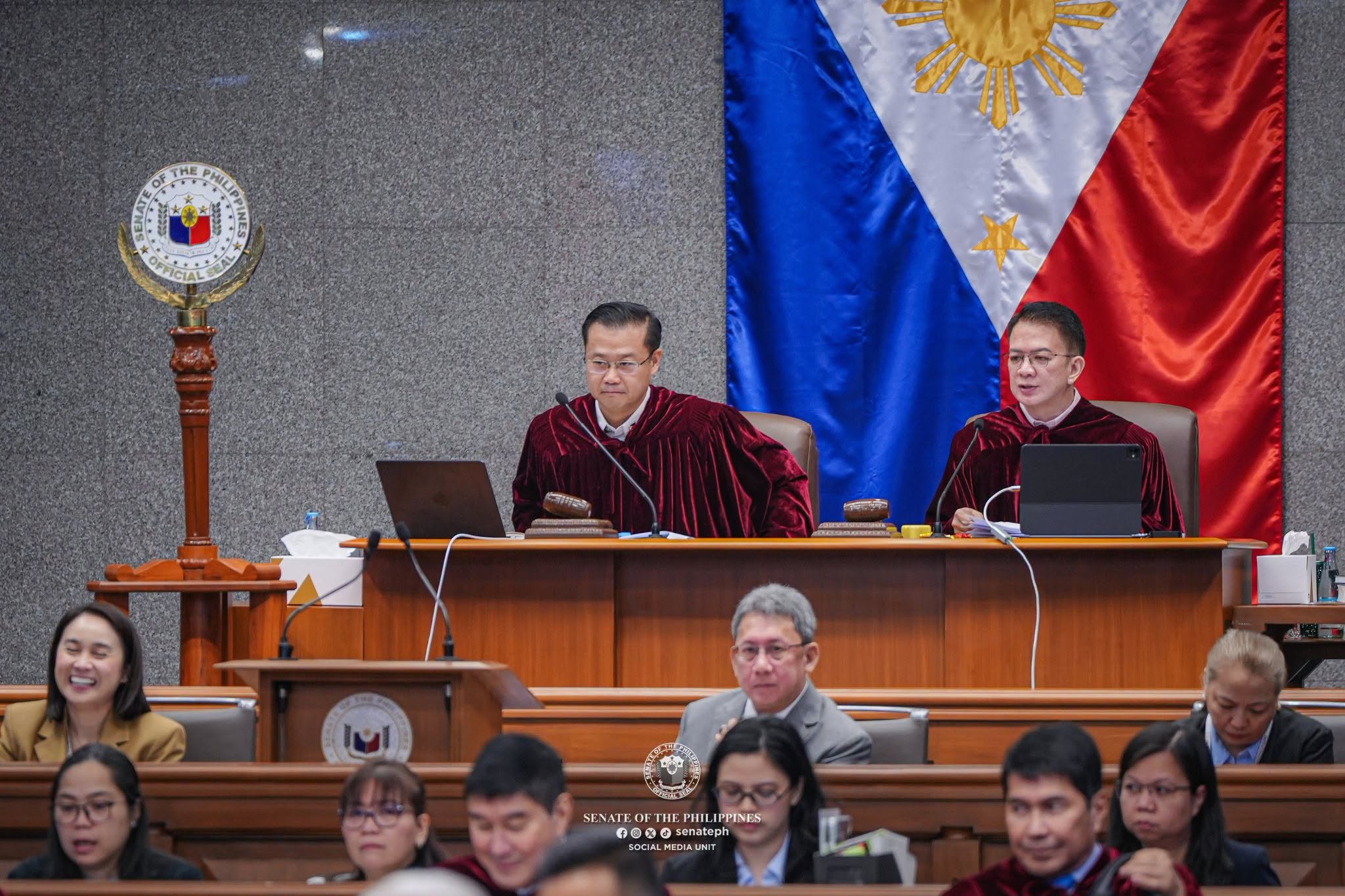

The Senate impeachment court wants the Supreme Court to resolve the legal challenges to its recomputed conviction threshold before senator-judges decide whether to convict or acquit Vice President Sara Duterte.

At the center of the dispute is the court’s September 23 ruling, approved in a 13-1 vote, which interprets the constitutional two-thirds requirement as referring only to senator-judges actually taking part in the trial. With 20 senator-judges currently participating, a verdict would now need 14 votes instead of 16.
Court spokesperson Reginald Tongol defended the decision, saying there was “nothing capricious, whimsical, or arbitrary” in how the tribunal arrived at it.
Speaking on dzBB on Sunday, Tongol said the court is counting on a quick resolution from the high tribunal.
“Yes, that’s the expectation of our presiding officer [Sen. Francis Escudero] and the whole impeachment court. That’s why he also mentioned that he doesn’t want any issue to crop up beyond 2027,” he said.

The timing, according to Tongol, matters. A ruling that comes only after the senator-judges vote could leave the court’s verdict in limbo.
“Not after [they cast their votes], because of course, we don’t want the impeachment court to have a decision but we are all left hanging whether or not the respondent will comply with it because there is a pending issue before the Supreme Court. We don’t want that kind of problem to happen,” he said.
Senate President Sherwin Gatchalian has said a revised trial calendar could allow the court to complete the proceedings and hold the final vote by December.
Two petitions questioning the new threshold are now before the Supreme Court. Former Executive Secretary Victor Rodriguez, in a petition for certiorari and prohibition filed September 24, argued that the ruling unlawfully rewrote the 1987 Constitution.
Lawyer Ernesto Francisco Jr. is seeking a status quo ante order to stop the rule from taking effect. He contends that by changing a clear constitutional mandate, the Senate committed grave abuse of discretion amounting to lack or excess of jurisdiction.
