



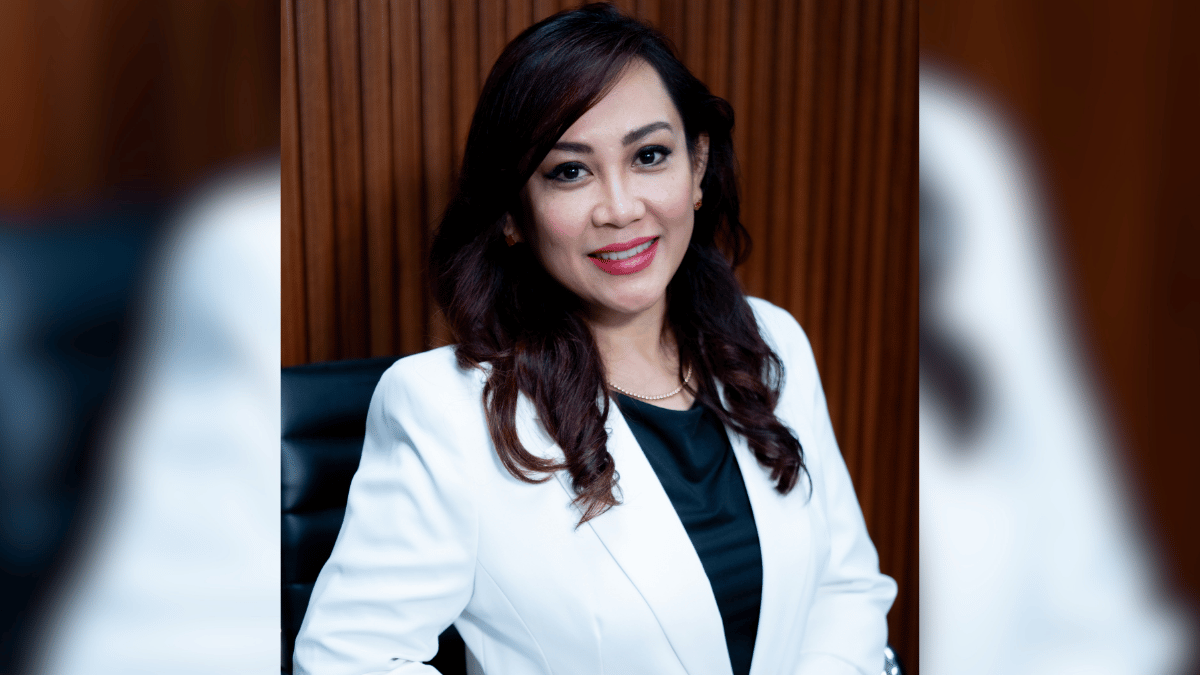

From the outside, a hospital operations chief looks like someone who mapped the route years in advance — the degree that pointed straight at the job, the ladder climbed one deliberate rung at a time. The reality is usually messier, and in this case almost the reverse. Mia M. Romasanta arrived in Dubai twenty-one years ago with a nutrition diploma and a plan to spend her career in a dietary department, not to one day oversee a dozen healthcare units across the city.

Today she is Senior Operations Manager at HealthHub Day Surgery and part of the senior management team of HealthHub, the healthcare division of Al-Futtaim. She runs the end-to-end operations of the Day Surgery Unit and its affiliated clinics — scheduling, nursing, allied health, administration and patient services — which means the entire patient journey, from the first hello at reception through to customer experience and financial performance, runs through her. Her remit reaches further still, into planning, strategy and business growth, with twelve units now operating and more clinics on the way.
None of it was the plan.
A stepping stone she never stepped off
The path started with a Bachelor of Science in Nutrition and Dietetics from the University of Santo Tomas and a clear idea of where it would lead. “I came to Dubai intending to work in the dietary department,” she shares with TGFM. The first door to open was somewhere else entirely — a role as Patient Administrator — and she walked through it expecting to leave it behind quickly. “I took it as a stepping stone,” Mia says, “but I unexpectedly fell in love with the work.”
What caught her was the part no textbook had prepared her for. She found she loved dealing with patients face-to-face, smoothing the small frictions of a hospital visit for people who were often anxious or unwell. So when the chance eventually came to cross-train in dietetics — the profession she had actually studied for — she chose the patients instead.
That decision hardened into a conviction she still carries. “Healthcare is not only about the profession you studied for,” she says. “It is about where you can serve people best.”
Leading from the floor up
Her first real taste of healthcare as something larger than a job had come earlier, back home. As an instructor at Palawan State University’s College of Nursing and Health Sciences, teaching Basic Nutrition and Food Microbiology, she was later put in charge of the Civic Welfare Training Service, helping organize the university’s medical and dental mission with the Gawad Kalinga Foundation. It was, she says, her first exposure to healthcare as community service — a thread that would run through everything after.
In Dubai, the climb was patient and unglamorous. She joined Welcare Hospital in 2005 as a Patient Administrator and worked her way up — coordinator, officer, then Front Office Manager at Mediclinic Dubai Mall. From there came a stint as Acting Clinic Manager at Mediclinic Al Sufouh, a promotion to Cluster Manager across both sites, and a place on the team that commissioned Mediclinic Creek Harbour.
Having started at the reception desk shapes how the operations manager leads now. Because she grew from one position to the next, she understands both the patient’s point of view and the daily reality of the teams on the floor. Any process improvement, she insists, has to make her people more efficient, never more burdened. “Management can design brilliant processes, goals and plans,” she says, “but if the people are not properly trained, motivated and supported, none of it will succeed.”

She also credits something less easily put on a résumé. “One of the greatest strengths we Filipinos bring to healthcare is our natural warmth and genuine approach to customer service,” she says — a strength she has leaned on with even the most difficult patients and clients. Her proudest wins are the ones she turned around: several clients who began as headaches, she notes, eventually became friends who stayed in touch.
The ceiling she had to break twice
The hardest barriers were rarely operational. Like many Filipinos abroad, she had to adjust to a new culture, live far from family and carry the weight of providing for them. But the heaviest struggle, she admits, was internal — a private belief that she was not good enough, layered on top of a broader assumption that Filipinos could not be leaders.
Rather than accept the ceiling, she treated it as an opening. Early on she noticed how few leadership seats went to people like her, and decided to become proof of the opposite. She became deliberate about how she showed up. “I was very intentional about how I showed up in meetings,” she says, “not simply so my voice would be heard, but so I could contribute, influence decisions and bring a different perspective to the table.”
Then came the season that tested all of it. The pandemic was the hardest stretch of her career, and also, she says, the one that taught her what healthcare truly means — being present when people are at their most vulnerable, and keeping both patients and staff safe as circumstances shifted by the hour. She does not claim the credit alone; she points to mentors, to the prayers of her family and church, and above all to what she calls the grace of God. “Barriers can either stop you or make you stronger,” she says. “I chose to let them make me better.”
Breaking through changed what she wanted. The Filipina healthcare leader no longer measures herself against other people’s doubts, or her own. “I am no longer focused on proving myself,” she says. “I am focused on motivating people and growing the business.”
What she wants to give back now
That shift now points outward. Beyond the day job, she takes visible pride in the community work her organization enables — health screening campaigns and free webinars on stress and wellness, plus awareness drives run with other Al-Futtaim divisions for breast cancer, colon cancer and kidney stones. “Being part of an organization that creates that kind of support gives me a different purpose,” she says.
Her ambitions from here are less about titles than people. She wants to keep adding value to the mission she believes in, and to develop more leaders — capable ones who genuinely care about the work. She already mentors individuals outside her company and across industries, a way of paying forward the belief others once extended to her. What makes her proudest today, she says, is not the role but the reach: the people she has influenced, the colleagues she has developed, the patient experiences she has helped improve.
Her advice to fellow OFWs is characteristically direct. Reinvest in yourself, keep learning, and use the free courses and low-cost certifications now within everyone’s reach. “Know what you want, act toward it, and pursue it with intention,” she says — then adds the part that has anchored the whole improbable journey. “If you are an OFW, be grateful for where you are and what you have. There are many Filipinos back home who are still hoping for the very opportunity you are holding right now.”
