



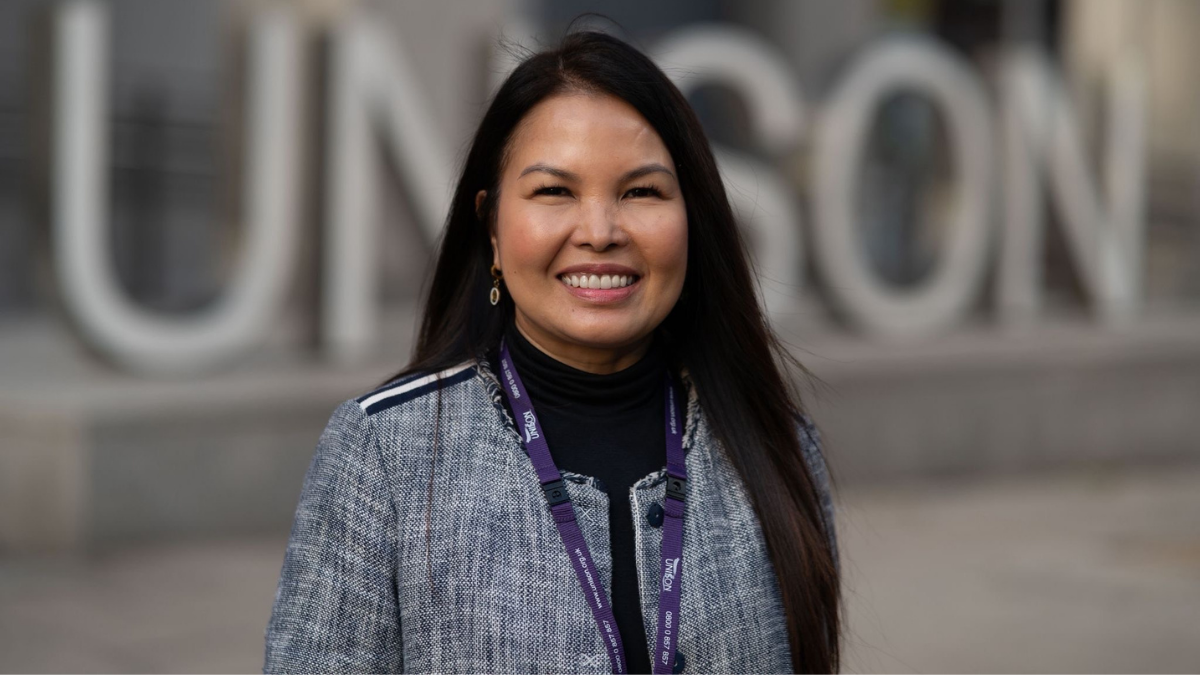

For years, one of the largest groups of international nurses in British healthcare barely existed on paper. Filipino nurses ran wards, trained newcomers and held shifts together across the National Health Service, yet in workforce records many of them were filed under “Any Other Asian Background” or simply “Other.” Louie Horne BEM spent part of her career changing that, and she is quick to say it was never really about a box on a form.

“If we are not counted, we are much harder to see,” says the Filipino nurse, now the National Nursing Officer at UNISON, the UK’s largest trade union. “And if we are invisible in the data, it becomes harder to understand our experiences, identify inequalities and make the case for change.”
That idea of being seen, and then being heard, runs through nearly everything Louie has done since she arrived in the United Kingdom more than 25 years ago. At the start, the goal was far simpler.
“I don’t think the young nurse who arrived here all those years ago could have imagined where that journey would eventually take her,” she shares with TGFM.
A profession, then a way out
Like many Filipinos of her generation, Louie left home for opportunity. She grew up in the Philippines without many of the things others take for granted. Nursing gave her a profession, and the UK gave her a way to change her circumstances and her family’s.
“Nursing gave me a profession, and coming to the UK gave me opportunities that changed not only my life but my family’s life,” she says. “But migration is complicated.”
The complication, as she describes it, is less about paperwork and homesickness than about temperament. Filipino healthcare workers carry a reputation abroad: hardworking, resilient, caring, adaptable. Louie is proud of those traits. She is also wary of what they can hide.
“Sometimes our resilience can also mean that we tolerate things for too long,” she says. “We don’t want to complain. We don’t want to appear ungrateful. We don’t want to cause trouble. I understand that because I have lived it.”
In the NHS, she built her career the long way, moving from staff nurse through clinical, operational and strategic leadership roles until she became a Deputy Associate Director of Nursing. Along the way, she took on work that had little to do with job titles. At her former NHS trust, she founded and chaired EMBRACE, a staff network where colleagues from different backgrounds could talk openly about what they were experiencing at work.
That work pulled her toward the national stage. She became the first Filipino appointed as a Workforce Race Equality Standard (WRES) Clinical Research Fellow with NHS England, and later served as a Senior Global Health Fellow there. It was in those roles that she led the push for Filipino and Filipina ethnicity to be recognized in NHS workforce data, and advocated for the same visibility in data held by the Nursing and Midwifery Council, the UK’s nursing regulator.
For a community that had been part of British healthcare for decades, the change was overdue. The former NHS nurse leader frames it not as a personal win but as a debt repaid.
“Seeing Filipino nurses finally able to be counted as Filipinos remains one of the highlights of my nursing career,” Louie says. “I did this for the nurses who came before us, those working today and the generations who will follow. They deserve to be counted, visible and heard.”
The cost of keeping quiet
Being counted, she learned, is not the same as being listened to. Early in her time in the UK, Louie discovered that doing good work did not guarantee anyone would hear what she had to say.
“When you arrive in another country, there is enormous pressure to fit in,” she says. “You are learning a new healthcare system, new terminology, different accents and a different culture. You don’t necessarily want to be the person asking difficult questions.”
She does not pretend she was braver than she was. There were moments when she experienced inequality herself, and moments when she watched colleagues go through things that did not sit right with her.
“Like many people, I didn’t always challenge everything immediately,” the Filipino nurse admits. “Confidence came gradually.”
It came from mentors, from colleagues and from staff networks like the one she built. Most of all, it came from seeing that what felt like a private struggle was usually a shared one. That realization is what eventually led her from equality work into trade unionism.
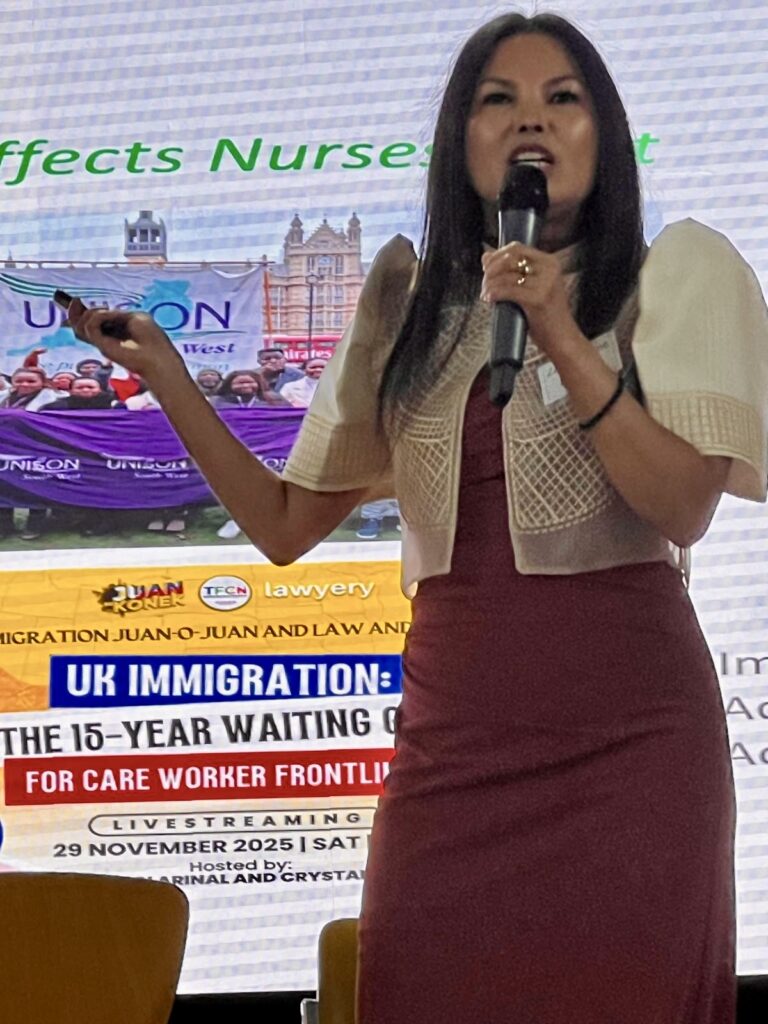
“Many experiences we think are individual problems are actually shared by other workers,” Louie says. “That is one of the most powerful things about a union. It changes the question from ‘How do I fight this on my own?’ to ‘How do we address this together?'”
Her work with diaspora organizations reinforced the lesson. Louie currently serves as Vice President of the Filipino Nurses Association UK (FNA-UK), Chair of the Filipino Senior Nurses Alliance UK (FSNA UK), and Press Relations Officer of the Alliance of International Nurses and Midwives Diasporas UK (AINMD-UK), a coalition of more than 30 diaspora organizations. Each role taught her the same thing about who actually gets to shape decisions.
“Representation is not simply about having diverse faces around a table,” she says. “It is about whether those people have the confidence, evidence and influence to challenge what is happening around that table.”
Moving into a union, she adds, “felt like a natural next step.”
What a union is really for
At UNISON, Louie’s brief is wide. She works on national nursing policy, workforce issues, professional regulation, safe staffing and career progression, as well as the particular problems facing internationally recruited and migrant healthcare workers. The union represents nurses, midwives and what she calls “the wider nursing family,” including healthcare assistants.
She knows how many workers picture a union: a representative who shows up when a disciplinary meeting is on the calendar. The UNISON nursing officer calls that picture accurate but incomplete.
“That is an important part of union support, but it is only one part,” she says. “Trade unions also influence pay, working conditions, safe staffing, equality, professional issues, immigration policy, career progression and national workforce policy.”

For migrant workers, she argues, that broader role is not a bonus. It is the point. When a nurse’s visa depends on her employer, a complaint about unsafe staffing or unfair treatment carries a different weight. The risk is not just an awkward conversation with a manager, but a family’s security.
“When your job is connected to your visa and your family’s security, speaking up can feel frightening,” Louie says. “There can be a real imbalance of power. That is exactly when workers need to understand that they do not have to face everything alone.”
The part of the job she values most is the connection between the two ends of the system: the nurse on a night shift and the room where national policy is written.
“My greatest satisfaction comes from helping make sure the experiences I hear from nurses and healthcare workers actually reach the places where decisions are being made,” she says.
She is careful, too, to separate trade unionism from the idea of a fight. Many protections workers now treat as normal, she points out, including fair pay, safer conditions, representation when things go wrong and equality protections, were strengthened because workers organized.
“Trade unionism is not about fighting your employer,” Louie says. “It is about workers having a meaningful voice in the decisions that affect their lives.”
Honors that point somewhere else
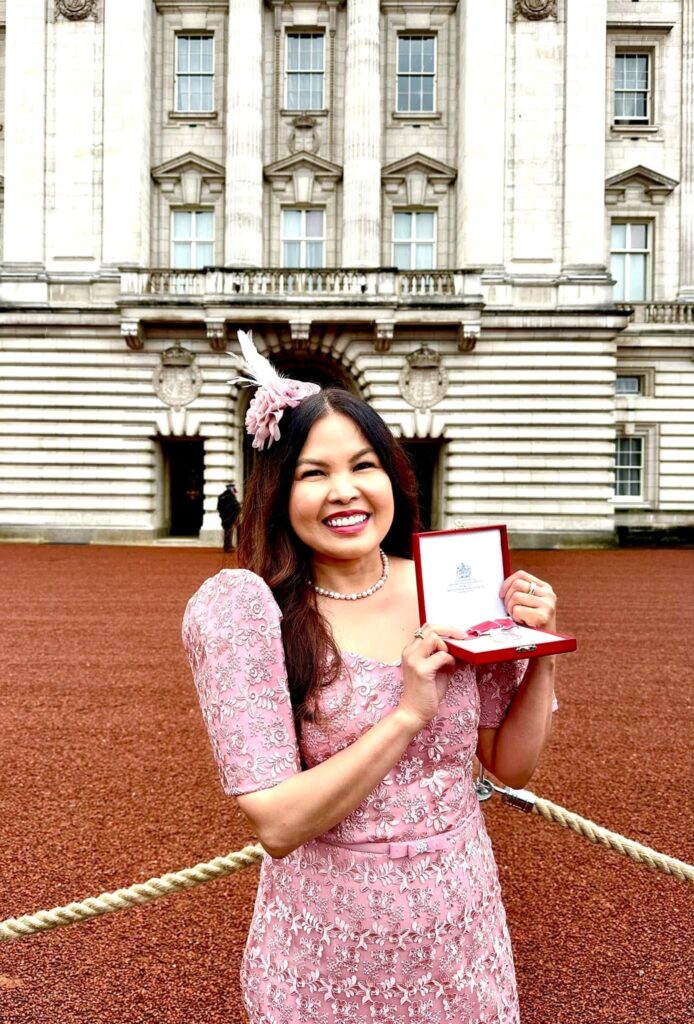
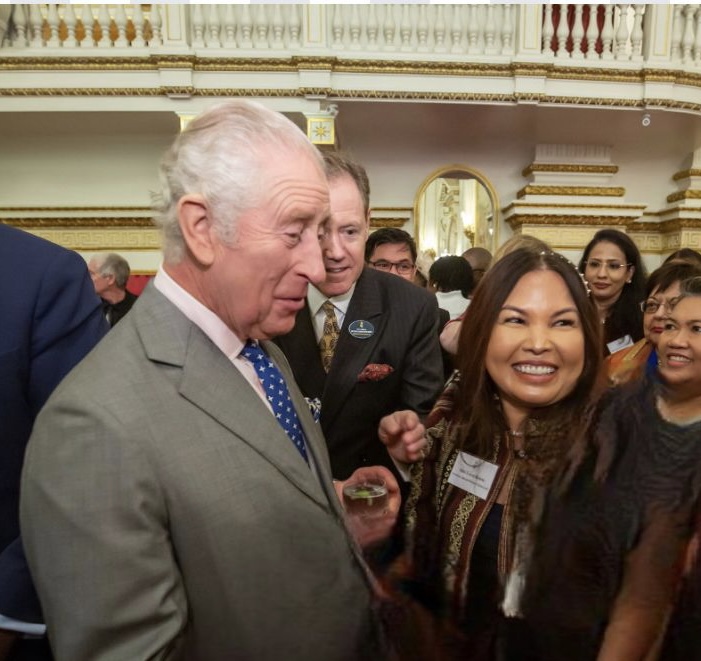
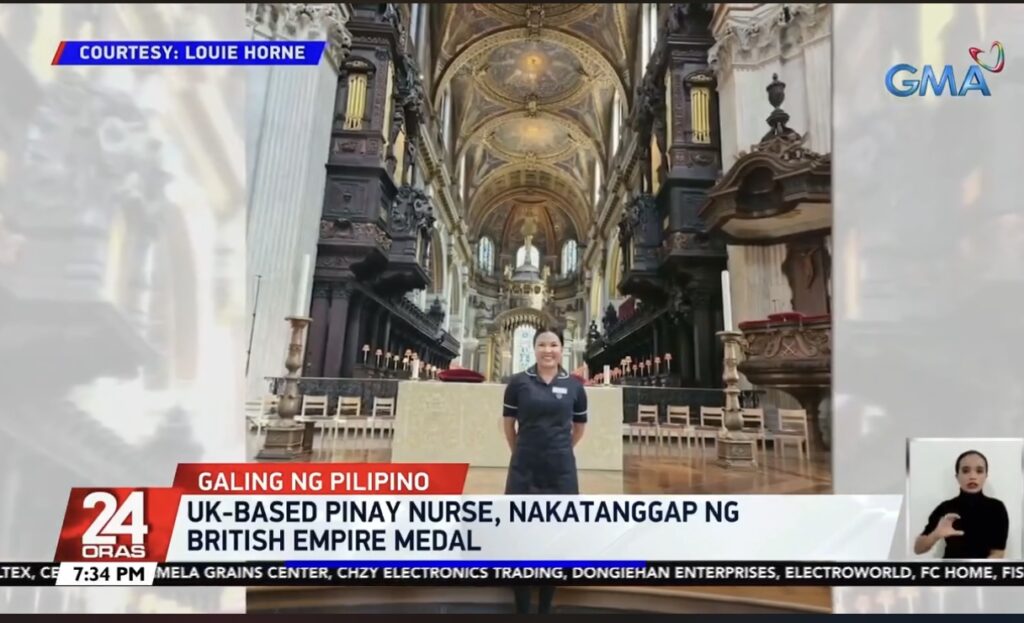
The recognition has been considerable. In 2023, Louie received the British Empire Medal in the King’s Birthday Honours for services to nursing, and she became the first Filipino nurse to serve as Lamp Bearer at the Florence Nightingale Commemoration Service, carrying the lamp that honors the founder of modern nursing. She has received the Chief Nursing Officer Silver Award and was named by the Health Service Journal among influential Black, Asian and minority ethnic leaders in health.
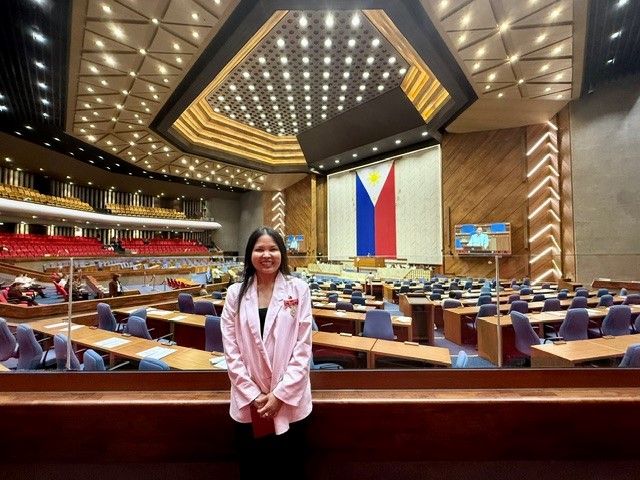
Some of the most meaningful moments brought her back home. In 2024, she was recognized at Malacañang Palace alongside other UK-based Filipino nurses who had received British honors. In August 2026, while in the Philippines on trade union work with partners focused on nurses, healthcare workers and migrant workers, she was acknowledged on the floor of the House of Representatives during deliberations on nursing legislation.
The BEM awardee does not treat any of it as the headline.
“Those moments mean a great deal to me, but I don’t see the awards or recognition as the story,” she says. “What matters to me is what they represent. A Filipino nurse who came overseas looking for opportunity can eventually find herself in places where decisions are being discussed and where our profession and our communities can be represented.”
What she does with that access is the part she dwells on.
“Working hard and progressing in your own career is one thing; using whatever influence you gain to make sure other people are heard is another,” Louie says. “Now, when I have the privilege of being in rooms where decisions affecting thousands of healthcare workers are discussed, I try never to forget the people who aren’t in those rooms.”
Gratitude without silence
Ask Louie about the benefits of working abroad and she will list them without hesitation: security for her family, exposure to other cultures, professional growth she could not have found at home. Then she adds a caution that runs against the usual script of overseas success.
“Behind many photographs of successful OFWs are sacrifices that aren’t visible,” she says, “missing family milestones, adapting to another culture, loneliness, discrimination and sometimes feeling that your right to remain in a country depends upon your employer.”
It is not a complaint, she stresses. It is context that younger workers deserve before they decide that endurance is the same thing as professionalism.
“We contribute enormously to the countries in which we work,” the Filipino nurse says. “We should be proud of that contribution without feeling that gratitude requires silence.”
Her ambitions now center on a nursing workforce where background, ethnicity, nationality and immigration status do not decide how safe someone feels speaking up. Recruitment of internationally educated nurses, she argues, is only the first step.
“We need internationally educated staff represented in leadership, policy, regulation and trade unions, not simply talked about by other people,” Louie says.
She wants Filipinos in particular to stop treating their union as an emergency number. Her advice is practical: attend meetings, become a workplace representative, ask questions and learn your rights before you need them.
“Don’t wait until you are in trouble to discover your union,” she says. “I would love to see more Filipinos not just members of unions, but active within them and eventually leading within them.”
For kababayans struggling overseas, the counsel is the same one she had to learn slowly. Know your worth. Know your rights. Don’t carry workplace problems alone out of embarrassment or fear.
“Please don’t mistake silence for professionalism,” Louie says. “You can be respectful and still ask questions. You can be grateful and still challenge unfairness. You can love your profession and still demand better from it.”
Years of equality work, and now her move into trade unionism, have sharpened a conviction she returns to often: representation without voice is not enough, and voice without the power to change anything is not enough either. When she thinks about what she wants another Filipino worker to take from her story, she rules out the obvious reading.
“It isn’t ‘look how far I have come,'” she says. “It is: ‘You have a voice. You have rights. And you don’t have to stand alone.'”
