



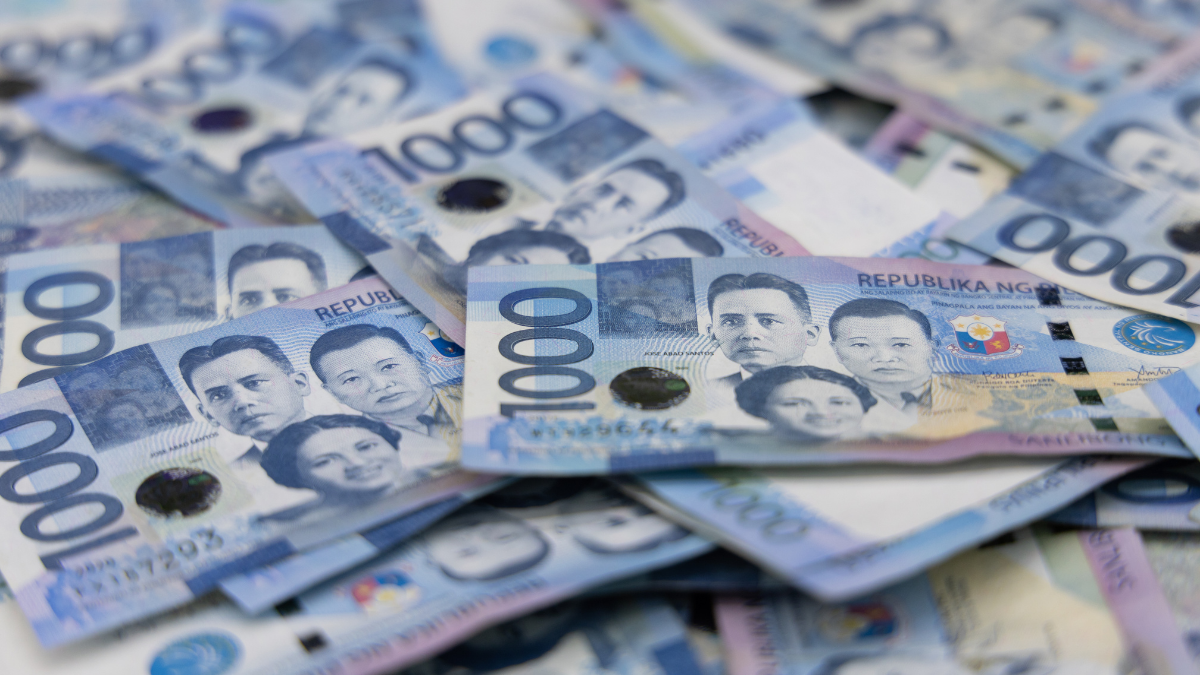

Cash sent home by Filipinos working abroad totaled $20.389 billion between January and July of 2026, a 2.3% improvement over the $19.932 billion booked during the same span a year earlier, according to preliminary figures from the Bangko Sentral ng Pilipinas (BSP). The seven-month tally underscored the steady role migrant earnings continue to play in propping up household spending and the wider economy.

Workers based on land supplied the lion’s share of that sum, sending $16.35 billion as of end-July, a 2.4% gain from the $15.97 billion recorded the previous year. Seafaring Filipinos contributed $4.04 billion over the same period, up 2% from $3.96 billion.
Geographically, the flows leaned heavily on a handful of host economies. The United States delivered 39.7% of the cash total, well ahead of Singapore at 7.1%, Saudi Arabia at 6.3%, Japan at 5%, and the United Kingdom at 4.7%. Broader personal remittances, which fold in transfers through informal channels and in-kind support alongside bank-coursed cash, climbed to $22.726 billion for the seven months, also a 2.3% annual rise.
The BSP said the sustained inflows reinforced the importance of migrant earnings to the domestic economy. “These inflows provided continued support to household consumption and domestic economic activity, underscoring the resilience of remittance flows as an important source of external financing and household income,” the central bank stated.
July alone marked a bright spot within the period. Bank-coursed cash remittances that month reached $3.24 billion, a 1.9% year-on-year gain and the strongest monthly showing since December 2025’s $3.522 billion. Compared with June’s $3.039 billion, the figure represented a 6.6% jump, while the annual pace was the quickest since May’s 2%.
Analysts credited the mid-year strength partly to the academic calendar. Ser Percival K. Peña-Reyes, a senior research fellow at the Ateneo Center for Economic Research and Development, linked the uptick to families stretching budgets for tuition. “Seasonal remittance patterns, stronger inflows from major host economies, and OFWs sending more ahead of school-related and household expenses likely lifted July flows,” he said through Facebook Messenger.

A softer peso also factored into the numbers. Jonathan L. Ravelas, senior adviser at Reyes Tacandong & Co., characterized the currency’s slide as a modest boost rather than a turning point. “Remittances continue to demonstrate resilience and remain a critical buffer for the Philippine economy,” he noted in a Viber message, adding that “the latest data suggest steady — not spectacular — growth, with the weaker peso providing additional support but not fundamentally changing the long-term trajectory of remittance inflows.”
The peso’s descent was steep during the period, sinking to a record P61.847 against the dollar on July 24 amid inflation worries, rising oil prices, and heavy demand for the greenback. Since remittances arrive in dollars, a weaker local unit lifts their value once converted into pesos, though economists cautioned the effect on underlying dollar volumes stays limited.
Peña-Reyes expected the recovery to hold through the balance of the year while tempering expectations tied to the currency. “A weaker peso raises the peso value received by families, but does not necessarily increase dollar remittances. Its boost to underlying cash-remittance growth is, therefore, likely limited,” he said.
Rizal Commercial Banking Corp. Chief Economist Michael L. Ricafort pegged growth at between 2% and 3% for the remainder of the year, citing possible drags from Middle East conditions and tighter U.S. immigration policy. He also pointed to how the exchange rate has been a mixed blessing for recipient households. “OFWs and their families to also benefit from near record-high US dollar/peso exchange rate, now at P62.80 levels, up by more than 9% since the war on Iran/Middle East started on Feb. 28… resulting in more peso proceeds from OFW remittances but offset by the resulting higher local prices or inflation, but still better off than those that just earn in pesos,” he said.
For the full year, the BSP has projected cash remittance growth of 2.7% to $36.6 billion, a slowdown from the 3.3% expansion to $35.6 billion posted in 2025.
