



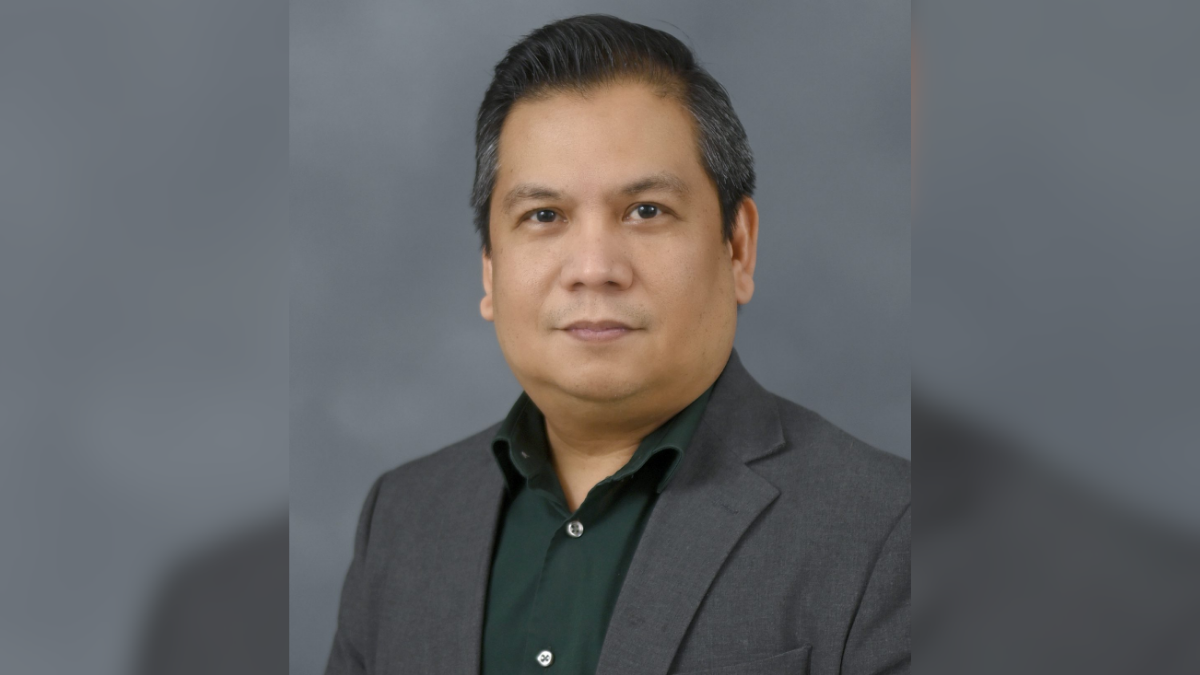

For many Filipino nurses who build successful careers overseas, migration is often described as a journey outward—from Philippine classrooms and hospitals to healthcare systems across the world. But for a growing number of Filipino nurse academics in the diaspora, professional success is also creating a journey in the opposite direction: bringing knowledge, experience, and networks back to the Philippines.

Dr. Jhordin James Montegrico, PhD, RN, CMSRN, represents this emerging form of nursing diaspora engagement.
With 33 years of combined academic and clinical experience in the Philippines and the United States, Montegrico is currently an Assistant Professor at the School of Nursing at the University of North Carolina at Charlotte. His academic journey began in the Philippines, where he earned his Bachelor of Science in Nursing, magna cum laude and as an academic scholar, from the University of Santo Tomas, followed by his Master of Science in Nursing from Saint Paul University Philippines. He later completed his PhD in Nursing Science at the University of North Carolina at Greensboro.
Yet despite establishing an academic and research career in the United States, he continues to return to the Philippines—often once or twice each year—to voluntarily share his expertise with nursing schools, faculty members, students, and researchers.
His motivation is rooted partly in reciprocity.
“As a product of the Philippine nursing education system,” he explains, returning home recognizes the institutions and people that provided the foundation for what Filipino nurse academics later accomplish internationally.
For Montegrico, however, giving back should go beyond gratitude. Diaspora engagement can be a strategic mechanism for strengthening nursing education itself.
“By re-engaging with Philippine institutions, we don’t only complete the circle, but we turn our personal advancement and achievement into a resource and blueprint for better and more positive individual and institutional outcomes,” he says.
That distinction matters. The Philippines has long educated nurses who subsequently contribute to healthcare systems internationally. Filipino academics abroad therefore accumulate considerable intellectual capital: exposure to different curricula, research environments, teaching methodologies, technologies, clinical standards, and workforce systems. When deliberately reconnected with Philippine institutions, that expertise can potentially benefit far more people than a single visiting lecture might suggest.
Montegrico sees this particularly clearly through nursing education.
His doctoral dissertation examined Filipino nurses’ preparation and performance in the NCLEX-RN. His broader academic experience has allowed him to observe the challenges nurses can encounter when transitioning between Philippine education and international professional environments.
“By bringing evidence-based and best practices, we as academics and researchers help Philippine institutions modernize nursing curricula and contribute to faculty and student development,” he explains. “This commitment ensures that the next generation of Filipino nurses is equipped not just to pass exams, but to excel on the global stage.”
His contribution also extends into research.
As a nurse scientist, Montegrico advocates strengthening research competency and productivity among Philippine nurses and institutions. His research interests encompass nursing education, the nursing workforce, and HIV/AIDS. As Director of Project SHIP—School-based HIV Initiatives in the Philippines—he sees his expertise in HIV research as carrying a particular social responsibility: helping improve awareness, reduce stigma, and contribute to better outcomes for Filipinos living with HIV.

This illustrates how diaspora knowledge exchange can move beyond the traditional idea of the returning expert delivering a lecture. A visiting nurse academic can mentor researchers, advise emerging scholars, strengthen research design, facilitate international collaborations, support publication, introduce pedagogical innovations, and connect Philippine colleagues to wider professional networks.
The potential multiplier effect is substantial.
For Montegrico, this is precisely why more Filipino nurse academics overseas should consider contributing. He acknowledges that doing so is not necessarily easy. Academics abroad already contend with teaching responsibilities, research expectations, clinical work, family commitments, and limited time. Returning to the Philippines often involves personal expense and sacrificing leave that could otherwise be used for rest or family.
But he encourages colleagues to consider their contribution through the lens of legacy rather than recognition.
“The time and resources we invest create a massive, multi-generational ripple effect,” he says. “Think about legacy—more than self-achievements and recognitions.”
Training one faculty member, for example, may influence hundreds of students over a teaching career. Mentoring one emerging researcher can contribute to future studies, publications, and subsequent generations of research trainees. Helping a nursing school strengthen its curriculum or research culture can create institutional effects lasting well beyond the diaspora academic’s visit.
“Training faculty members in modern pedagogical techniques, test-taking licensure strategies, or research process alters the trajectory of every current and future faculty or student who walks through their classroom doors,” Montegrico argues.
His story points toward a broader possibility for the Filipino nursing diaspora.
For decades, discussions about nurse migration have understandably focused on departure—the loss of skilled professionals, international recruitment, remittances, and the consequences of workforce mobility. Yet physical return is not the only way diaspora nurses can contribute to their country of origin. Knowledge can return even when careers remain overseas.
A Filipino professor in the United States can mentor a researcher in Manila. A nurse scientist can collaborate with colleagues in provincial universities. An educator can spend part of an annual Philippine visit conducting faculty development. Others can teach virtually, co-author research, advise curricula, open international networks, or mentor young Filipino nurses.
As Montegrico puts it, looking back toward the Philippines is “more than a service gesture.”
It is a strategy for strengthening nursing from its roots.
And perhaps that is one of the most powerful possibilities of the Filipino nursing diaspora: success abroad need not represent the end of a relationship with Philippine nursing. It can become the beginning of a different one—where expertise gained around the world is deliberately brought home, shared, multiplied, and passed to the next generation.
