



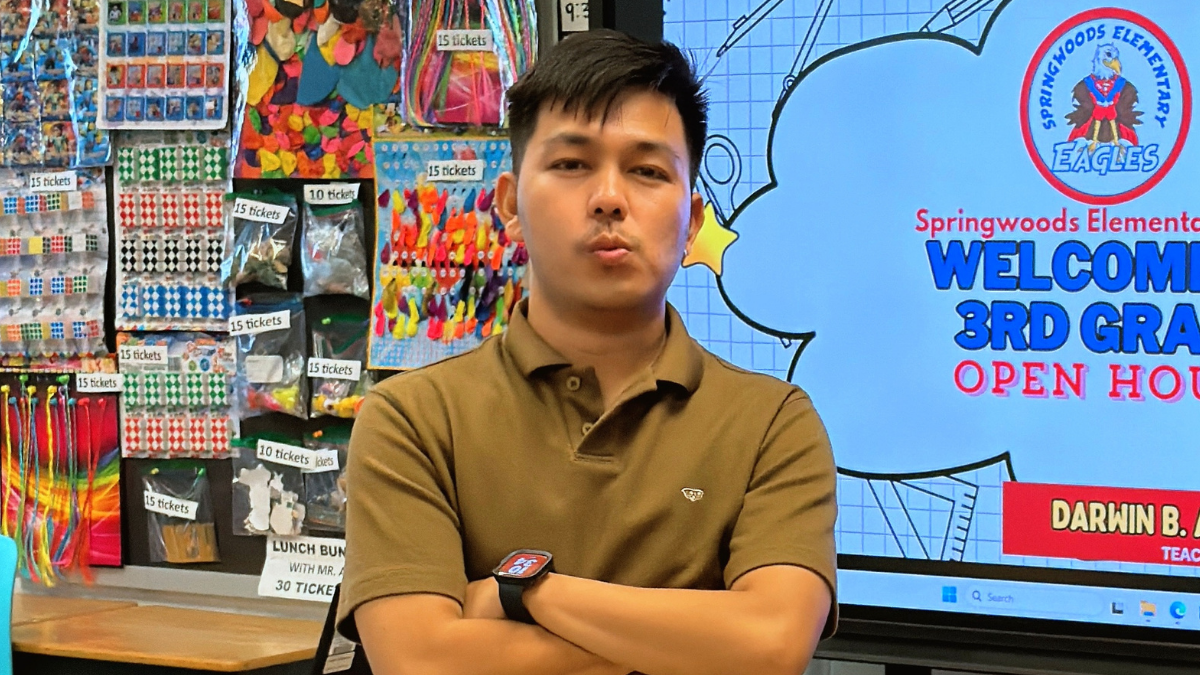

Every year, thousands of Filipino teachers weigh the same quiet math: a stable career at home against the uncertainty of a classroom half a world away. Most who make the leap are running toward something. Fewer make it while insisting they had nothing to run from. Darwin Amistouso is one of those rare few — a decade into a decorated teaching career in General Santos City, comfortable, awarded, respected, when he decided that comfort was exactly the problem.

“People often ask me, ‘Why did you choose to work abroad when you were already doing well in the Philippines?'” he shares with TGFM. “My answer is that I did not leave because I was dissatisfied with my career.”
At 32, he now teaches third grade at Springwoods Elementary School under Prince William County Public Schools in Northern Virginia, two years into a life he built from scratch on purpose. The distinction matters to him, and he returns to it often. This was not an escape. It was a decision to build on top of something already good.
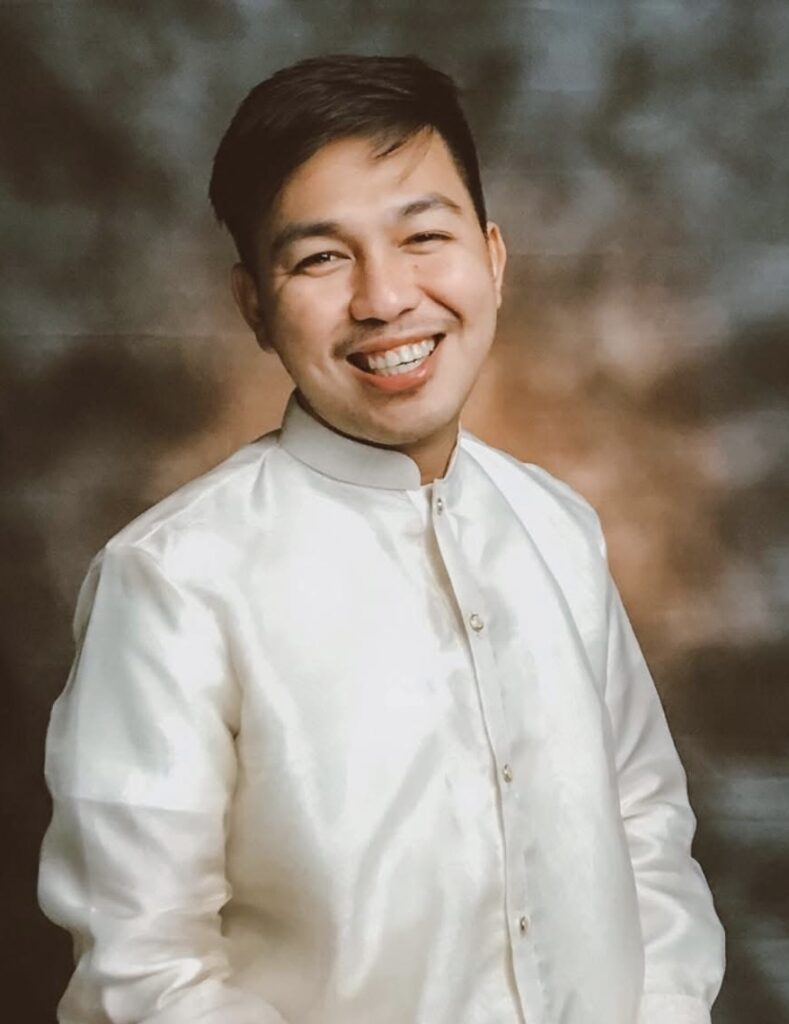
The career he didn’t need to leave
Before Virginia, there was a full life to account for. Ten years of teaching. A foundation laid at Holy Trinity College of General Santos City, where he first learned the rhythm of a classroom and picked up an early habit of taking on more than the job description required — he served as school paper adviser almost from the start. When he moved into the public school system at Conel Central Elementary School, the extra roles multiplied rather than shrank.
He became School Publication Coordinator, Campus Journalism Coordinator, and School Research Coordinator, often all at once. He coached academic competitions, and the coaching produced results: regional wins, and a run that carried his region to the National Schools Press Conference school paper contest. It was the kind of track record that gets noticed, and in 2022 it was — he was named 2nd Most Outstanding Elementary School Teacher in the Division of General Santos City.
“This was one of the proudest moments of my career,” the former General Santos teacher recalls, “because it recognized not only my work in the classroom but also my contributions to students and the wider school community.”
That is the résumé of someone with every reason to stay put. Which is what makes his answer to the question so telling. Teaching in the United States, he explains, “has been a longtime dream of mine.” Not a fallback. A dream he had simply postponed while the rest of his career unfolded.
“I am very grateful for the career I built in the Philippines, the students I taught, the leadership opportunities I received, and the recognition I earned,” he says. “I simply wanted to challenge myself and experience what it would be like to teach in a different educational system.”
In 2024, through Participate Learning — the organization that would sponsor his visa and become, in his words, a steady presence during the hardest stretch — Darwin arrived in Northern Virginia and walked into a third-grade classroom at Springwoods Elementary. The dream, finally, had a room number.
Emptying the cup
The hard part came fast, and it came from an unexpected direction. Darwin had assumed his ten years of experience would travel with him intact. Instead, he discovered that some of it needed to be set down before he could pick up anything new.
“One of the biggest challenges I faced was adapting to an overwhelming curriculum, classroom management expectations, and a new school culture,” he says. The strategies that had won him awards in General Santos did not simply transfer. The students were different. The systems were different. The unspoken rules of an American elementary school — how you manage a room, how you correct a child, how you talk to a parent — had to be relearned from the ground up.
He reached for a phrase that has become something of a personal creed. He needed, he says, to “empty my cup” — to let go of assumptions and approaches that worked in the Philippines and remain open to learning new ways of doing things.
It is a striking admission from someone who had every credential to lean on. Rather than defend what he already knew, he chose to watch and absorb. “I asked questions, listened to feedback, observed experienced teachers, reflected on my practice, and continuously adjusted my strategies, particularly in classroom management and instruction.”
The professional adjustment was only half of it. The other half was the ache that every overseas Filipino worker knows and few describe out loud. “I also experienced homesickness and moments of uncertainty,” he admits, “especially when I had to adjust to being away from my family and familiar surroundings.”
What carried him through was a support system stitched together across two continents. His family encouraged him from home. Filipino friends in the U.S. gave him a piece of the Philippines to hold onto. Participate Learning helped him navigate the transition. And around him at Springwoods were experienced teachers whose patience he studied as closely as any lesson plan.
He came out the other side with a conviction that sounds simple but took real effort to earn. “Adapting does not mean losing who I am,” he says. “It means being willing to persevere, remain resilient, empty my cup, and continuously unlearn and relearn. The challenges I faced ultimately made me a stronger, more flexible, and more confident educator.”
From new arrival to school leader

Here is where his story takes its most surprising turn. The teacher who spent his first months quietly emptying his cup did not stay in the back of the room for long.
By his second year, the recognition began to accumulate again — this time on foreign soil. In 2025 he was nominated for the Participate Learning Teacher of the Year Award, a milestone he describes as meaningful precisely because it validated the thing he had crossed an ocean to do: teach well, and build cultural exchange while doing it.
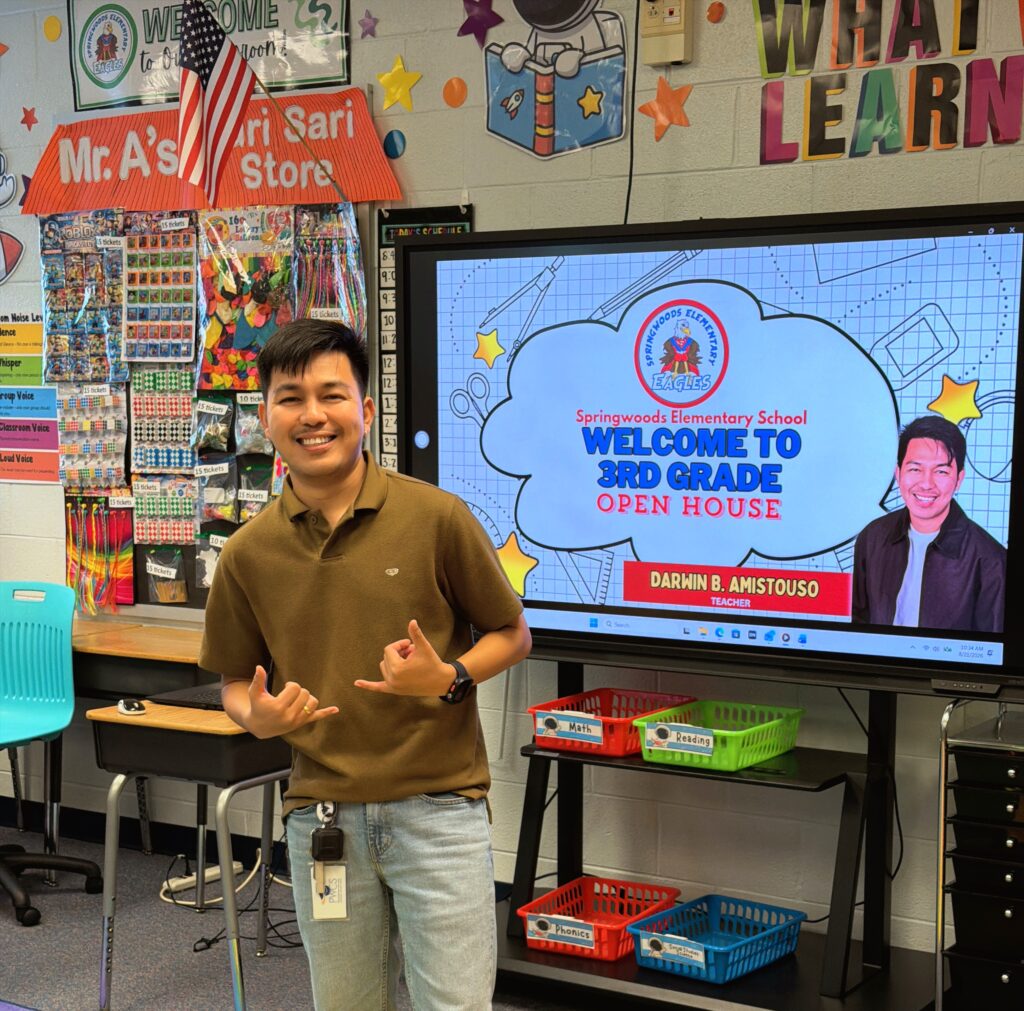
Then came the leadership roles, arriving in quick succession. During the 2025–2026 school year, he was tapped as Saturday School Coordinator, overseeing scheduling, attendance, teacher coordination, and the overall organization of a schoolwide academic program. It pulled him beyond his own classroom for the first time since arriving and let him support both students and colleagues across the building.
For the 2026–2027 school year, the assignments have grown again. He has been designated a NEST Leader, a role focused on school culture, student belonging, and schoolwide initiatives. And he has joined the Gifted Committee at Springwoods, where he takes part in the collaborative review of evidence for students identified for gifted assessment — weighing academic performance, classroom learning, strengths, and demonstrated abilities to make sure advanced learners are properly recognized and supported.
“This experience has strengthened my understanding of identifying and supporting students with advanced learning needs,” he says, “and has deepened my appreciation for equitable, evidence-based practices that recognize the diverse strengths and potential of every learner.”
For a teacher who had to relearn the basics of an American classroom only two years earlier, the arc is remarkable. He arrived as the newcomer studying everyone else. He is now, by design of his principals and the trust of his peers, one of the people others study.
What the work is really for
Strip away the titles and the committees, though, and Darwin’s account of why he teaches sounds much like it probably did on his first day in General Santos a decade ago. The satisfaction has not changed even as the setting has.
“I chose teaching because I am passionate about working with children, helping them learn, and seeing them grow both academically and personally,” he says. The most rewarding part, he adds, is watching students “gain confidence, overcome challenges, and realize their own potential.” That is the through-line connecting the boy who advised a school paper in Mindanao to the man now sitting on a gifted committee in Virginia.
There is a second thread, too, one he brings up almost every time he describes his work: culture. He does not treat his Filipino identity as something to manage or minimize in an American school. He treats it as part of the curriculum. He enjoys “sharing my Filipino culture, traditions, language, and experiences with my students and colleagues,” and he frames his entire overseas chapter in terms of representation — of standing in for Filipino educators on a stage most of them will never reach.
“Working abroad is not about leaving my career in the Philippines behind,” he says. “It is about building on what I have already accomplished and opening a new chapter in my journey as an educator. I am proud of where I came from, and I see my experience in the United States as an opportunity to grow while representing Filipino teachers on an international stage.”
Ask him what comes after Virginia, and the answer is not a return ticket but a wider map. He hopes to keep exploring — potentially teaching in other countries, learning from other communities, and using what he gathers to advocate for cultural exchange, quality education, and global understanding wherever he lands.
Your health is your greatest capital
For all his talk of ambition and growth, the advice Darwin offers other Filipinos abroad is grounded in something far more basic. He has watched too many kababayans pour themselves out for others until there is nothing left, and his counsel circles back, again and again, to a single line.
“Take care of yourself because your health is your greatest capital,” he says. “No matter how busy or difficult life becomes, make time to rest, eat well, and take care of your physical and mental well-being.”
On money, his guidance is equally plain and hard-won: work hard, manage it wisely, save, avoid unnecessary debt. And then a gentle challenge to the deep Filipino instinct to give until it hurts. “You do not have to measure your success by how much you can provide for others,” he says. “Help your family, but remember to take care of yourself, too.”
He is careful, too, about the people an OFW lets in — a lesson that lands differently when you are thousands of miles from anyone who knew you before. “Choose people you can genuinely trust,” he urges. “Surround yourself with individuals who respect you, support your goals, and bring out the best in you.” Set boundaries. Be slow to hand out that trust when home is far away. And on the days that feel impossible, “do not be afraid to ask for help.”
It is fitting advice from a man whose whole overseas story is, in the end, about balance — between the career he built and the one he is building, between the confidence to lead and the humility to empty his cup, between representing where he came from and remaining open to everywhere he has yet to go. He left the Philippines already successful. Two years on, he is proof that the point of leaving was never to become someone else. It was to find out how much further the same person could go.
“Never forget why you started,” he says. He clearly hasn’t.
