



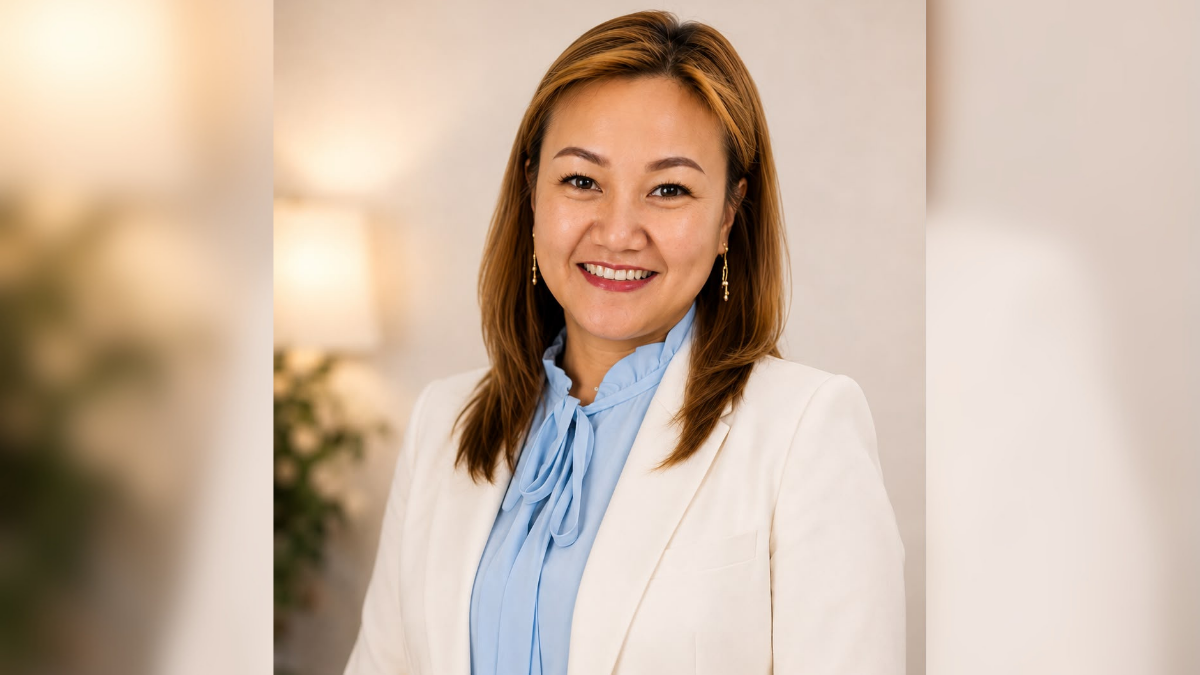

Every migrant worker knows the arithmetic of separation — the years traded now for a family reunited later, the child’s face memorized before a departure gate, the quiet arguments with yourself about whether the math will ever balance. Connie Caneo Baral ran that calculation nearly two decades ago, standing in a church beside a six-year-old who had just asked her a question she could not answer.

“She would ask me at church why other children were praying with their fathers while she was not with hers,” recalls the Filipina educator, now 42 and an Academic Senior Leader at Al Azm Charter School in Abu Dhabi. Her husband had already been in the UAE for six years, moving up from laundry attendant to supervisor. Connie was in the Philippines, raising their daughter alone, weighing a decision that no formula could solve cleanly.
She made it anyway. “I need to leave you for a while so our family will be together for a long time,” she told her daughter before boarding her own flight. It was, she admits, painful to leave her child. But she wanted the girl to understand that the separation carried a purpose — that it was a temporary sacrifice made in service of something longer and larger.
More than 17 years later, the ledger reads differently than she could have predicted. What began as a wife’s permission to study and a mother’s difficult goodbye has become one of the more quietly remarkable career arcs in the Filipino educator community in the Emirates — one that, by her account, has left her the only Filipina serving as a Senior Academic Leader for Curriculum and Assessment across Abu Dhabi’s Charter Schools.
From her own classroom to everyone’s
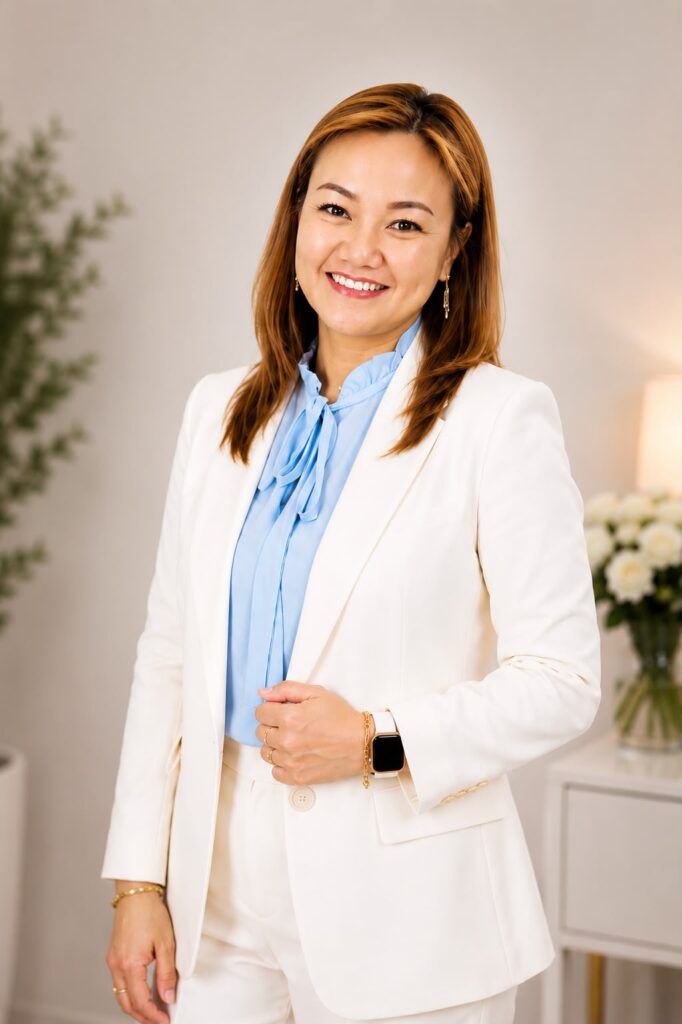
Connie’s story starts in the ordinary machinery of a Philippine school — Mathematics teacher, class teacher, Junior Scout Master, moderator of the Glee Club and the Brilliant Club. These were not glamorous roles, but they shaped a conviction she still carries: that education has to develop the whole child, not just the test-taker. Knowledge, confidence, character, leadership, responsibility. The academic answer was never the only thing worth grading.
She had earned her bachelor’s degree in Secondary Education, majoring in Mathematics, at the Polytechnic University of the Philippines – Santa Rosa Campus, where she was a Congressman Dan Fernandez Achievement Awardee. Later, she would complete a Master’s Degree in Curriculum Design, Development and Supervision at St. Paul University Manila — the second earned, improbably, while caring for a six-month-old during a global pandemic.
When she moved to Abu Dhabi in 2009, she picked up more or less where she had left off: Mathematics teacher and Scouting Coordinator, first at Philippine National School, then at Philippine Emirates Private School. Familiar work in an unfamiliar country. The real inflection came between 2017 and 2022 at GEMS Cambridge International School Abu Dhabi, where she taught Mathematics and planned Moral Education — and where she became the first Filipino to receive the school’s Outstanding Teacher Award, along with recognition as a World Class Teacher.
Then the ground shifted. She was named Head of Mathematics at Al Majd Charter School, a two-year post that pulled her, for the first time, outside the walls of her own classroom. She was no longer just teaching students; she was teaching the people who taught them — working alongside Mathematics teachers on pedagogy, curriculum, collaborative planning, assessment, intervention, and the discipline of using evidence to sharpen practice.
Something clicked there, and it reframed how she measured her own worth. “When we improve the practice of teachers, the impact reaches far beyond one classroom,” she says. Watching changes in her teachers’ methods surface in the work of thousands of students, she saw leverage she had never had as a lone teacher, however good. One improved lesson, multiplied across a department, multiplied again across a student body.
The larger classroom
After those two years of departmental leadership, Al Azm Charter School entrusted her with a broader Senior Leadership role — curriculum, teaching and learning, assessment, teacher development, whole-school improvement. Based at Al Azm, she holds a distinction she believes is hers alone: the only Filipina serving as a Senior Academic Leader for Curriculum and Assessment across the Charter Schools network in Abu Dhabi. She represented the school at an ADEK workshop on Curriculum and Assessment and brought the learning home, training teachers on implementation with an eye fixed firmly on student progress. She also took on Impact Coaching professional learning informed by John Hattie’s research, applying its principles with both Filipino and international educators — helping them set purposeful goals, weigh evidence, test new approaches, and honestly evaluate whether any of it moved the needle.
Ask her what she actually values in all this, and she does not reach for the titles. She reaches for the trust. “When people come to me with their ideas, concerns, or challenges, I feel honored that they trust me enough to share them,” she says. “It reminds me that leadership is not something I do alone; it is something we build together.” Executive leaders, middle leaders, teachers, operations staff, parents, students — she reads their willingness to bring her their problems as the truest measure that she is doing the job.
There is a line she returns to that captures how her thinking evolved, and it is the kind of thing only a longtime teacher would say. “My students taught me that a correct answer is not always the greatest achievement — the confidence to keep trying can be.” That insight, she explains, is what pulled her toward leadership in the first place. If a struggling student’s breakthrough moment mattered more than a perfect worksheet, then helping many teachers manufacture many more of those moments was simply the same work, scaled up.
She insists she has not stopped being that classroom teacher. “Even as a Senior Leader, I remind myself that I am still Connie the teacher — curious, willing to listen, and willing to learn,” she says. “Leadership has simply allowed me to learn and serve on a much larger scale.” She frames the whole progression in almost humble terms: leadership, she says, just gave her a bigger room.
Her personal philosophy has a name — REPLICA — and a creed to go with it: “Our students’ and teachers’ determination is my aspiration; their success is our greatest achievement.” Stripped of the acronym, it amounts to a belief that the lessons, trust, and opportunities others hand you are meant to keep moving, passed forward through every life you touch.

What a port-wine stain taught a math teacher
The most consequential lesson of Connie’s career did not come from a workshop or an accreditation review. It came from her youngest daughter.
The child was born with a port-wine stain — a birthmark that, in some cases, can be associated with neurological complications. For a mother, it was a source of worry. For an educator, it was a reordering of everything. “She became an inspiration for my advocacy for inclusive education,” Connie says, “to encourage teachers to see the learner before the limitation and help every student treasure their own journey towards success.”
That phrase — the learner before the limitation — has become the spine of how she now talks about teaching. Every child, she argues, arrives with different needs, strengths, and circumstances, and the job is to understand a student for who they are rather than measure them only against what they cannot do. It is easy to say and hard to practice, which is perhaps why she says it so often.
Her résumé is dotted with the kind of resilience stories that migrant professionals recognize instantly. There was the pandemic, which she navigated while nursing a six-month-old and finishing a master’s degree, refusing to let the circumstances become an excuse. “I chose not to let the circumstances stop me; instead, they taught me discipline, adaptability, and perseverance,” she says. Even as education buckled under lockdowns and periods of regional conflict, she and her colleagues kept teaching, kept training teachers online, kept engineering ways for learning to continue. Their NEASC accreditation, earned with strong marks shortly after a stretch of distance learning, she counts as proof that disruption need not lower the bar.
She is careful, always, to name the people who carried her. “My husband was the first person who believed in me and supported my education,” she says, “while my parents, siblings, aunts, uncles, and CFC family were the wings beneath our wings.” She extends the same gratitude to the leaders and organizations who kept betting on her. Resilience, in her telling, was never a solo act — and never merely survival. “Resilience is not simply surviving difficult seasons,” she says. “It is continuing to grow, serve, and create opportunities for others despite them.”
A seat at the table, not above it
There is a quiet argument running underneath everything Connie says, and it concerns her fellow Filipinos. Seventeen years in a multicultural system — different people, different pedagogies, different assumptions about who gets to lead — hardened a conviction she now states plainly: Filipino educators belong at the leadership table. Not, she is quick to clarify, above anyone. Alongside them.
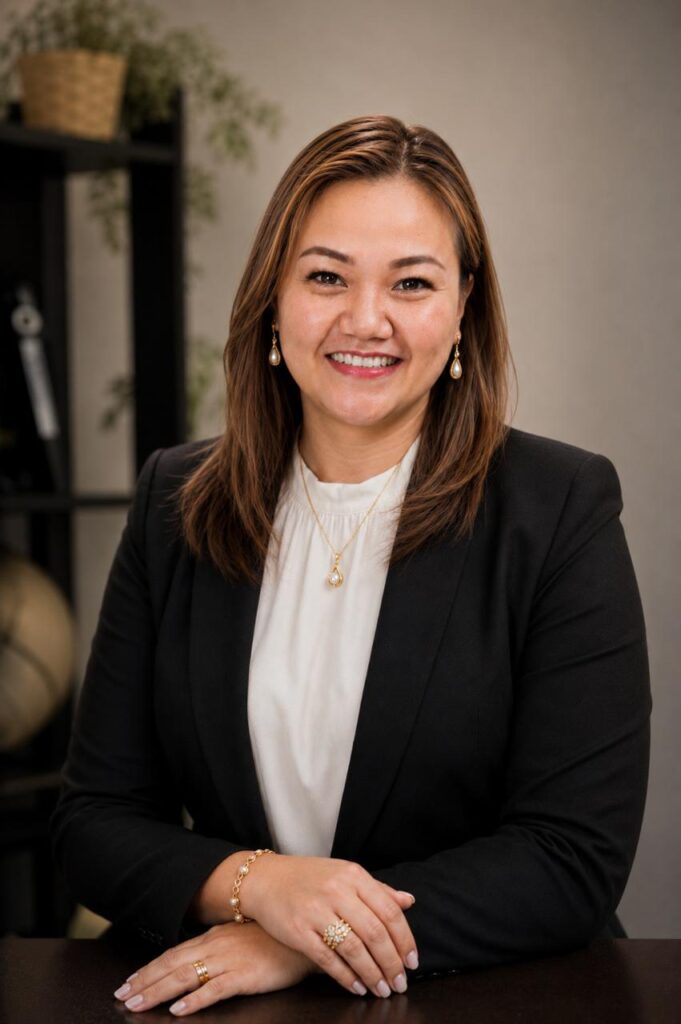
“I believe Filipino educators deserve a place at the leadership table — not to be above others, but to stand alongside them, contribute our expertise, develop others, and create an impact that reaches far beyond ourselves,” she says. Her own climb — from teacher, to pastoral roles, to middle leadership, to senior academic leadership — happened because institutions were willing to trust her with more. She treats that trust as something owed forward, a debt to be repaid to the next Filipino educator still figuring out what they might become.
Her advice to kababayans navigating life overseas is unsentimental and practical. Stay grounded while you grow. Work with integrity. Manage your money wisely. Build relationships carefully, and never stop learning from the people around you. She carries a small framework her sister once passed along from a mentor — the ABC of leadership. “Attitude helps us face circumstances, Belief gives us courage to pursue our potential, and Character determines who we remain when circumstances change,” she explains. To it she has added a conviction shaped by her own executive leaders: that Filipinos are not less than anyone.
“Do not be afraid to start small or begin again,” she says. “Be fair to everyone, regardless of nationality or position, because integrity has no boundaries.” And then a reminder that doubles as a warning against the very ambition that sends so many abroad: “You may be away from home to build a better life, but never be so focused on your destination that you forget the values that brought you there.”
What else can I contribute?
When the overseas chapter eventually closes, Connie does not picture herself returning home with a suitcase full of titles. She pictures lessons, experience, knowledge — things she can hand off. She wants to keep serving through teacher coaching, academic leadership, curriculum development, and the mentoring of future Filipino leaders, particularly those who need convincing that their influence can reach beyond their own four walls. The inclusive-education advocacy, born from her daughter’s journey, will stay close.
She has, she says, reached a stage where the question has quietly changed. “At this stage of my life, I am less interested in asking, ‘What else can I achieve?’ and more interested in asking, ‘What else can I contribute?'” More than seventeen years of leaders, teachers, students, parents, colleagues, and hard experiences have left her with a conviction that sounds almost like a confession for someone who spent a career at the front of a room: “We may think we are teaching others, but in many ways, we are learning with them.”
The math, in the end, did balance — though not in the currency she first expected. The daughter who once wondered why she prayed without her father grew up inside a family finally assembled. And the teacher who left one classroom to make it possible found herself, improbably, in charge of thousands. “If I can leave people better, more confident, and more hopeful than when I met them,” she says, “then I believe I have done something worthwhile.”
For a woman who built a life out of Mathematics, it is a fitting sum. The titles change; the positions change. What endures is quieter, and it does not fit neatly on a door.
