



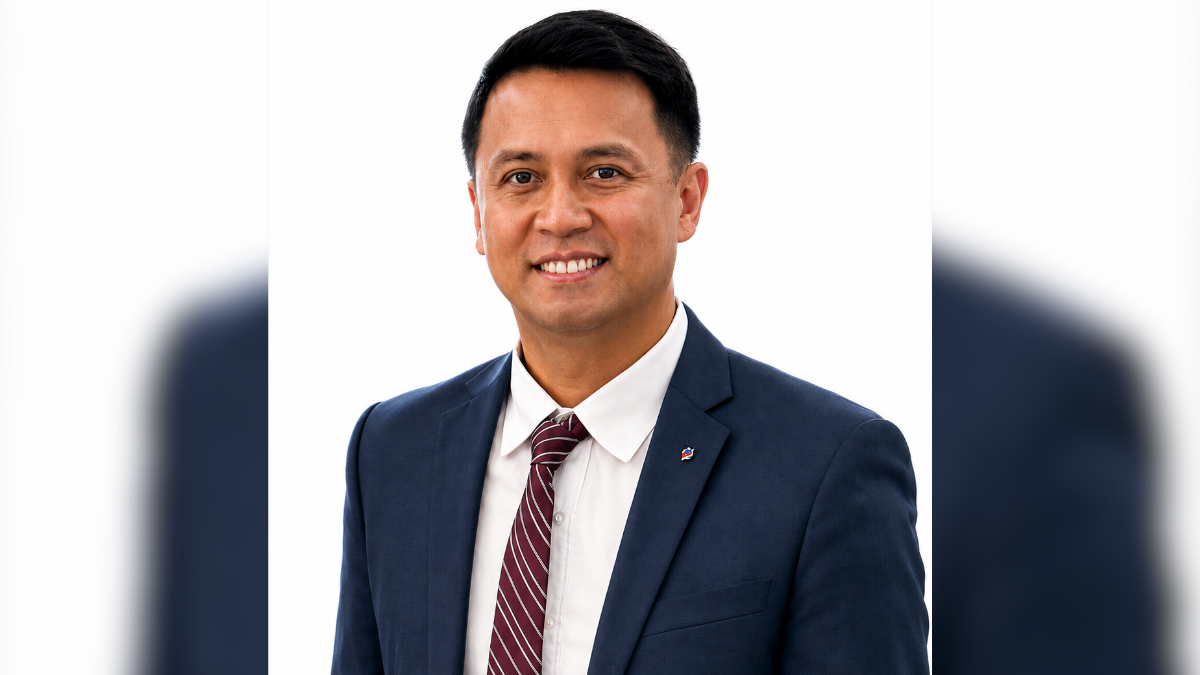

Every Filipino who leaves for a job overseas carries a version of the same arithmetic: the salary that will change the family’s future, weighed against the weight of everything left behind. Most people talk about the first half. Fewer talk about the grief that sometimes travels in the luggage. John Mark A. Ebron, 41, a Physical Science teacher at Nogales High School in Arizona, knows both columns of that ledger by heart — and he built a life abroad anyway, one careful step at a time.

Three years ago, he walked into a Grade 9 classroom in a border town in the American Southwest, a long way from the barangay in Camarines Sur where his story began. Today he teaches physics to teenagers, coaches the school chess team, and shares the profession with his wife, who teaches at the same level of the American system he was still learning to read. It is, by most measures, a good life. What makes it remarkable is everything that had to happen — and everything that had to be survived — for him to get there.
From the barangay hall to the classroom
Before he was a teacher, he was a public servant, and a young one. From 2002 to 2007 he served as Sangguniang Kabataan Chairman of Poblacion, Pamplona, in Camarines Sur, then spent three consecutive terms as a Barangay Kagawad from 2007 to 2013. That is more than a decade of local governance — youth programs, community activities, the unglamorous machinery of small-town public life — before he ever stood in front of a chalkboard.
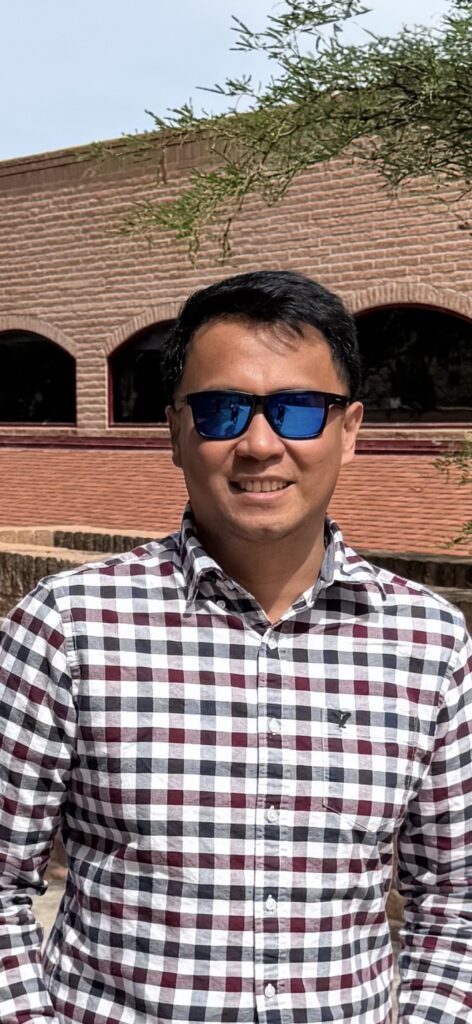
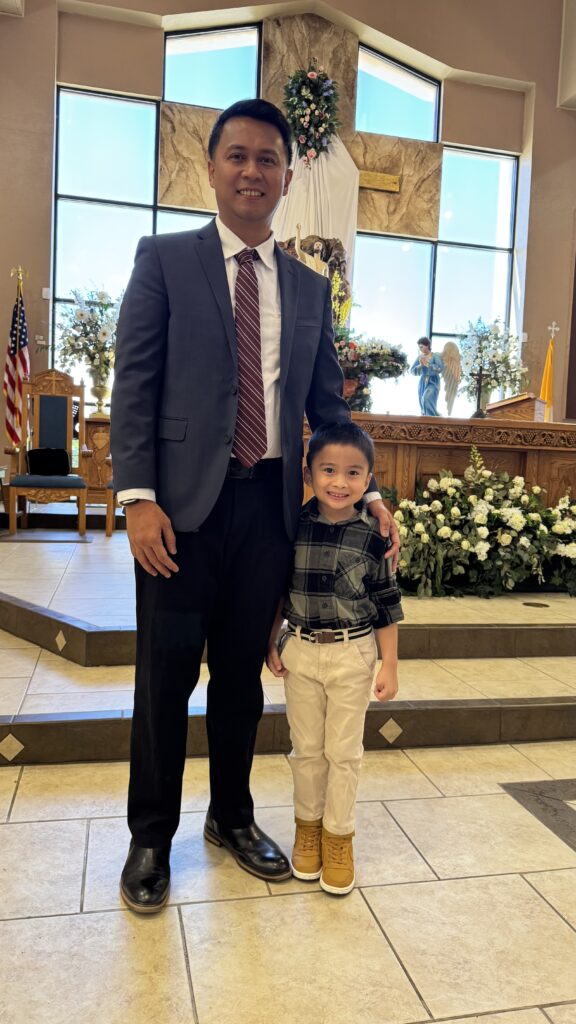
Then, in 2013, he walked away from it. He resigned his seat as Kagawad to chase something that had been tugging at him the whole time. “I resigned from my position as Barangay Kagawad to pursue my passion for education,” John Mark explains with TGFM. He started at Batang Elementary School in Pamplona and stayed for roughly ten years, teaching by day and folding himself into the extracurricular life of the district.
One assignment from those years still stands out. The Bicolano teacher was tapped by the Division of Camarines Sur to help officiate the Paralympic Games, serving as an official for para-swimming. “It was a meaningful experience because it allowed me to support athletes with disabilities and contribute to an inclusive sporting event,” he recalls. It was the kind of work that doesn’t pad a résumé so much as it shapes a worldview — and years later, it would quietly become the seed of his advocacy.
The arc from youth leadership to community service to the classroom wasn’t a series of career pivots so much as a single, consistent instinct. “My journey has shaped me into an educator who values service, leadership, perseverance, and giving back to the community,” John Mark says. Every stop had the same throughline: show up for people, especially young ones.
The decision to leave
There is a comfortable story Filipinos tell about working abroad, and it is mostly about money. John Mark doesn’t dodge that part. The salary and benefits of an American teaching job, the former Kagawad says plainly, are “significantly better than what I earned in the Philippines,” and that difference reshaped what his family could plan for. He is too honest an accountant of his own life to pretend otherwise.
But the money was never the whole reason, and he is careful to say so. He wanted to be challenged — to see how a different system taught, to work with students whose backgrounds looked nothing like the ones he knew, to find out what kind of teacher he’d become under unfamiliar conditions. “I wanted to grow, provide, and make a difference,” John Mark says. “I believe that every challenge comes with an opportunity.”
None of that made the leaving easy. It meant a new culture, a new curriculum, and distance from the people and places of a lifetime. He weighed it the way most migrant workers do — not as an adventure, but as a calculated risk taken on behalf of the people he loves. He bet that the hard parts would make him a stronger teacher. Three years in, the bet looks sound.
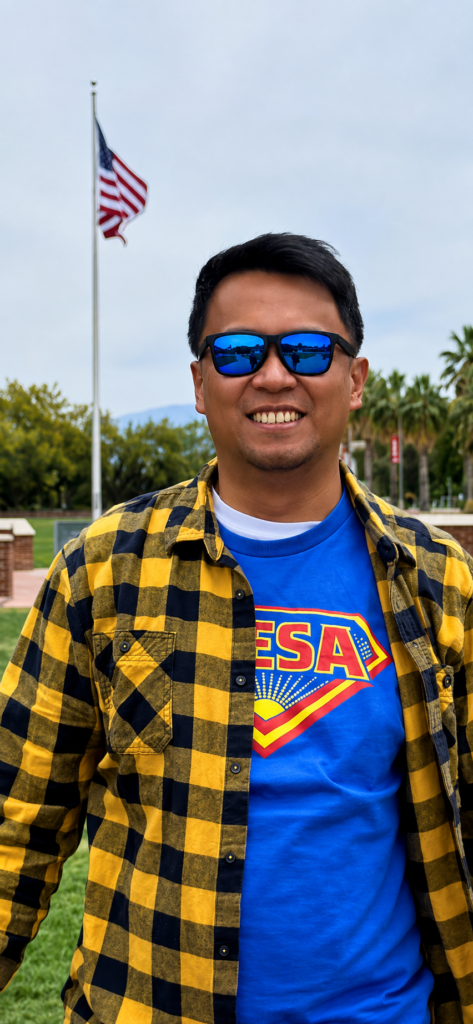
His first overseas posting was the one he still holds: Physical Science at Nogales High School, where he plans and delivers lessons, assesses learning, manages a classroom of ninth graders, and — in a detail he clearly relishes — coaches chess. The chess is not incidental. It’s the same impulse that made him an SK Chairman at nineteen, the belief that some of the most important teaching happens after the bell rings.


The loss that reshaped everything

Then there is the part of the story that does not fit neatly into any migration success narrative, the part he tells without flinching. During the pandemic, he lost his daughter, Julia Czarina.
“Her passing was devastating,” John Mark says, “and there was a time when I could not even think clearly about what my next step would be.” For a while, the grieving father moved through his days on something like autopilot — “trying to cope with the pain and the situation around me.” It is a rare thing for a professional profile to hold a sentence that raw, and rarer still that the person offering it does so to be useful to someone else who might be grieving.
What pulled him back was almost impossibly poignant. His son, Julian Marcus — Zi-Em to the family — was born on the same date as the daughter he had lost. He does not treat the coincidence as tidy consolation. He treats it as a reason. “That coincidence became a meaningful reminder that even in the middle of great loss, life can still bring hope and a reason to keep moving forward,” he says.
He is emphatic about how he got through it, and the answer is not willpower. It’s people. His family stayed beside him. So did a specific roster of friends and colleagues from the Pamplona District Teachers he can still name without pausing — Eboy, Aldren, Rocky, Jay, Isagani, Elmo, Ernesto, and Arjay. “Their friendship, encouragement, and simple efforts to cheer me up meant a lot during a very difficult period in my life,” John Mark recalls.
The lesson the teacher took from the worst year of his life is not that grief ends. “Overcoming struggles does not mean forgetting the pain,” he says. “It means learning how to live with it, finding strength in the people around you, and continuing to move forward.” That sentence is more or less the philosophy he now carries into a foreign classroom every morning.
What the work gives back
Ask what he loves about the job now, and the answer isn’t the physics, though John Mark still lights up when a struggling student finally grasps a hard concept. It’s that the work and the family are, for once, in the same place. His wife teaches in the same American system, so the two of them trade notes and troubleshoot the same unfamiliar terrain together. “We are able to support each other and share our experiences as educators,” he says.
The stability has bought them ordinary joys that were harder to reach before. Last summer the family drove out to see New Mexico, Colorado, and Las Vegas — the kind of trip that’s really about time together, dressed up as a vacation. “The most satisfying part of my work is knowing that I can provide for my family while continuing to do what I love,” the Bicolano educator says. For a man who once described going through his days in automatic mode, the deliberate act of making memories reads like its own quiet victory.
The plan to bring it home
He is clear that the American chapter has an ending, and that the ending is the point. When his tenure abroad is done, he wants to go back to the Philippines and pour what he’s learned into education at home — new strategies, a wider perspective, and a stubborn belief that Filipino teachers deserve room to grow.
His advocacy is already chosen. Inclusive education sits at the center of it, the direct inheritance of those days officiating para-swimming for athletes most events overlook. He wants to keep investing in young people through education, sports, and yes, chess — the same wager on youth he’s been placing since he was barely out of his teens. “Investing in young people is an investment in the future of the community,” he says.
For the kababayan still finding their footing overseas, John Mark’s counsel is grounded and unromantic. Manage your money, and don’t perform success you haven’t secured: “Do not feel pressured to show that you are successful just because you are working abroad.” Protect your relationships across the distance. Respect the laws and culture of the place that took you in. And, most of all, don’t try to carry it alone — a lesson the chess coach learned in the hardest possible way. “We may be far from the Philippines,” he says, “but we can still create a strong support system abroad.”
It comes back, in the end, to the line he repeats like a compass heading: “Keep moving forward, stay humble, and never give up on the life you are working to build.” He has earned every word of it.
