




The Philippine Army leaned on its own appropriations to stage a series of youth summits in 2023, an active-duty colonel told the Senate impeachment court, undercutting the paper trail the Department of Education assembled to account for millions in secret spending during Vice President Sara Duterte’s stint as education chief.

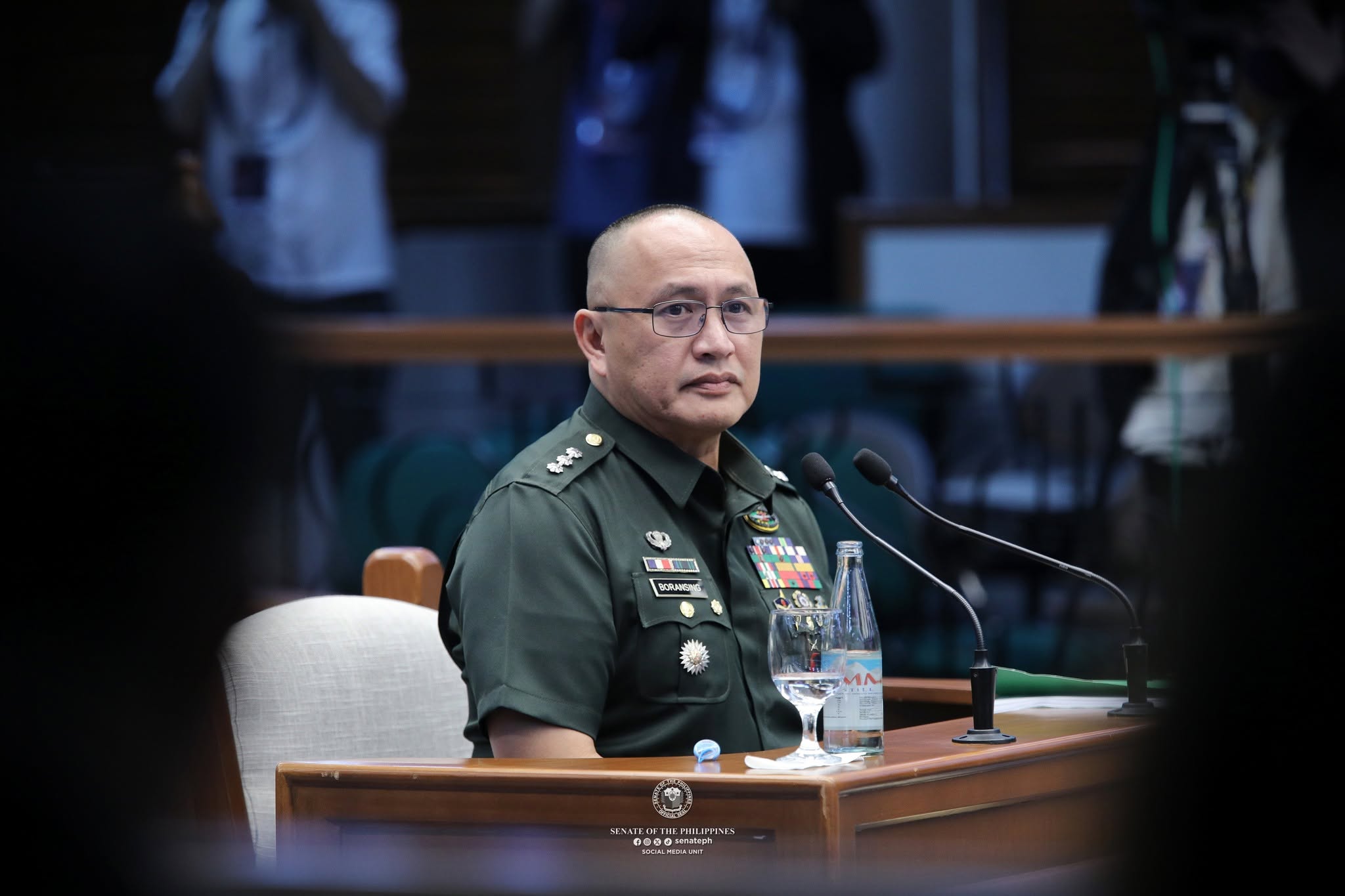
Col. Manaros Boransing II, who served as assistant chief of staff for civil and military operations of the First Infantry “Tabak” Division and now commands Task Force Zamboanga, appeared on the trial’s 20th day. Between January and December 2023, he oversaw the division’s Youth Leadership Summit (YLS) and its Information Education Campaign (IEC). Pressed by House private prosecutor Reynaldo Robles on how much the education department channeled to the unit for those programs, Boransing was categorical. “There was no funding released to the 1st Infantry Division from DepEd, of any source,” he said. He extended that denial to the Office of the Vice President and its Vice Presidential Security and Protection Group, none of which, he testified, put money toward the division’s summit or campaign work that year.
The document at the heart of the questioning was a certificate of attendance Boransing signed on January 1, 2024, at DepEd’s request. He agreed with Robles that the paper was meant to do one thing only: record which stakeholders showed up for the activities. What happened to it afterward, he said, he learned about later. DepEd forwarded the certificate to the Commission on Audit as “proof of success of information gathering or surveillance activity,” casting it as support for P15.54 million in confidential funds the department described as rewards.

When Robles moved to establish the moment Boransing realized his signature had been repurposed, defense counsel Lindon Bacquel cut in, telling the court the question rested on nothing in evidence. Robles held that the point was already lodged in the case record. Bombo Radyo reported that the exchange turned on whether the prosecutor could probe the certificate’s downstream use at all; Robles maintained the documents were official filings in the proceeding.
The financing that did keep the summits running came from a patchwork of contributors, Boransing explained. Local government units carried the tab for the young participants, while lecturers, delegates from other agencies, and outside stakeholders paid their own way. That structure left the actual outlay modest. The Philippine News Agency reported the colonel pegged each summit’s cost in the range of P30,000 to P60,000; questioned by Sen. Bam Aquino, he placed the military’s operational spend per event at roughly P30,000, according to Philstar, a figure the senator set against the far larger confidential sums DepEd tied to surveillance work.
Eight YLS events ran under the Army’s watch across 2023. The summit itself is not new: it has operated since 2002 with the Philippine Army as lead agency, built to blunt the pull of violent extremist groups on young people in areas troubled by communist insurgency. That longevity, spanning more than two decades and predating Duterte’s Cabinet post, framed the prosecution’s argument that the program stood on its own long before it was invoked to answer state auditors.
