



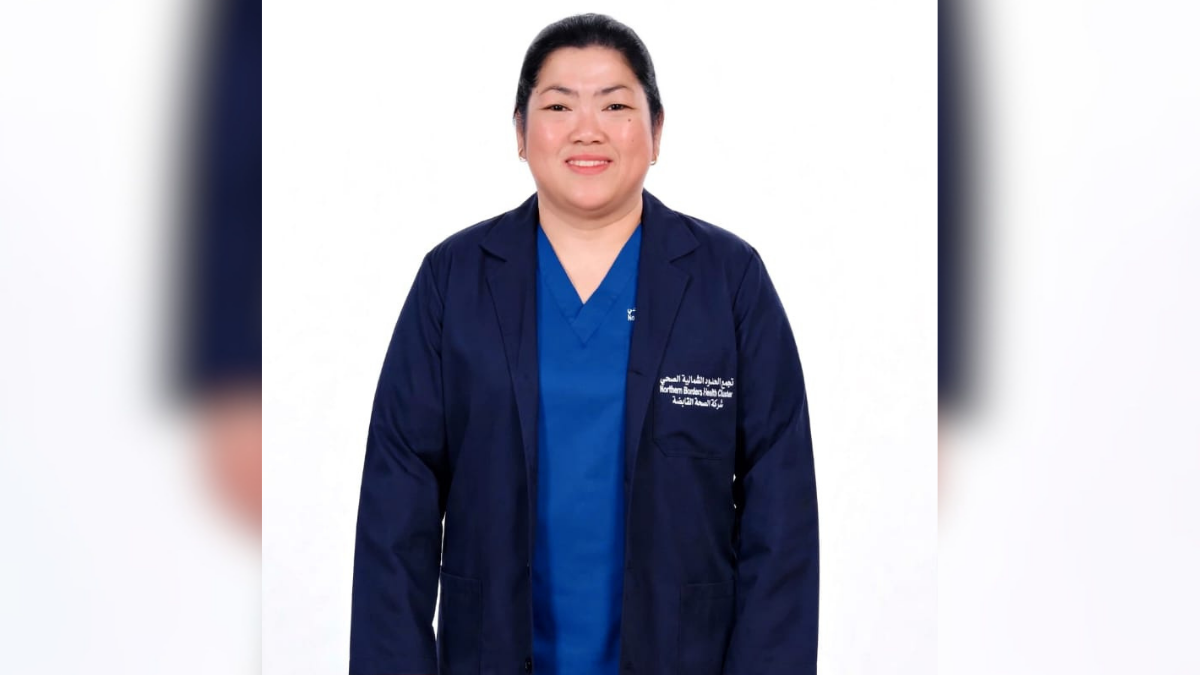

Most people picture nursing as a bedside act — a hand held, a wound dressed, a fever watched through the night. It is intimate work, measured one patient at a time. But there is another kind of nurse whose patients never learn her name, whose victories are counted in infections that never happened, whose entire craft is built around a threat no one can see. Michelle Enderes-Mangubat has spent the better part of two decades in that quieter, harder line of work, and she wouldn’t trade it for anything.

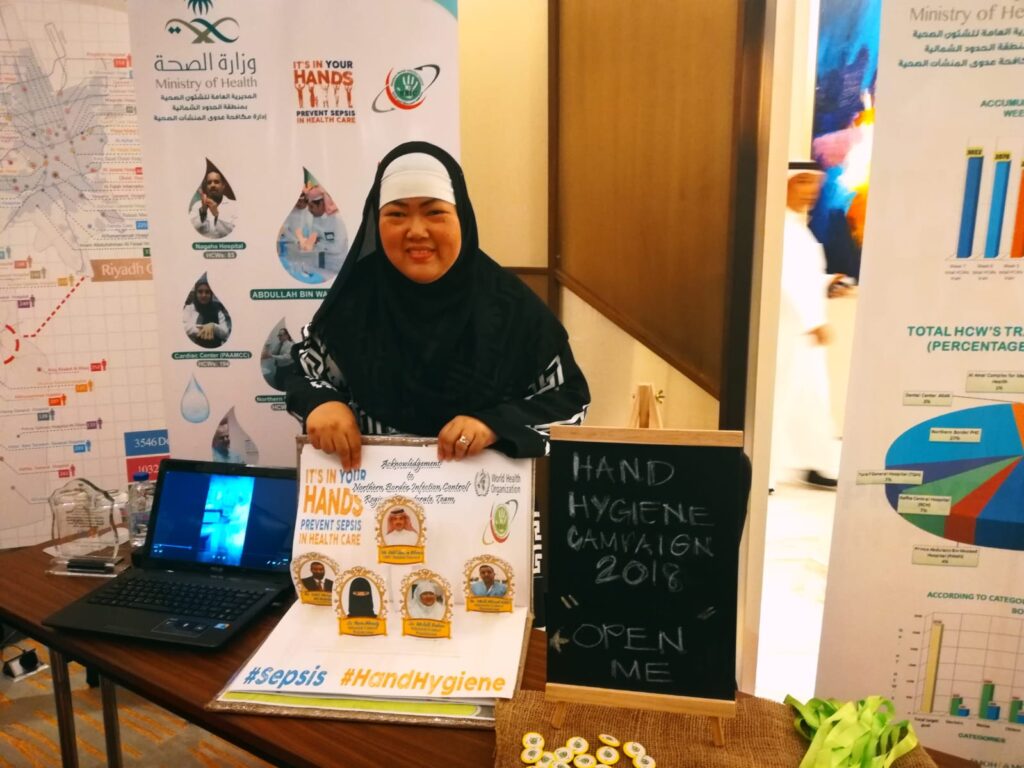
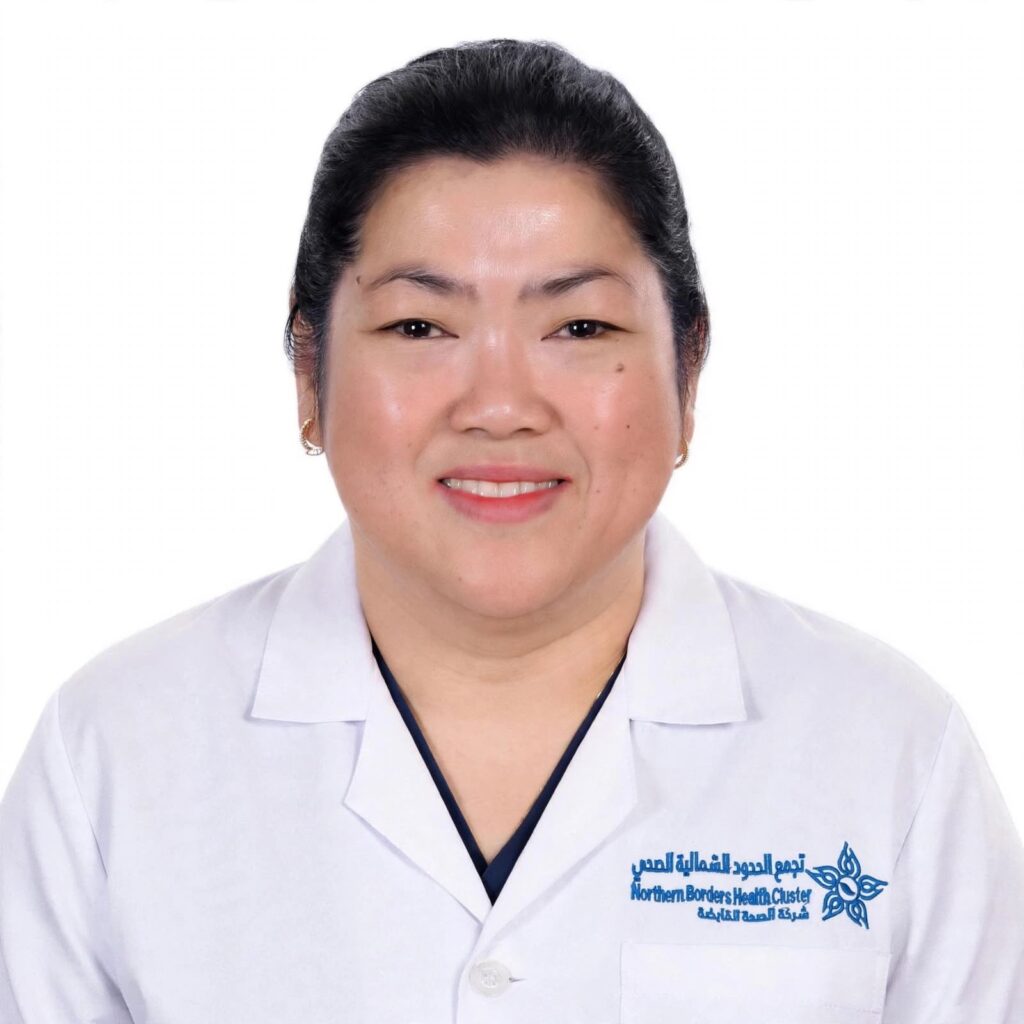
At 47, she serves as a Regional Infection Control Practitioner with the Ministry of Health’s North Border Regional Health Cluster in Saudi Arabia, a role that stretches her reach across 11 hospitals, 44 Primary Health Care Centers, and 3 dental centers. Her days are filled with the technical vocabulary of her field — surveillance for CLABSI, CAUTI, VAE, SSI, dialysis events, and MDROs; hand hygiene monitoring; audits; bundle compliance; data analysis; education. Behind all of it sits a single, stubborn goal: keeping people safe from the harm that hides inside the very places built to heal them.
But she did not begin here. She began, as many Filipino nurses do, with a plane ticket and a much simpler intention.
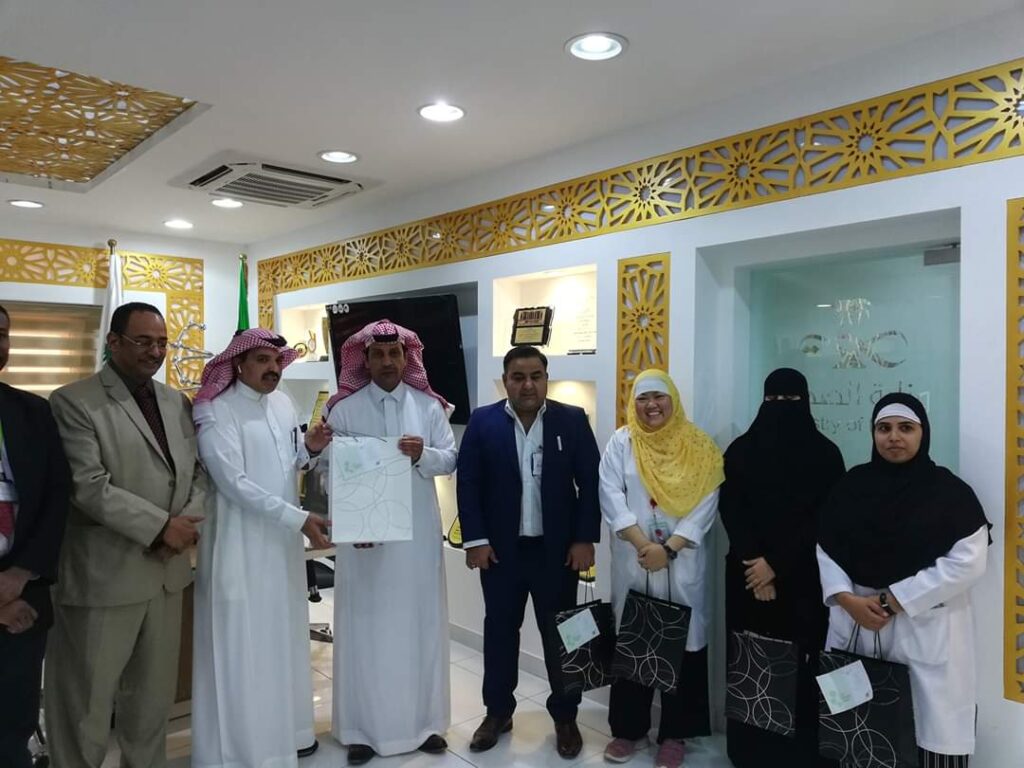
A decision to leave, a career she never planned
In March 2002, at 21 years old, she boarded a flight to Saudi Arabia with roughly a year of nursing experience behind her and a family to support back home. Her first overseas post was as an Emergency Room Staff Nurse at King Fahad Hospital in Al-Ahsa, Al Hofuf, a facility of about 500 beds where the pace left little room for hesitation. She learned triage, rapid assessment, and clinical decision-making the way emergency nurses always do — under pressure, in real time, with no margin for error.
The reason she left was neither ambition nor adventure. It was arithmetic.
“Coming from the Philippines, I decided to pursue employment abroad primarily to achieve financial stability and provide better opportunities and security for my family,” she shares with TGFM. She understood the cost of that choice early. “At a young age, I understood that working overseas would require sacrifices — being away from my loved ones, adapting to a new culture, and facing challenges independently.”
What she could not have predicted was how thoroughly the destination would rewrite the destination she had imagined. “What started as a decision to support my family eventually became a journey of personal growth, professional development, and meaningful contribution to patient safety,” she reflects. “I left home to support my family, but along the way, I discovered a career that gave my work a greater purpose.”
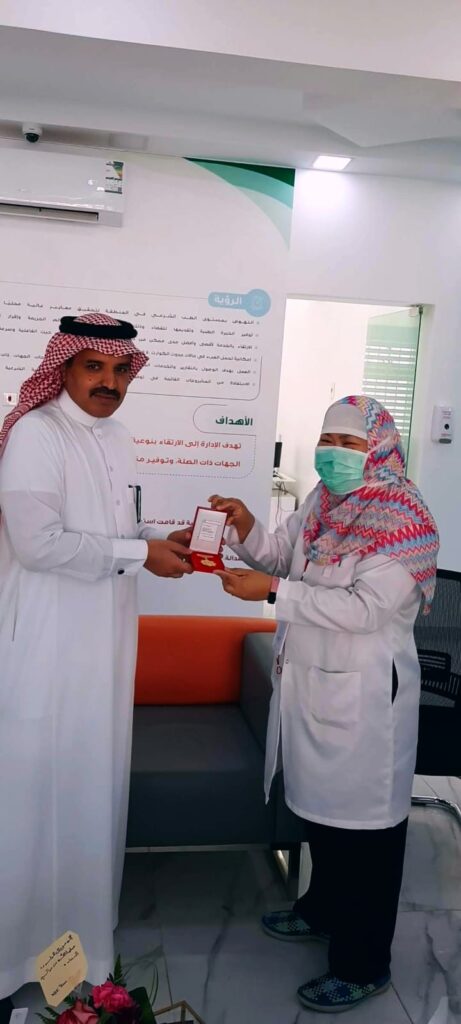
From the emergency room she moved to medical-surgical wards, then to Arar Central Hospital, where she also served as an infection control nurse reliever — a small, almost incidental assignment that would prove to be the hinge her whole career swung on. Direct patient care sharpened her clinical judgment and her ability to work across multidisciplinary teams. But the reliever role planted a seed.
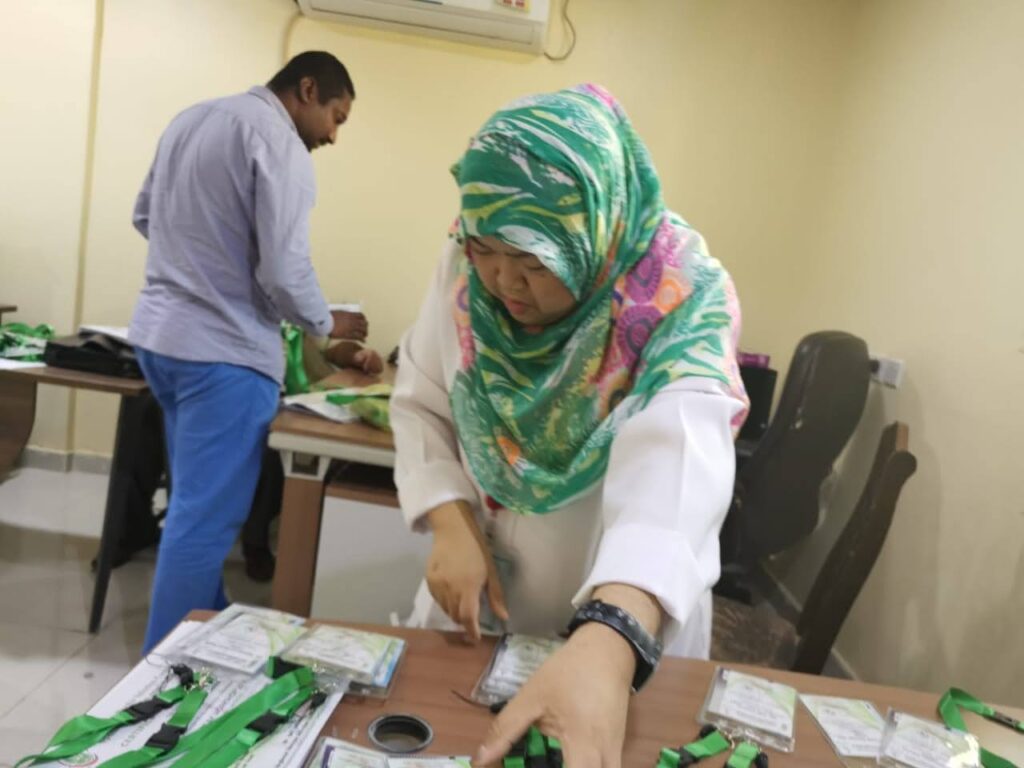
Building something from almost nothing
The turning point arrived at Prince Abdulaziz Bin Musaad Hospital, a 110-bed Ministry of Health facility, where she was offered a full move into Infection Prevention and Control. It was an opportunity she was, by her own honest accounting, underqualified for.
“When I first became involved in Infection Control, I had limited formal experience and no specialized certification,” she admits. What she had instead was a willingness to say yes. With the backing of hospital leadership, she trained, absorbed, and slowly built her expertise from the ground up — surveillance, prevention policies, device-associated infections, communicable disease control, staff education, quality improvement.
Then came the part she is proudest of. She joined the small pioneering team that helped establish the regional Infection Control department in the North Border Region — not inheriting a program, but constructing one. “Being part of that journey — from learning the fundamentals to helping build a functioning regional program — remains one of my proudest professional achievements,” she says.
There is a rare symmetry in how she describes those years, one that captures the whole arc of her working life. “I grew with Infection Control, and Infection Control grew with me. What started as a field I entered with limited experience eventually became my passion and my area of expertise.”
It is worth pausing on what that means in practice. When she started, infection prevention in the region was informal, scattered, largely improvised. Over two decades she watched it become structured, evidence-based, and systematic — hand hygiene programs, auditing systems, coordinated surveillance, accountability. And she was not a bystander to that evolution. “I did not simply experience the changes — I was part of them.”
For someone who came to Saudi Arabia to send money home, she found herself instead shaping the safety architecture of an entire region’s hospitals. The bedside nurse who once cared for patients one at a time now influences the practices that protect thousands she will never meet. “As a bedside nurse, I cared for patients one at a time,” she says. “Through Infection Control, I can influence the practices of healthcare workers, improve systems, and potentially protect thousands of patients across healthcare facilities.”
The fear you work through anyway
If her career has a proving ground, it is the years when the invisible enemy she trains others to fight suddenly turned visible, lethal, and everywhere.
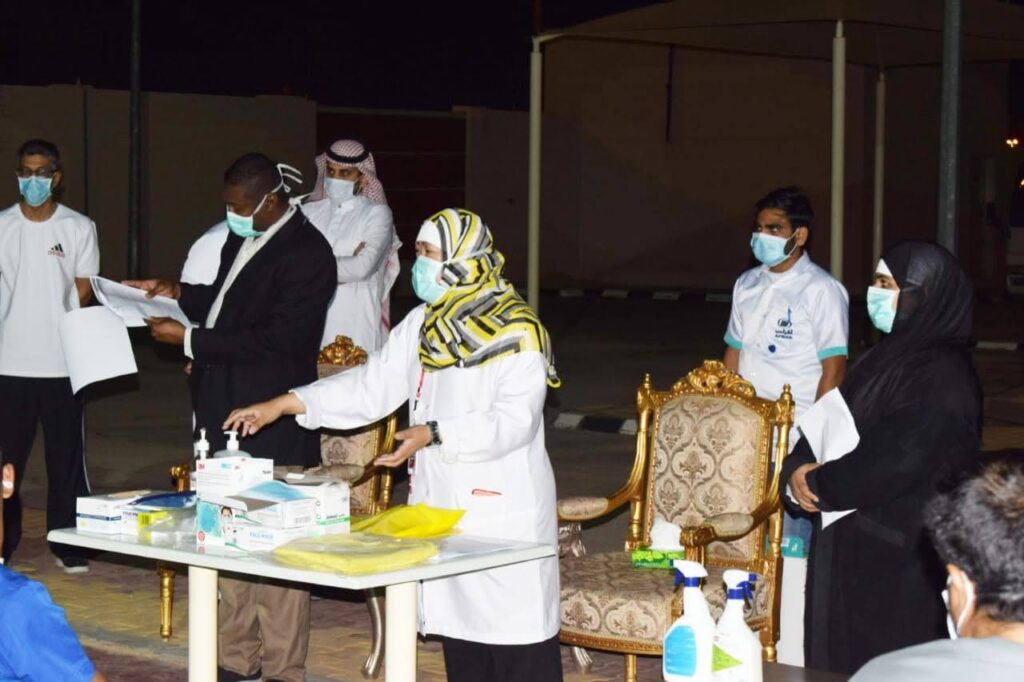
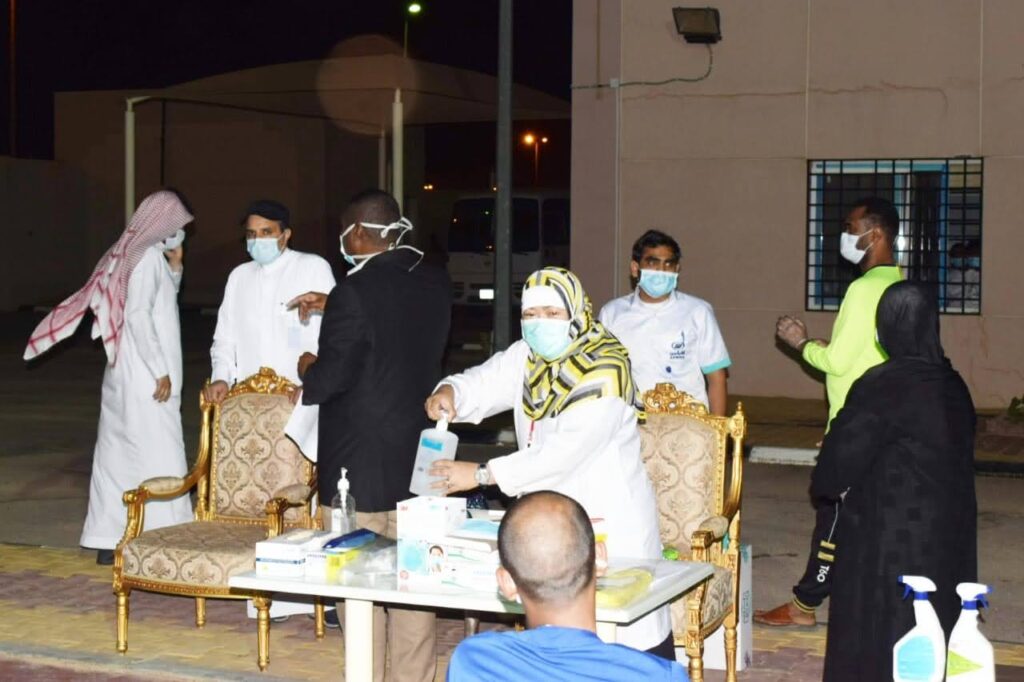
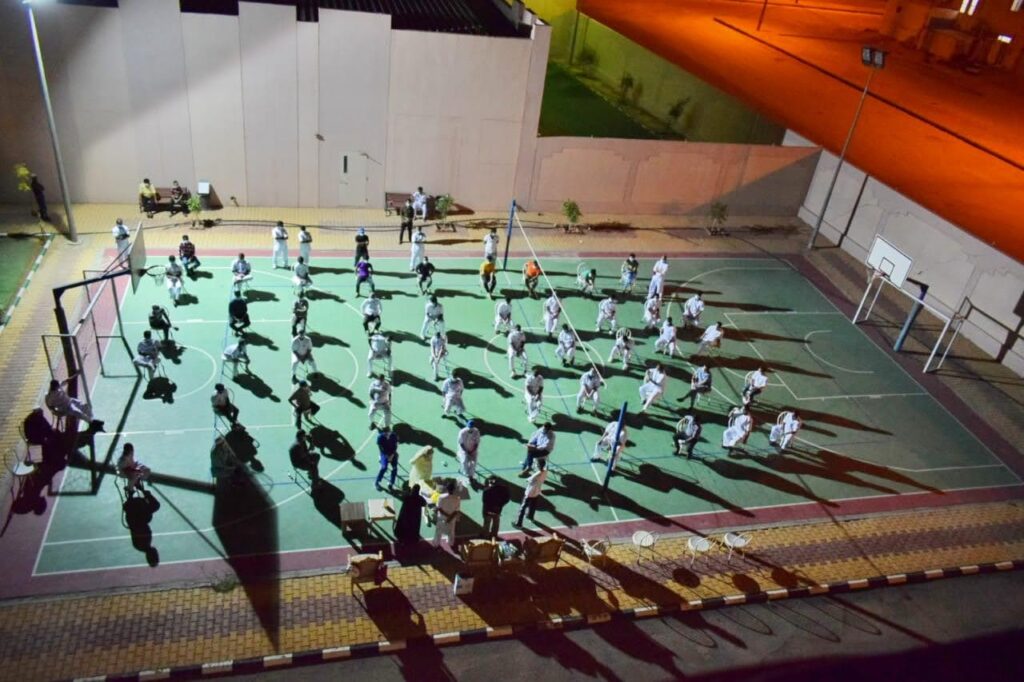
As part of the Ministry of Health’s regional infection prevention team, she was on the front lines of both the MERS-CoV outbreak and the COVID-19 pandemic — doing contact tracing, case investigation, monitoring, and prevention across hospitals throughout the Northern Border Region. She describes an environment stripped of the usual safeguards. The risks were immediate, the workload crushing, and for long stretches, no vaccine existed.
“Every contact tracing activity required extreme caution because we knew that one mistake could potentially expose ourselves or contribute to further transmission within the healthcare setting,” she recalls. The days blurred into on-call duties, thin sleep, and relentless pressure. “There were times when we were physically and emotionally exhausted, but our responsibility to protect patients, healthcare workers, and the hospital community gave us the strength to continue.”
What carried her through, she is careful to note, was not solitary grit. It was structure and solidarity. The Saudi Ministry of Health supplied training, updated protocols, and clear direction on case management, isolation, and contact tracing as the science shifted week to week. “We were not left to face the pandemic alone,” she says. And her team became something closer to a lifeline than a workplace. “We depended on one another, shared knowledge, encouraged each other, and worked together through demanding shifts and on-call duties.”
Out of those years came a definition of courage she now carries like a credential. “Their dedication reminded me that courage is not the absence of fear — it is having the strength to continue doing what needs to be done despite it.” And a lesson she distills even more tightly: “When uncertainty surrounds us, knowledge becomes our protection, teamwork becomes our strength, leadership becomes our guidance, and responsibility becomes our purpose.”

Giving the work away on purpose
There is a particular anxiety common among specialists — the quiet fear that teaching someone everything you know might one day make you replaceable. She rejected that fear so completely that its opposite became one of her defining principles.
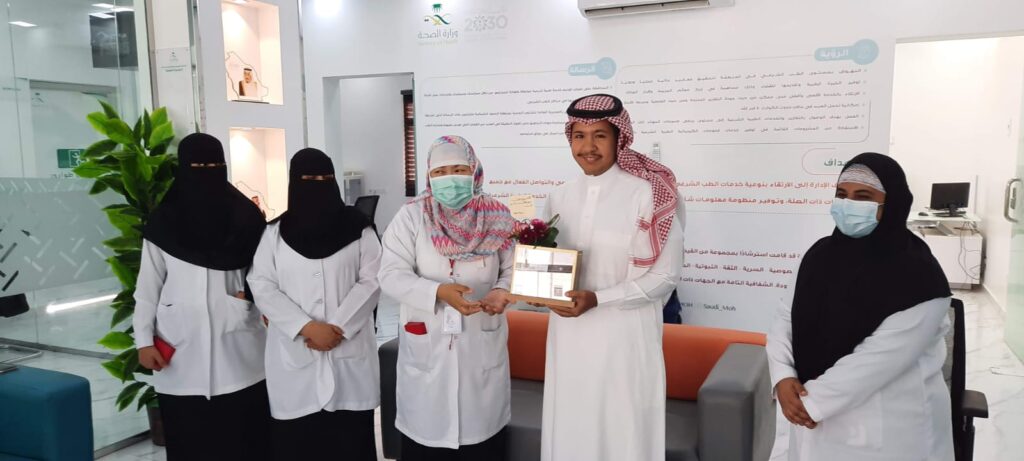
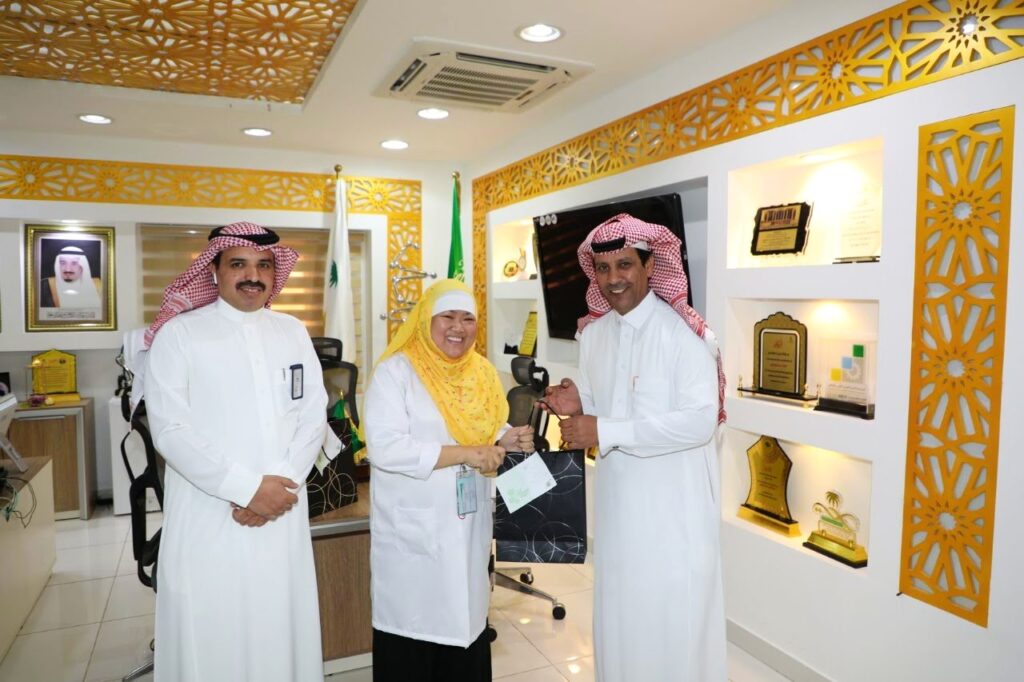
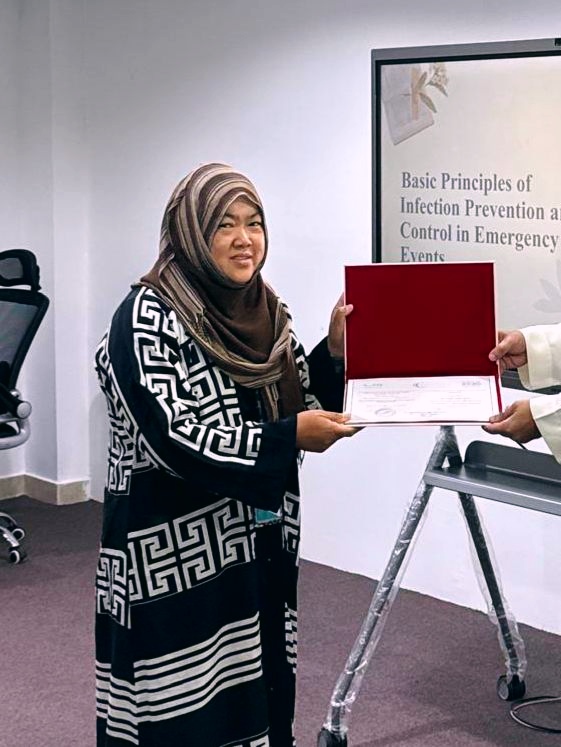
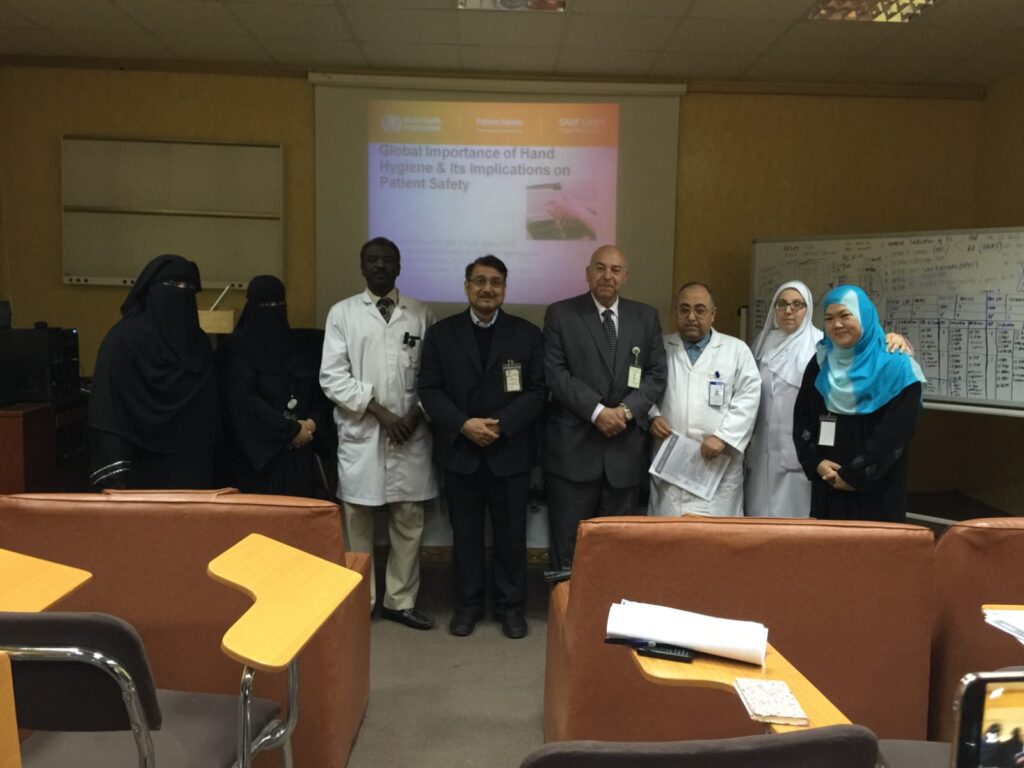
“After more than 20 years of experience in Infection Prevention and Control, I never wanted to keep my knowledge to myself out of fear that someone else might become better than me,” she says. She trained her Saudi colleagues openly, holding nothing back, even knowing some might eventually surpass her. That was, in fact, the point. “My goal was never to be the only person who knew how to do the work; my goal was to help build a team that could do the work exceptionally well.”
She frames it not as generosity but as strategy — the only strategy that actually strengthens a department. “When we share our knowledge, skills, and experience, we do not make ourselves less valuable. Instead, we make the entire department stronger.” When she left her longtime hospital for the Regional Health Cluster, she walked away without the usual pang of indispensability, because she had made herself dispensable on purpose. “I knew I had contributed something that would remain even after I was gone.”
It is a philosophy she states plainly, and one that reorders the usual metrics of professional success. “True professional success is not measured by how much knowledge I keep for myself, but by how many people I can help become better because of what I have learned. The best legacy of a healthcare professional is not simply the work they accomplish, but the people they empower to continue that work even better.”
What twenty-two years actually give you
Ask her what working abroad has meant, and the ledger she offers is not the one she opened with. The financial stability that first drew her overseas turns out to be the least of what she gained.
“After 22 years of living and working in Saudi Arabia — almost half of my life — I can honestly say that working abroad has given me much more than financial stability,” she says. What she names first are the relationships. Strangers became something like family. “I have experienced genuine kindness and generosity from people who treated me not simply as a colleague or an expatriate worker, but as someone they cared about. When they offer help, they often go beyond what is expected.”
She talks about the country the way a person talks about a place that has quietly become home without permission. “Saudi Arabia is no longer simply the country where I work. It has been a major part of my life, my professional journey, and my personal growth.” And the arithmetic that started it all comes out inverted: “I came here looking for an opportunity, but I gained much more than I expected — a career I am proud of, friendships that became like family, and experiences that shaped me into the person and professional I am today.”
The knowledge she intends to carry home
For all that Saudi Arabia has given her, her eyes are turned toward the country she left. When her overseas chapter closes, she wants to bring the whole of it back to the Philippines — not just her nursing license, but two decades of infection control, surveillance, patient safety, and leadership that she had almost no chance to practice at home the first time around.
“I had only about one year of work experience in the Philippines before beginning my overseas journey,” she notes. Returning, then, is less a homecoming than a delivery. Her clearest ambition is to teach — in universities, nursing schools, training institutions, wherever young nurses gather. She wants them to understand that the profession is bigger than the bedside. “Nursing is not only about caring for patients at the bedside — it is also about preventing harm, improving systems, educating others, and becoming advocates for safer healthcare.”
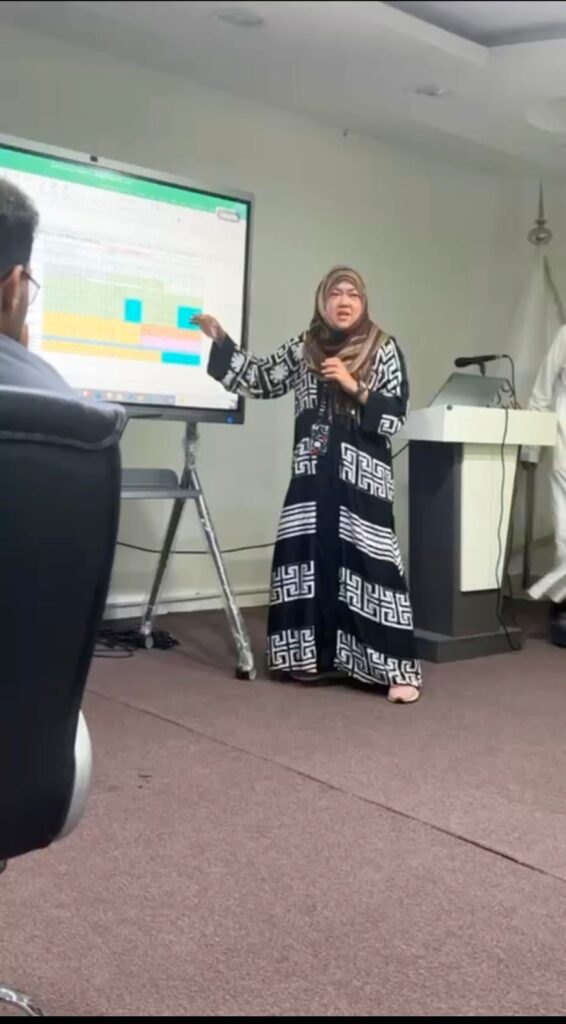
She has no single destination fixed in mind, only a direction. “Whether the opportunity comes through a university, nursing school, hospital, training institution, or another healthcare organization, I want to go where my experience can be most useful.” And she has a conviction underneath it all, one that ties her past to whatever comes next: “Knowledge should not end with the person who gained it. It should be passed on to others.”
She puts the whole of that intention into a single line: “I left the Philippines to build my career; I hope to return with the knowledge and experience to help build the careers of others and contribute to a safer healthcare system in my own country.”
What she would tell the ones still finding their footing
Two decades abroad have earned her the right to offer advice, and she does so without sugarcoating the loneliness, the homesickness, the financial strain, or the way distance can make a person vulnerable to the wrong relationships. Her counsel begins with a single anchor: know why you left.
“Before making decisions, remember why you came abroad,” she says. “When difficult situations come, remembering your purpose can help you stay focused and make wiser decisions.”
On love, she is protective. “Do not let loneliness make decisions for you. A healthy relationship should give you peace, respect, honesty, and support — not constant fear, manipulation, or financial pressure.” On money, she is practical, warning against the peculiar trap of earning more without ever becoming secure: help your family, but do not dismantle your own future to do it. On work, she offers herself as proof. “Your first job abroad may not be your dream job, but it can become the foundation for something greater. I started as an ER nurse and eventually moved into Infection Prevention and Control. Do not be afraid to start small. Your first position does not define where your career will end.”
And on the people worth keeping, she has a test worth remembering. “Choose people who show up for you, especially when you have nothing to offer them. Look for people whose actions match their words, who respect your boundaries, and who support you without expecting something in return. And remember to be that person for others too.”
Beneath all of it runs a warning she has watched too many kababayans fail to heed — that survival abroad can quietly cost a person the self they came with. She refuses to let the ledger end on money alone. “Success is not only measured by how much money you send home or how long you survive overseas. It is also measured by the person you become along the way and the lives you positively influence.”
She leaves her fellow Filipinos with a line that could serve as the epigraph for her entire life abroad: “We left our homeland to build a better life, but let us make sure that in the process of building our future, we do not lose ourselves.”
For a woman who has spent twenty-two years fighting an enemy no one can see, protecting patients who will never know her name, it is a fitting philosophy. The infections she prevents leave no trace. The nurses she trained now carry her methods without needing her in the room. The legacy she has built is, by design, invisible — and that is exactly how she measures its worth.
