



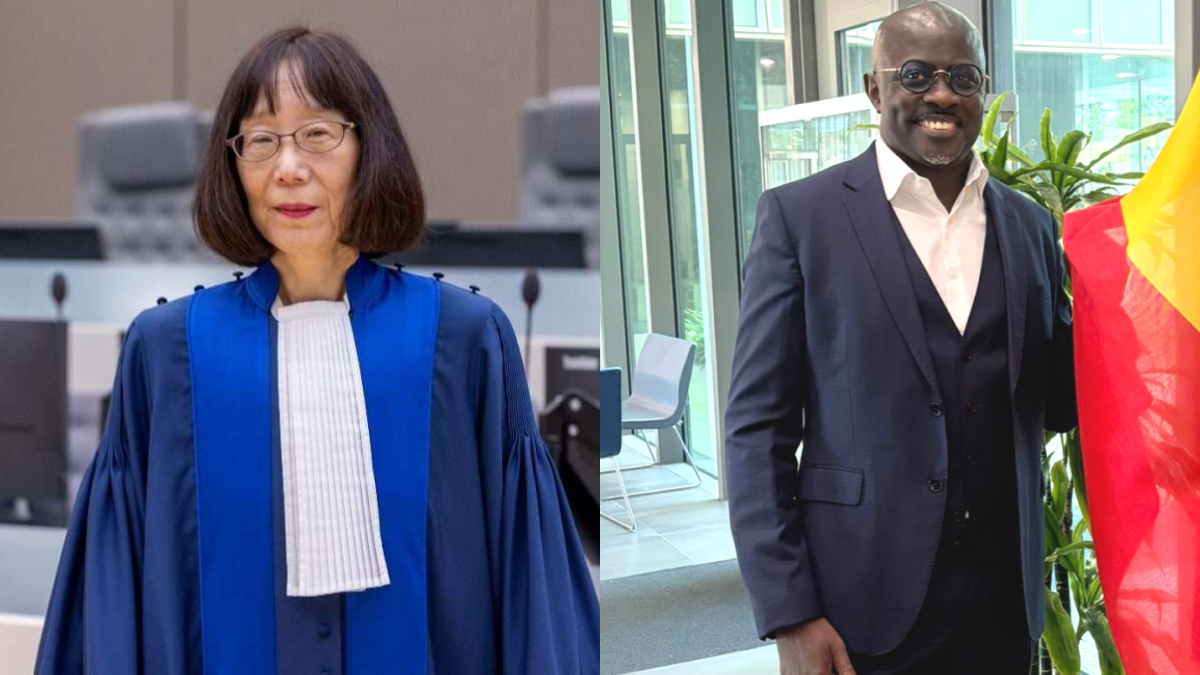

The Trump administration widened its offensive against the International Criminal Court on Tuesday, blacklisting the tribunal’s president and one of its lead prosecutors in a fresh round of financial penalties, according to Reuters.

Secretary of State Marco Rubio identified the two officials as Tomoko Akane, a Japanese jurist who presides over the court, and Abdoulaye Seye, a Senegalese national serving as a senior trial attorney. Both were designated under an executive order Trump signed last year that permits the government to penalize court personnel. Rubio defended the action by pointing to the officials’ roles in the institution’s work: “These individuals have directly engaged in efforts by the ICC to investigate, arrest, detain, or prosecute officials whose government has not consented to ICC jurisdiction,” he said in a statement.
The penalties carry concrete financial consequences. Any holdings the two may keep in the United States are now frozen, and the designations effectively bar them from a banking network that most global financial institutions depend on. Alongside the announcement, the Treasury released a general license permitting parties to unwind dealings tied to Akane and Seye until September 17.
Seye’s designation is notable given his position on the team that pursued an arrest warrant against Israeli Prime Minister Benjamin Netanyahu; he has also been put forward as a candidate for a judgeship at the court. Trump has framed the broader effort as protection for Netanyahu and other allies facing possible prosecution, rather than a shield for himself.

The court pushed back sharply. Officials there argued the sanctions erode legal norms, warning that “When judicial actors are threatened for applying the law, it is the international legal order itself that is placed at risk.” Akane herself had sounded the alarm in December, cautioning that American penalties could “rapidly undermine the court’s operations in all situations and cases, and jeopardize its very existence.”
This is not the administration’s first strike. Washington sanctioned a slate of court prosecutors and judges last year, citing the warrants issued for Netanyahu and former defense minister Yoav Gallant, along with an earlier examination of American forces in Afghanistan. Rubio signaled last month that pressure would intensify, describing a diplomatic push to convince member states to abandon the institution — an appeal at least five nations have already answered. He has cast the tribunal as a danger to US personnel enforcing Trump’s immigration agenda, carrying out strikes on vessels suspected of drug trafficking, and serving in the armed forces.
Resistance has also moved into the courts. Three ICC judges filed suit against Trump and his administration in June, contending the measures violate the law, while advocacy organizations brought two additional cases arguing the campaign tramples the constitutional protections of groups that assist the tribunal. The court, founded in 2002 to try genocide, war crimes, and crimes against humanity, can claim jurisdiction over atrocities committed on a member state’s soil even when the accused come from countries that never joined — a reach that extends to nationals of non-member states like the United States.
