



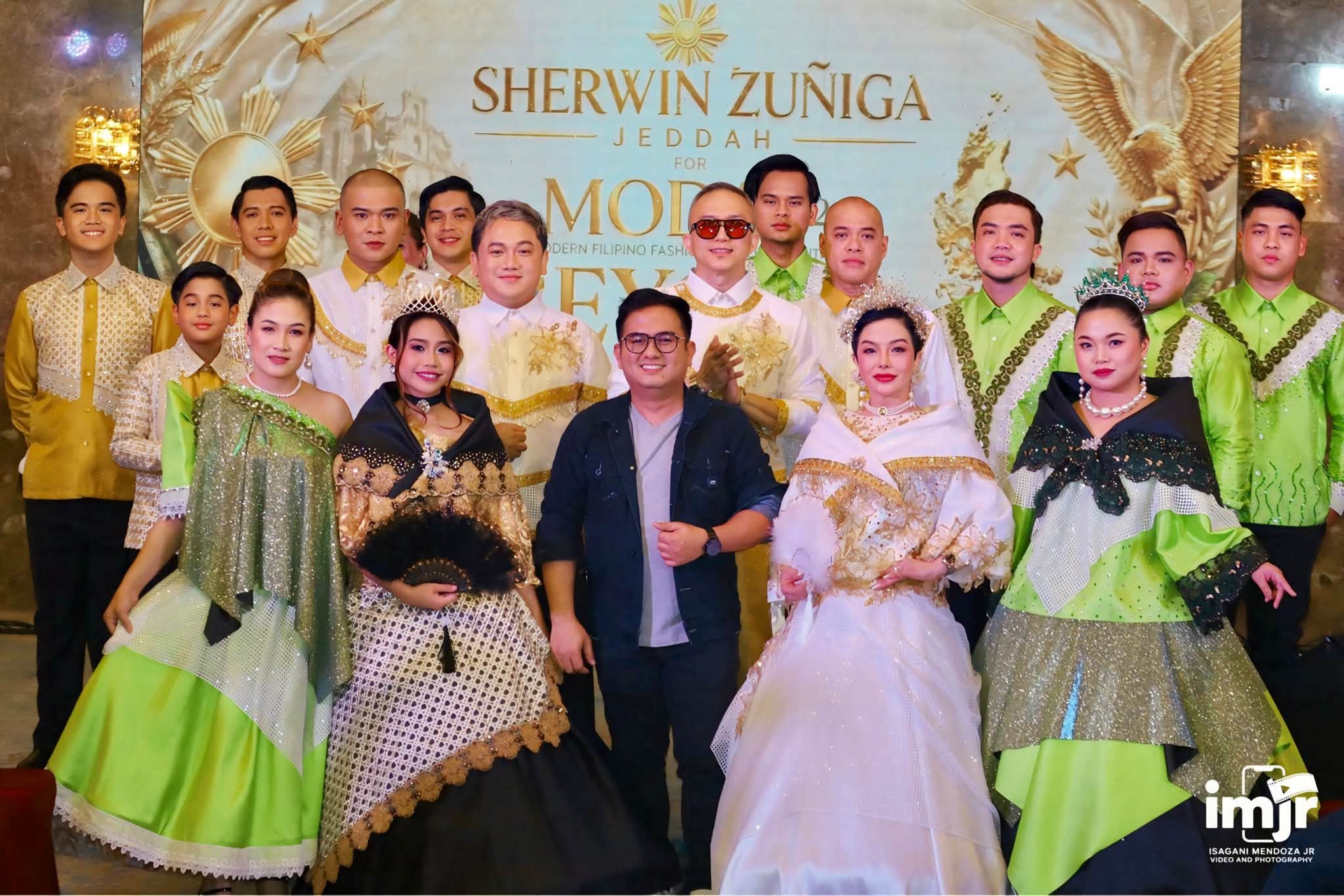

JEDDAH, Kingdom of Saudi Arabia — Confidence, culture, and character took the place of tape measures at MODA 2026, where a lineup of Filipino designers turned the runway into a statement on who fashion is meant to serve.

The evening’s most talked-about entry came from Sherwin Zuñiga, whose collection “Beyond Measure: Modern Filipino Fashion. Timeless Identities.” set out to unsettle long-held assumptions about beauty and style. His guiding idea was direct: “Because true elegance is not measured by size; it is measured by confidence, culture, and character.”
Rather than staging a conventional parade of garments, Zuñiga filled his runway with children, young people, elders, community leaders, professionals, members of the LGBTQIA+ community, and everyday individuals of varying heights, weights, and body types. Each model, he intended, would stand as proof that beauty registers in a person’s bearing and story rather than in the number stitched into a dress.

His presentation unfolded across three movements. Gintong Pamana opened with Barong Tagalog and Filipiniana pieces in gold and cream, worn by children, youth, and slender models, its crystal detailing and classic silhouettes framing Filipino heritage as something passed down across generations. Berdeng Bagong Hibla, among the night’s most applauded segments, brought together models of different sizes, ages, and heights — including people rarely given a place on traditional runways — in vivid green modern Barong and contemporary Filipiniana, the color chosen to signal growth, change, and a more inclusive industry. Liwanag ng Karangalan closed the set with white and gold ensembles worn by community leaders, volunteers, entrepreneurs, senior participants, and LGBTQIA+ members, honoring service and dignity that Zuñiga argued cannot be measured by age or appearance.
Zuñiga was one of six Filipino designers on the program. Betty and Bebs presented evening gowns and formal wear built around classic luxury and modern refinement, while Rej, Shakira, and Amang Hari pushed toward bolder territory with upscale, avant-garde, and contemporary pieces that treated each garment as an experiment in identity.
For Zuñiga, the collection functions less as a wardrobe than as a movement — an argument that fashion, and the society around it, has room for everyone regardless of size, age, or gender.
