




State auditors have no authority under existing accounting rules to reject acknowledgment receipts simply because they carry obviously invented names, a former Commission on Audit official told the Senate impeachment court, addressing one of the questions that has drawn the most attention in the proceedings against Vice President Sara Duterte.

Roderick Wamil, who previously served with the COA-Intelligence and Confidential Funds Audit Office, gave that testimony on the 13th day of the trial as senator-judges pressed him on the names that appeared in receipts covering money the Office of the Vice President spent between December 21 and 31, 2022. Entries such as “Mary Grace Piattos,” “Chippy McDonald” and “Mickey Mouse” had been raised by the House prosecution as signs of questionable liquidation records.
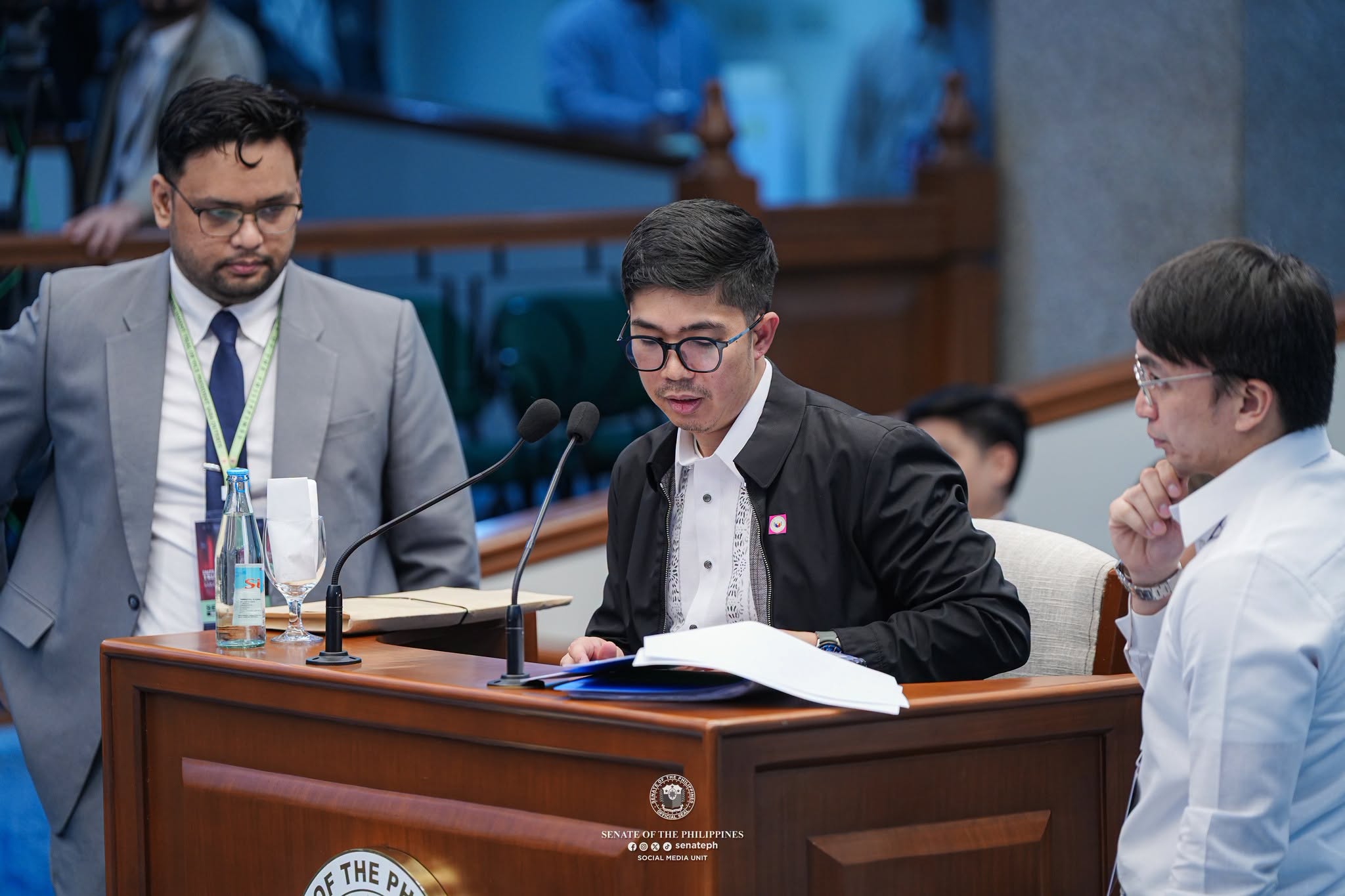
Senator-Judge Bam Aquino asked whether COA-DBM Joint Circular 2015-01 permits agencies to record informants or intelligence agents under aliases. Wamil said the rule takes no position either way. “The circular is silent. It is neither allowed nor prohibited,” he testified. He described the agency’s review of confidential funds as one built around paperwork and compliance, with auditors checking documents against the circular’s requirements rather than tracing the real identities behind listed names. “As auditors, we are document-based. We have no way of determining whether a name is an alias or not,” he said. Even so, he stressed that liquidation papers are presumed to point to real people, and that supporting documents such as the receipts missing in this case are still expected to reflect genuine individuals.
A separate line of questioning came from Senator-Judge Erwin Tulfo, who wanted to know why COA had not pursued legal action if it regarded the disbursements as suspect. Wamil explained that audit findings alone are not enough to bring a matter to the Office of the Ombudsman; under agency rules, a referral can follow only after a final audit order has been issued and the agency involved fails to act on it. He said he could no longer speak to where the OVP findings now stand, having been moved to a different office, and noted that updates on confidential fund audits are not shared widely among personnel because of their sensitive nature.

Much of the day turned on what the OVP did and did not hand over. Wamil said the office backed its P125-million in spending for that late-December stretch entirely with acknowledgment receipts, submitting no official receipts or sales invoices at all. In his experience auditing confidential and intelligence funds, he said, he had never before seen a liquidation report built solely on such receipts. “The OVP did not submit any official receipts or sales invoices. They submitted only acknowledgment receipts (ARs),” he said. He was careful to add that he could not declare the practice unheard of across the whole government, since only the OVP and a handful of offices fell within his audit jurisdiction.
Wamil maintained that receipts and invoices matter as audit evidence because they let COA confirm whether declared spending matches real purchases. “If the official receipts or sales invoices had been presented, we would have been able to validate whether the expenditures reflected in the liquidation report were accurate,” he told the court. Responding to Senator-Judge Raffy Tulfo, he said requiring such proof would not endanger national security. Tulfo referred to the defense argument raised the previous day: “Yesterday, attorney [Michael] Poa [of the defense] said the circular stating that the names of the recipients should not be disclosed for security and national security reasons. In your opinion, would it compromise the security of the informants if you asked them to provide receipts for the medicines they received through the confidential funds?” Wamil answered that COA sought proof of purchase, not the identities of recipients.
The “Mary Grace Piattos” entry drew particular scrutiny from Senator-Judge Risa Hontiveros. Wamil said it was not standard for medicine to change hands in return for intelligence, as that receipt suggested, with the named beneficiary said to have received P70,000 worth of medicine. The OVP under Duterte, he said, was the first agency he encountered using medicine as a form of reward. COA, he added, did not look into what conditions the medicine was meant to address or why informants had to supply intelligence before receiving it. The documents themselves carried none of that detail, he said, though the circular allowed auditors to seek clarification on unusual entries. He also testified that the office produced no evidence that the operations tied to the reward payments yielded results, an omission that both breached the circular and left COA unable to confirm the money reached any informant.
The proceedings also opened a broader question about whether the audit framework itself needs work. Senator-Judge Panfilo Lacson argued that the rules on confidential and intelligence funds should be widened to strengthen accountability, pointing to Wamil’s account of a review confined to document-based compliance. “Why are you limited to paper audits? Don’t you have physical audits? It seems your current auditing system is lacking. How would you know if the one signing the acknowledgment receipts is a legitimate person if you cannot determine if the person behind the alias is a real person?” Lacson said. He urged COA to consider amending the Joint Memorandum Circular, suggested that after-surveillance or after-intelligence reports be treated as proof that an operation succeeded, and questioned how auditors could review classified spending thoroughly without the security clearance to see classified material.
