





Ask any teacher who has spent years commuting to a classroom far from home, and they’ll tell you the cruelest part of the job isn’t the workload — it’s the math. The hours on the road, the evenings missed, the children who learn to fall asleep before a parent gets home. Jennifer A. Balicog ran that math for over a decade in the Philippines, and one day the numbers stopped adding up.

“Being apart from my children while working in the Philippines was one of my greatest struggles,” she says. “I knew I could only be my best as both a teacher and a mother if my family stayed together.”
That realization is what carried the Surigao City educator across the world to Florida, where she now serves as English Language Arts Teacher and Reading/ELA Department Lead at Palm Beach Maritime Academy. But the decision wasn’t a flight from teaching. It was a bet that she could do more of it, better, and without leaving her family behind.
A decade of groundwork
Before Florida, there was a long apprenticeship in the classrooms of Caraga. Jennifer taught for more than fifteen years, including a decade at St. Paul University Surigao, where she spent five of those years as English Subject Team Leader. She guest lectured at Surigao del Norte State University and, in 2021, officially joined Philippine Science High School–Caraga — one of the most selective public school systems in the country.
It was the kind of résumé that doesn’t usually get abandoned. Most educators who reach a leadership post at a respected institution settle in. She did the opposite, applying to the J-1 Exchange Visitor Program in 2023 and landing her first overseas post at Palm Beach Maritime Academy, where she remains.
The motive was deliberate, not restless. “Teaching in Florida offered better opportunities for my children and a chance to expand my practice within a different educational system without sacrificing my role as a mother,” she explains. The move was less a leap than a calculation — one that put her family and her craft on the same side of the ledger for the first time in years.
Learning the new rules
Arriving in a U.S. classroom meant starting over in ways that experience couldn’t shortcut. New standards, new assessments, new expectations, new ways of teaching — the former subject team leader was suddenly the one with the most to learn.
Her response was characteristically methodical. Rather than improvise, she observed, committed to continuous learning, and went so far as to research the local system from the inside. That research became something larger: a published study on the Florida Assessment of Student Thinking, or FAST, and its impact on charter schools. The work turned a personal learning curve into a contribution, giving her colleagues research-based insight to support data-driven decisions across the school.

It’s a telling instinct. Faced with an unfamiliar system, the reading specialist didn’t just adapt to it — she studied it, documented it, and handed the findings back to the people around her. That habit of turning challenge into shared knowledge has become the throughline of her American chapter.
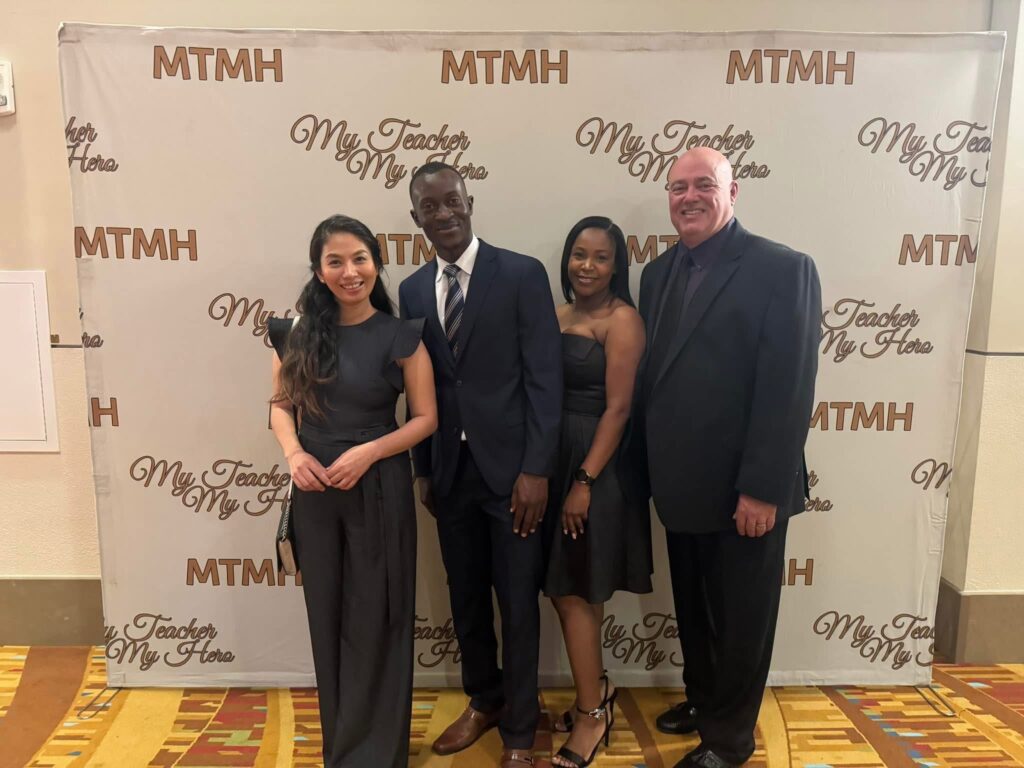
The results have not gone unnoticed. She was named one of the Top 3 nominees for Florida’s “My Teacher, My Hero” Award, a recognition she ties directly to her commitment to student success. On the strength of that work, she’s been entrusted with teaching Advanced International Certificate of Education courses and will step into an Instructional Coach role in the coming school year — a promotion that widens her reach from her own students to the teachers around her.

What keeps her in the classroom
For all the data analysis and instructional leadership, what grounds Jennifer is something plainer. She chose teaching, she says, “out of a deep love for teaching and a firm belief in education’s power to transform lives — just as it transformed mine.”
Years of working across two very different school systems have distilled that belief into something she states without hedging. “Regardless of race or place, children are children,” the Filipina educator says, “each one deserving of love, support, and high expectations so they can thrive and reach their fullest potential.” It’s a conviction that travels well — the same standard she held in a Surigao classroom holds in a Florida one.
The satisfaction, for her, is measurable in two directions: watching learners grow, and watching fellow teachers flourish. The mentoring is not a side duty but part of the point. Having been the newcomer relearning her profession, she now positions herself to shorten that curve for others.
Her plans after her overseas tenure point the same way. She intends to keep advocating for stronger literacy and data-informed instruction, to mentor educators, and to support initiatives that uplift Filipino teachers — carrying her research and experience back into service both at home and abroad.
Her advice to kababayans navigating life overseas reflects the posture that got her here. “Never assume that you know everything or can accomplish everything alone,” she says. “The willingness to learn from others, ask questions, and accept support is a sign of wisdom, not weakness.”
There’s a quieter conviction underneath all of it, the one she keeps as her mantra: serve with passion, even in silence. She knows the work isn’t always seen. “There may be times when your efforts go unnoticed and your sacrifices seem unappreciated,” she says. “Yet continue to do your work with excellence, integrity, and a sincere heart.” For a teacher who once measured her life in missed evenings, the faith that every effort eventually counts is not a consolation. It’s the whole equation, finally balanced.
