



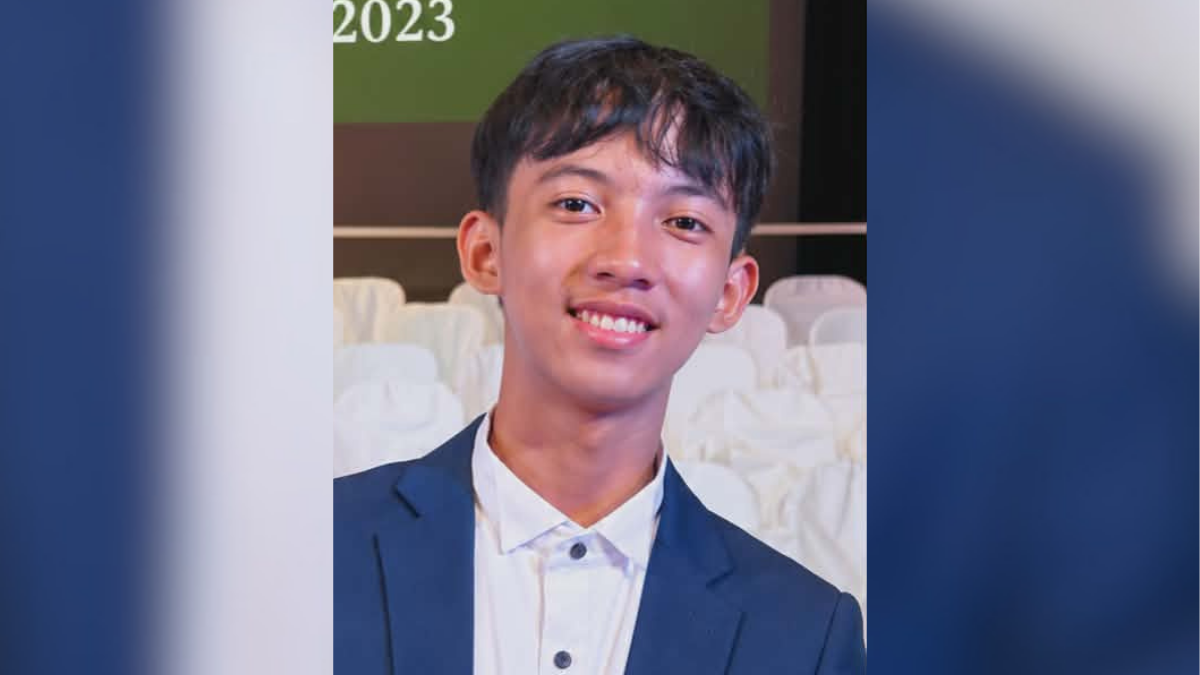

When Joshua Miguel Daclis was in Grade 1, he spent his afternoons sitting on the floor beneath his mother’s desk at the public school where she taught. While she sat through faculty meetings and seminars, he borrowed her phone and watched videos of surgeons at work — studying how a steady pair of hands could pull a patient back from the edge of an illness. He was barely old enough to spell the word “surgeon,” but he had already made up his mind. “Someday, I want to do that too,” he remembers telling himself. “I want to save lives.”

That childhood resolve has carried Joshua a long way from the floor of a classroom in San Jose del Monte, Bulacan. At 16, he has been accepted into the 2026 Yale Young Global Scholars (YYGS) program at Yale University in New Haven, Connecticut — an academic enrichment program that draws outstanding high school students from more than 150 countries each summer for an intensive two-week residential session on Yale’s campus.


His road there ran through two very different schools and one long bet on himself.
From Sapang Palay to BGC
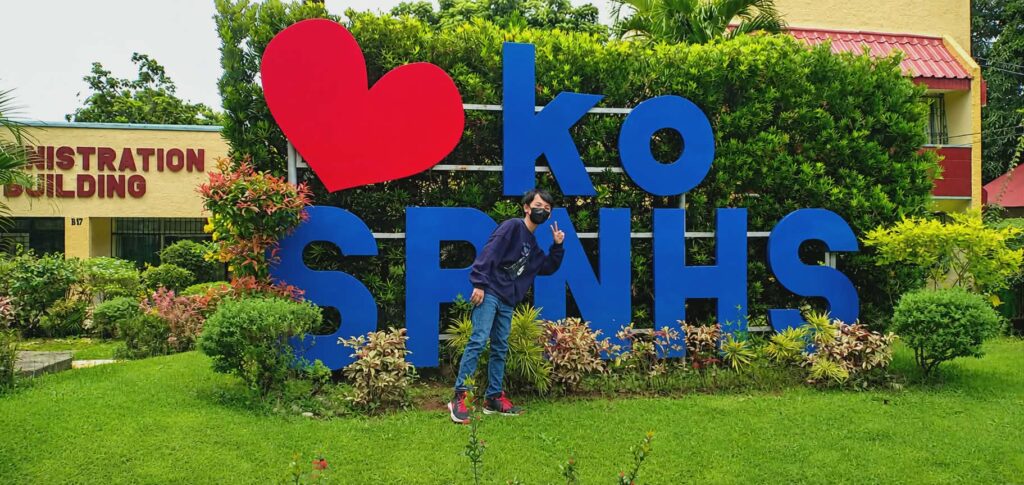
Joshua’s early education was entirely in the Philippine public system. He attended elementary school in San Jose del Monte and began high school at Sapang Palay National High School, the kind of campus where a child of two teachers grows up understanding both the value of education and its cost. His mother is a public school teacher. His father was one too. The family, by Joshua’s own description, is not wealthy.
The move to International School Manila in Bonifacio Global City was, by any measure, a leap. ISM is one of the country’s most prominent international schools, and Joshua found himself surrounded by classmates drawn from roughly 93 nationalities — the children of ambassadors, diplomats, business leaders, public figures, and expatriates from around the world. He arrived as a scholar from a public-school background, and he braced himself to feel out of place.
He says it never happened. From his first weeks, the school’s orientation program for new students and parents helped him find his footing, and he credits the superintendent, principal, teachers, guidance counselors, and staff with making him feel welcome. What surprised him most was the diversity itself — a community that changed shape every year and seemed to have room in it for him.

The facilities astonished him too. ISM’s campus includes purpose-built spaces for its youngest learners, extensive athletic facilities, swimming pools, and theaters built for student productions. Joshua, a musician, would come to know those stages well. But when he describes the moment he knew he belonged, he does not mention the buildings. He points instead to the feeling that everyone there was welcomed, respected, and encouraged to be themselves.
Three instruments, and a song for his parents
Music has shadowed Joshua’s academic life from the start. He plays violin, piano, and guitar, and at ISM he has performed across all three — playing piano for an arrangement of Robert Kerr’s “Irish Legend,” scored for strings by Soo Hee Newbold; lead guitar for the Class 8’7 Band; and violin with the school’s strings ensemble. He has performed for the Association for Music in International Schools in the United Kingdom through an online showcase, and once, during a layover on the way to a school biology trip in Croatia, he sat down at a public piano in Rome and played simply because the instrument was there.
The performances are many. The song that means the most to him is a quiet one. “Can’t Help Falling in Love,” the Elvis Presley standard, holds its place in his heart because he grew up listening to his father sing it to his mother. When he plays it, he says, it reminds him of his parents’ love and of why family matters. Music, for Joshua, is most meaningful when it is tied to memory.

That conviction has pushed him toward teaching. As lead guitarist of the Class 8’7 Band, he is part of ARTvocacy, a youth organization of young musicians founded by the band’s vocalist to bring music education to children who want to learn but lack the opportunity. Through it, Joshua has taught elementary pupils from public schools free of charge. He remembers one student who had never held an instrument before, and the excitement in the child’s eyes after learning a handful of notes. He understands that child, he says, because he was that child — a proud product of the Philippine public school system, the son of two public school teachers. Teaching music, for him, is a way of showing young learners that their dreams are possible regardless of where they begin.
A bet on himself
The YYGS application nearly overwhelmed him before it began. When his guidance counselor at ISM, Mr. Johnson, recommended the program and walked him through it, Joshua understood how competitive it was — and how easy it would be to talk himself out of trying. He decided that there was no harm in trying anyway.

He completed the entire application himself. He checked his eligibility, chose the academic track that fit his goals, and assembled his school records, his list of activities and achievements, his essays, and his recommendation requirements. The hardest and most important part, he says, was writing essays honest enough to reflect who he actually is and what he hopes to contribute to the world. The only help he asked of his mother was for photographs of his performances. Everything else — the online account, the forms, the review, the final submission — he handled alone.
Then he waited. The email, when it came, changed his life. He shared the news quietly with his family, and together they celebrated something none of them had quite expected.
For students eyeing the same path, his advice is plain: check the eligibility requirements, choose a session that genuinely interests you, prepare your documents early, write essays that are honest rather than impressive, ask for recommendations from teachers who truly know you, and submit before the deadline. Most of all, he says, believe in your own potential and do not be afraid to take the chance.
What he carries with him
The independence that the application demanded was not new to Joshua. At 13, in Grade 8, he began living largely on his own. His family rented a small unit in Taguig so he could continue his studies and pursue his opportunities, and since then he has seen his parents mostly on weekends and during school activities. Late at night, after his ice hockey training sessions, he knows his mother does not sleep until she is certain he has made it back safely. His father, he says, works without rest to provide for him and his younger brother, James, and never fails to offer guidance and advice.
He does not pretend the arrangement is easy, or that the family’s circumstances are comfortable. Living in the city is expensive, and his parents have made hard financial decisions to keep his dreams within reach. The lesson he draws from all of it is perseverance, bound up with what he calls his family’s unconditional love — the thing he carries on the harder days, when the distance from home is most felt.


His ambitions remain large and specific. Joshua hopes one day to study medicine and become a surgeon, and to continue his education in the United States; he is already working through online coursework in calculus and neuroscience offered by Harvard. YYGS, he says, brings that dream one step closer. It is a long way from a borrowed phone and the underside of a classroom desk — and for a teenager who decided early that there was no harm in trying, that is rather the point.
